
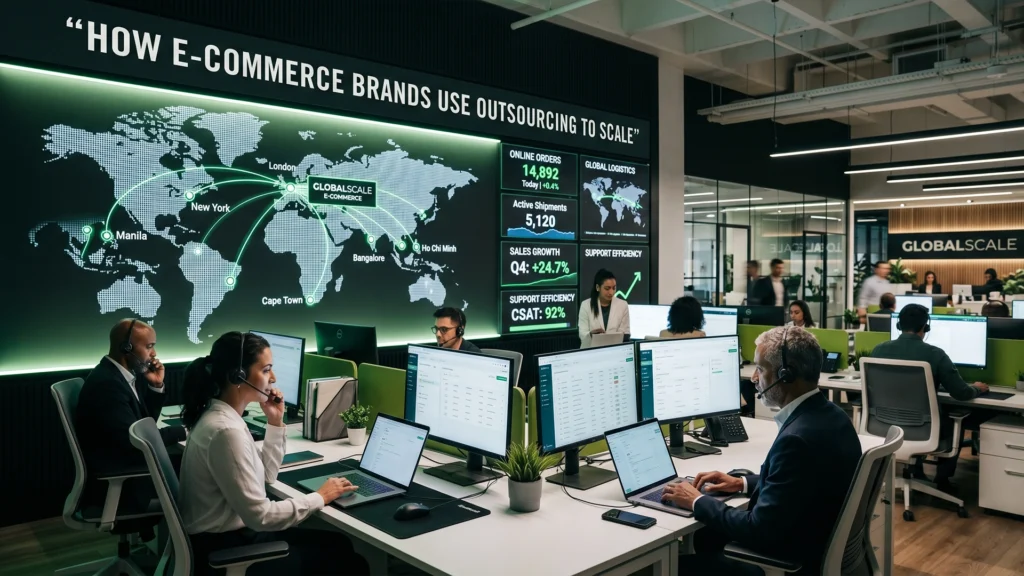
How E-commerce Brands Use Outsourcing to Scale Their Business Efficiently
Scaling an e-commerce business is exciting, but it also comes with significant operational challenges. As order volumes increase, customer expectations rise, and competition intensifies, many online retailers struggle to manage every aspect of their business internally. This is why understanding how e-commerce brands use outsourcing to scale has become increasingly important for modern businesses.
From customer support and order management to IT services and digital marketing, outsourcing enables e-commerce companies to access specialized expertise without the cost and complexity of building large in-house teams.
Instead of spending valuable time managing operational tasks, business owners can focus on strategic growth, customer acquisition, and expanding into new markets.
Today, many successful e-commerce brands rely on outsourcing as a core component of their growth strategy. By leveraging dedicated external teams, they can improve efficiency, reduce costs, and scale operations faster than traditional hiring models allow.
What Is E-commerce Outsourcing?
E-commerce outsourcing refers to the practice of hiring external specialists or dedicated teams to manage specific business functions. Rather than performing every task internally, businesses partner with experienced service providers who handle operational responsibilities on their behalf.
These outsourced functions may include:
- Customer support
- IT support and maintenance
- ERP management
- Digital marketing
- Product listing management
- Data entry
- Inventory management
- Marketplace management
- Order processing
- Technical support
The goal is simple: allow internal teams to focus on growth while experts manage day-to-day operational activities.
Why E-commerce Brands Use Outsourcing to Scale
Understanding how e-commerce brands use outsourcing to scale begins with recognizing the challenges of rapid growth.
As businesses expand, they often experience:
- Increased customer inquiries
- Higher order volumes
- More complex inventory requirements
- Growing technology needs
- Expanding sales channels
- Increased security concerns
Managing these responsibilities internally often requires substantial hiring, training, and infrastructure investments.
Outsourcing provides a more flexible solution by giving businesses access to skilled professionals whenever they need them.
Key reasons brands outsource:
- Reduce operational costs
- Access specialized expertise
- Improve service quality
- Scale quickly during growth periods
- Support global customers
- Increase operational efficiency
- Improve response times
- Reduce management overhead
The Most Common Areas E-commerce Brands Outsource
Customer Support
Customer experience directly impacts sales, retention, and brand reputation.
Many growing e-commerce businesses outsource:
- Live chat support
- Email support
- Social media inquiries
- Technical assistance
- Returns and refund management
Benefits include:
- 24/7 customer support
- Faster response times
- Improved customer satisfaction
- Reduced internal workload
IT Support and Infrastructure Management
Technology is the foundation of every successful online store.
Many businesses outsource:
- Website monitoring
- Server management
- Cloud infrastructure
- Security monitoring
- Technical troubleshooting
This ensures business continuity while minimizing downtime and security risks.
Although, we are introducing our service: E-commerce Store Development to support businesses in building scalable online platforms. This service ensures a strong technical foundation, optimized performance, and a growth-ready store architecture for long-term success.
ERP and Business System Management
As businesses scale, managing inventory, finance, procurement, and fulfillment becomes increasingly complex.
Outsourcing ERP management helps businesses:
- Improve data accuracy
- Streamline operations
- Increase visibility across departments
- Automate workflows
- Enhance decision-making
ERP support is particularly valuable for brands experiencing rapid growth.
Digital Marketing
Marketing demands consistent execution and specialized expertise.
Brands often outsource:
- SEO
- PPC campaigns
- Social media management
- Content marketing
- Email marketing
Benefits include:
- Access to specialists
- Improved campaign performance
- Faster implementation
- Better return on investment
Product and Marketplace Management
Selling on platforms like Amazon and Shopify requires continuous optimization.
Outsourced teams often manage:
- Product listings
- Catalog updates
- Keyword optimization
- Inventory synchronization
- Marketplace compliance
This allows businesses to maintain visibility and competitiveness across multiple channels.
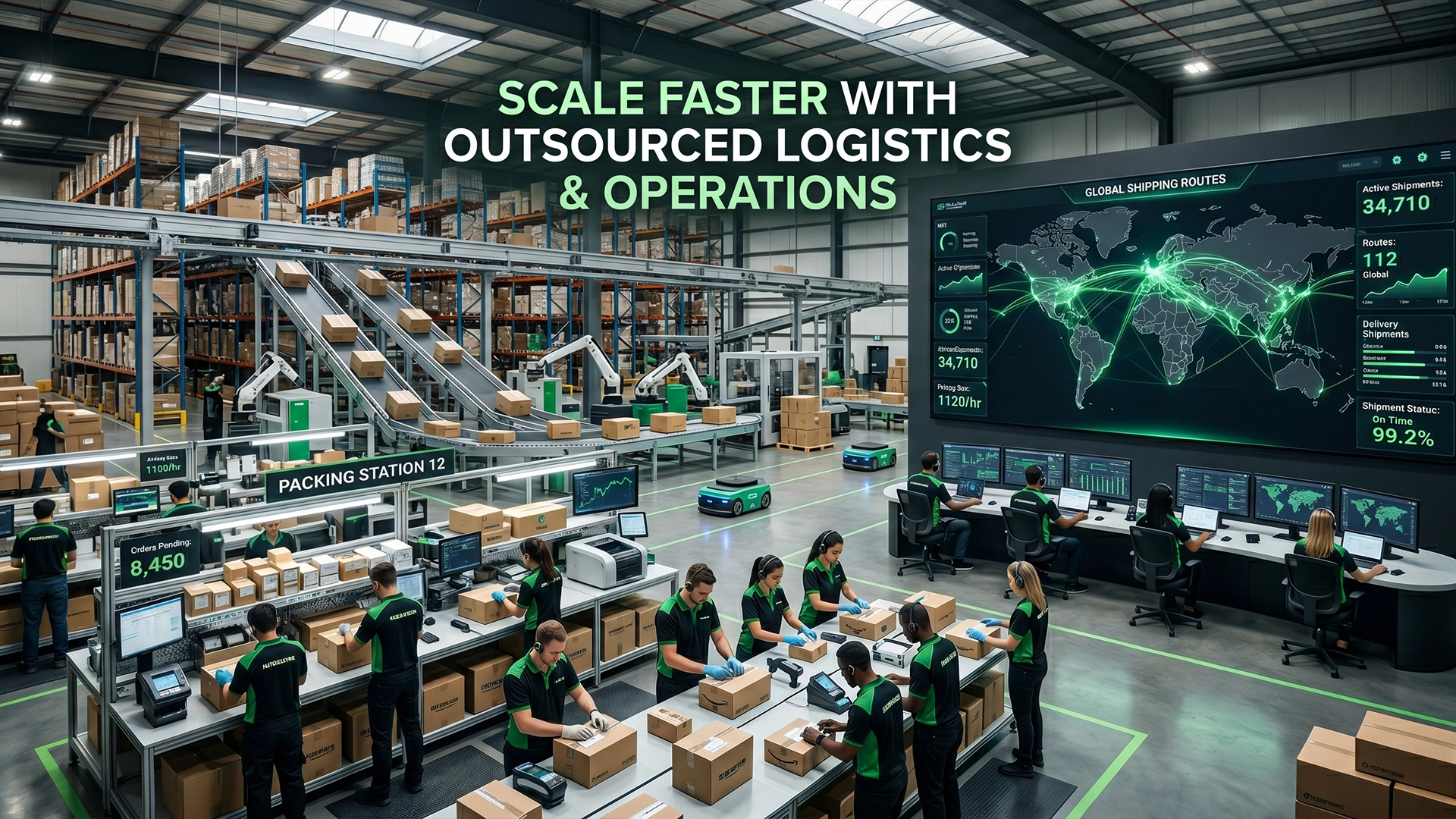
Apparently, we are introducing our service: Amazon Store Optimization as part of our e-commerce scaling solutions. This service helps businesses improve product visibility, optimize listings, and enhance marketplace performance to achieve higher conversions and sales growth.
How Outsourcing Supports Faster E-commerce Growth
One of the biggest advantages of outsourcing is scalability.
Instead of hiring and training new employees every time demand increases, businesses can quickly expand support through external teams.
Outsourcing enables businesses to:
- Launch new products faster
- Enter new markets
- Expand customer support coverage
- Improve operational efficiency
- Handle seasonal spikes
- Increase order capacity
- Support international growth
This flexibility makes outsourcing an effective growth strategy for businesses of all sizes.
Outsourcing vs. Hiring In-House Teams
Many business leaders struggle to decide between outsourcing and hiring internally.
In-House Teams
Advantages:
- Direct control
- Internal knowledge retention
- Strong company culture
Challenges:
- Higher costs
- Longer hiring processes
- Training requirements
- Infrastructure expenses
Outsourcing
Advantages:
- Lower operational costs
- Faster deployment
- Access to specialists
- Flexible scalability
Challenges:
- Vendor management
- Communication processes
- Onboarding alignment
For many growing brands, outsourcing offers a more cost-effective and scalable solution.
Challenges of E-commerce Outsourcing
Although outsourcing offers significant benefits, businesses should be aware of potential challenges.
Common concerns include:
- Communication barriers
- Vendor reliability
- Data security risks
- Quality control issues
- Process alignment challenges
To minimize risks:
- Establish clear KPIs
- Define communication processes
- Implement regular reporting
- Select experienced partners
- Conduct ongoing performance reviews
Proper planning helps maximize outsourcing success.
Is Outsourcing Right for Your E-commerce Business?
Outsourcing is Best For:
- Rapidly growing brands
- Seasonal businesses
- Multi-channel retailers
- International sellers
- Businesses facing staffing shortages
- Companies seeking operational efficiency
Outsourcing May Not Be Ideal For:
- Businesses with highly confidential processes
- Organisations requiring constant on-site collaboration
- Very small operations with minimal workload
The right outsourcing strategy depends on your business goals, operational complexity, and growth plans.
Building an E-commerce Scaling Framework Through Outsourcing
Successful businesses don’t outsource everything at once.
Instead, they follow a structured approach.
Phase 1: Operational Assessment
Identify:
- Bottlenecks
- Resource gaps
- Repetitive tasks
- High-cost activities
Phase 2: Prioritize Functions
Start with:
- Customer support
- Data management
- Administrative tasks
Phase 3: Expand Strategic Outsourcing
Move into:
- ERP support
- IT management
- Marketing execution
- Marketplace operations
Phase 4: Continuous Optimization
Measure:
- Cost savings
- Customer satisfaction
- Productivity improvements
- Revenue growth
This phased approach reduces risk while maximizing ROI.
Future Trends in E-commerce Outsourcing
The outsourcing landscape continues to evolve.
Emerging trends include:
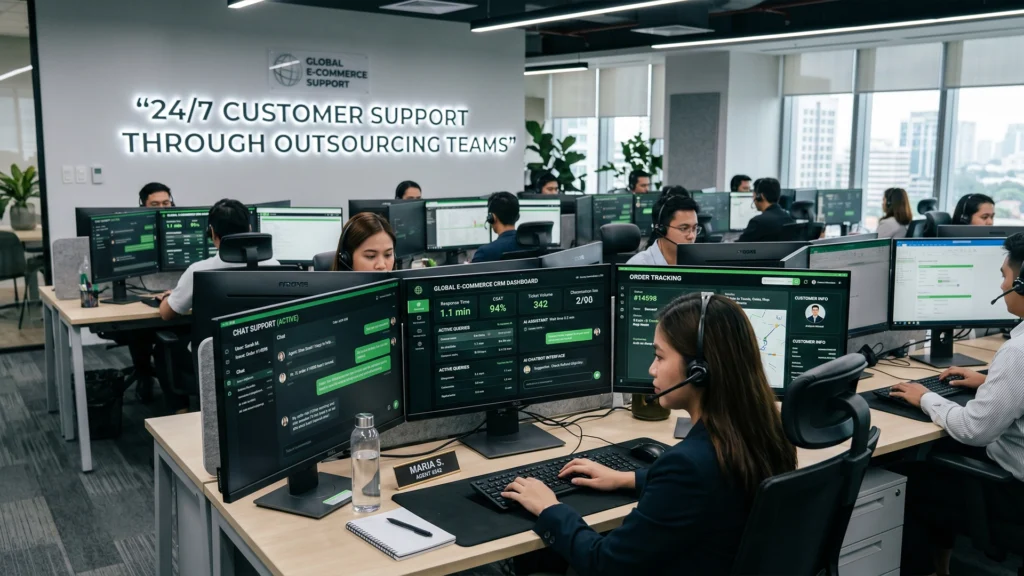
- AI-assisted customer support
- Dedicated remote teams
- Cloud-based operations management
- Predictive analytics
- Automation-driven workflows
- Omnichannel customer support
- Integrated ERP ecosystems
As e-commerce becomes increasingly competitive, outsourcing will continue to play a critical role in business scalability.
Why Outsourcing Has Become a Competitive Advantage for Modern E-commerce Brands
In today’s highly competitive digital marketplace, outsourcing is no longer viewed simply as a cost-saving strategy. Instead, it has become a powerful competitive advantage that enables businesses to remain agile, responsive, and scalable in rapidly changing market conditions.
Consumer expectations continue to rise. Customers expect fast response times, seamless shopping experiences, accurate order fulfillment, and reliable support across multiple channels. Meeting these expectations requires significant resources, specialized expertise, and operational flexibility.
This is why many successful e-commerce brands are shifting from traditional staffing models to outsourced support structures. By leveraging experienced external teams, businesses can quickly adapt to changing customer demands, manage seasonal sales spikes, and expand into new markets without the challenges associated with large-scale internal hiring.
Key advantages of outsourcing in today’s e-commerce environment include:
- Faster business scalability
- Reduced operational complexity
- Access to specialized expertise
- Improved customer satisfaction
- Enhanced business continuity
- Better resource allocation
- Greater operational flexibility
- Support for international growth
As e-commerce competition continues to intensify, businesses that build scalable operational frameworks are often better positioned to capture market opportunities and sustain long-term growth.
Why Choose Helionex as Your Outsourcing Partner?
Successfully scaling an e-commerce business requires more than additional manpower. It requires a strategic partner that understands operations, technology, growth, and digital transformation.
At Helionex, we help businesses build scalable operational ecosystems through dedicated teams, IT expertise, ERP support, and workforce scaling solutions.
Why businesses choose Helionex:
Businesses choose Helionex for its reliable IT services, scalable digital transformation solutions, and result-driven outsourcing support that helps streamline operations and improve efficiency. It empowers companies to reduce costs, enhance productivity, and stay competitive in a fast-changing digital landscape.
With a focus on innovation, business growth, and operational excellence, Helionex delivers tailored solutions that align with long-term scalability and performance goals.
- Dedicated workforce scaling solutions
- Experienced ERP support teams
- Reliable IT infrastructure management
- Network monitoring and security expertise
- Flexible engagement models
- Customized scaling strategies
- Transparent communication and reporting
- Focus on long-term business growth
What This Means for Your Business
It helps you identify opportunities, reduce risks, and improve decision-making for better long-term scalability.
By focusing on actionable insights and LSI-driven factors like business impact, growth strategy, and operational efficiency, you can align your goals with measurable success.
With Helionex, you gain:
- Faster operational scaling
- Reduced overhead costs
- Improved efficiency
- Better customer experiences
- Enhanced technology management
- Greater business agility
We help transform outsourcing from a cost-saving tactic into a competitive advantage.
Building a Sustainable Growth Strategy Through Outsourcing
Successful e-commerce growth is not solely about increasing sales; it is about creating operational systems capable of supporting growth over time. Businesses that scale too quickly without adequate infrastructure often face challenges related to customer service, inventory management, technology performance, and operational efficiency.
Outsourcing helps bridge these gaps by providing immediate access to skilled professionals, proven processes, and scalable resources. Rather than continuously reacting to growth challenges, businesses can proactively build a framework that supports expansion while maintaining service quality and operational stability.
A well-planned outsourcing strategy allows e-commerce brands to:
- Maintain consistent customer experiences
- Improve operational efficiency
- Reduce management burden
- Strengthen business resilience
- Support sustainable revenue growth
- Focus on innovation and market expansion
When combined with the right technology, processes, and strategic guidance, outsourcing becomes a critical component of a long-term e-commerce growth strategy rather than a short-term operational solution.
Conclusion
Understanding how e-commerce brands use outsourcing to scale is essential for businesses seeking sustainable growth in today’s competitive digital marketplace.
Outsourcing enables organizations to access specialized expertise, improve efficiency, reduce costs, and respond more effectively to changing market demands. Whether it’s customer support, IT management, ERP administration, digital marketing, or marketplace operations, outsourcing provides the flexibility businesses need to grow without the burden of expanding internal teams.
However, successful outsourcing requires careful planning, clear objectives, and the right strategic partner.
By partnering with Helionex, businesses can build scalable, technology-driven operations that support long-term growth, operational excellence, and exceptional customer experiences. As e-commerce continues to evolve, outsourcing remains one of the most effective tools for achieving sustainable and profitable expansion.
FAQ’s
How do e-commerce brands use outsourcing to scale their businesses?
E-commerce brands use outsourcing to scale by delegating non-core tasks such as customer support, IT management, ERP administration, digital marketing, and marketplace operations to specialized teams. This allows internal staff to focus on strategic growth while improving efficiency, reducing operational costs, and handling increased demand more effectively.
What e-commerce functions are commonly outsourced?
The most commonly outsourced e-commerce functions include:
- Customer support
- Technical support
- IT infrastructure management
- ERP management
- Product listing optimization
- Digital marketing
- Data entry and administration
- Inventory management
- Marketplace management
Outsourcing these tasks helps businesses improve productivity and scale operations without significantly increasing internal headcount.
Is outsourcing more cost-effective than hiring in-house employees?
In many cases, yes. Outsourcing often reduces costs associated with recruitment, employee benefits, office space, training, and technology infrastructure. Businesses also gain access to experienced professionals without the long-term financial commitment of expanding internal teams.
What are the biggest risks of e-commerce outsourcing?
Common outsourcing risks include communication challenges, data security concerns, inconsistent service quality, and selecting an inexperienced provider. These risks can be minimized by choosing a trusted outsourcing partner, establishing clear performance metrics, and maintaining regular communication and reporting processes.
How do I choose the right outsourcing partner for my e-commerce business?
When evaluating an outsourcing partner, consider their experience with e-commerce businesses, scalability capabilities, technology expertise, security standards, communication processes, and performance reporting. A reliable partner should be able to support your growth goals while integrating seamlessly with your existing operations and technology stack.