
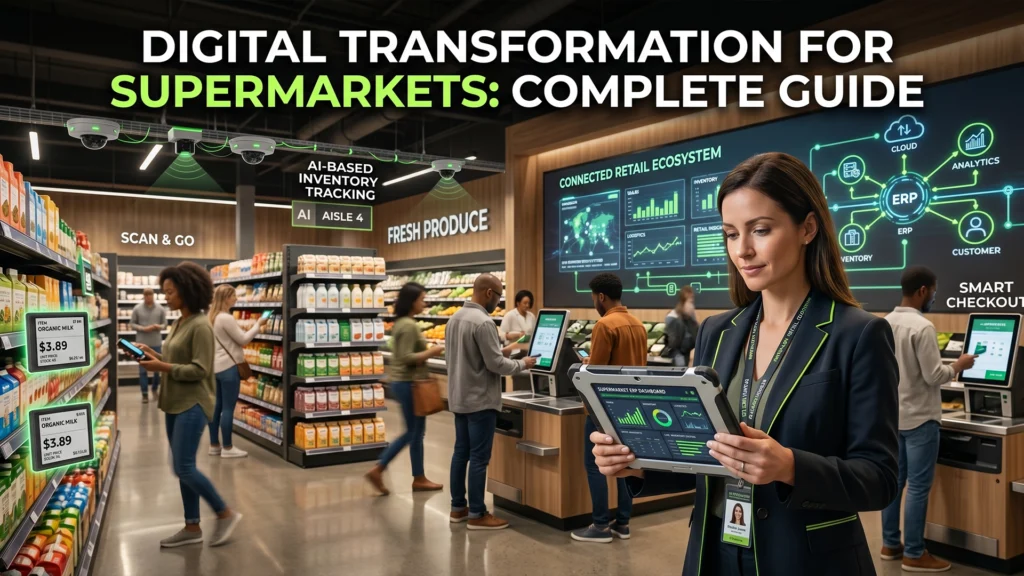
Digital Transformation for Supermarkets: Complete Guide to Modern Retail Success
The supermarket industry is undergoing a significant shift. Changing customer expectations, rising operational costs, supply chain disruptions, and increasing competition are pushing retailers to rethink how they operate. Traditional processes that once worked effectively are no longer enough to meet modern consumer demands. This is where Digital Transformation for Supermarkets becomes essential.
Digital transformation is not simply about adopting new technology. It involves reimagining supermarket operations, customer interactions, inventory management, workforce productivity, and business decision-making through technology-driven innovation.
From advanced ERP systems and AI-powered forecasting to omnichannel shopping experiences and automated inventory tracking, supermarkets are embracing digital tools to remain competitive and profitable.
Whether you operate a single grocery store or manage a large supermarket chain, understanding Digital Transformation for Supermarkets can help you improve efficiency, enhance customer satisfaction, and prepare your business for long-term growth.
What Is Digital Transformation for Supermarkets?
Digital Transformation for Supermarkets refers to the integration of digital technologies into every aspect of supermarket operations to improve efficiency, customer experiences, and business performance.
Instead of relying on disconnected systems and manual processes, digitally transformed supermarkets use integrated technologies that provide real-time insights and automate critical operations.
This transformation may include:
- Modern ERP systems
- Cloud-based infrastructure
- Smart inventory management
- AI-powered demand forecasting
- Omnichannel retail solutions
- Customer loyalty platforms
- Self-checkout technologies
- Advanced analytics and reporting
- Mobile shopping applications
- Automated replenishment systems
The goal is to create a connected ecosystem where every department works together seamlessly, enabling faster decisions and better customer experiences.
Why Digital Transformation for Supermarkets Is More Important Than Ever
Consumer behavior has changed dramatically over the past decade. Customers now expect convenience, personalization, and flexibility throughout their shopping journey.
Modern shoppers want:
- Accurate product availability
- Online ordering options
- Click-and-collect services
- Mobile payment methods
- Personalized promotions
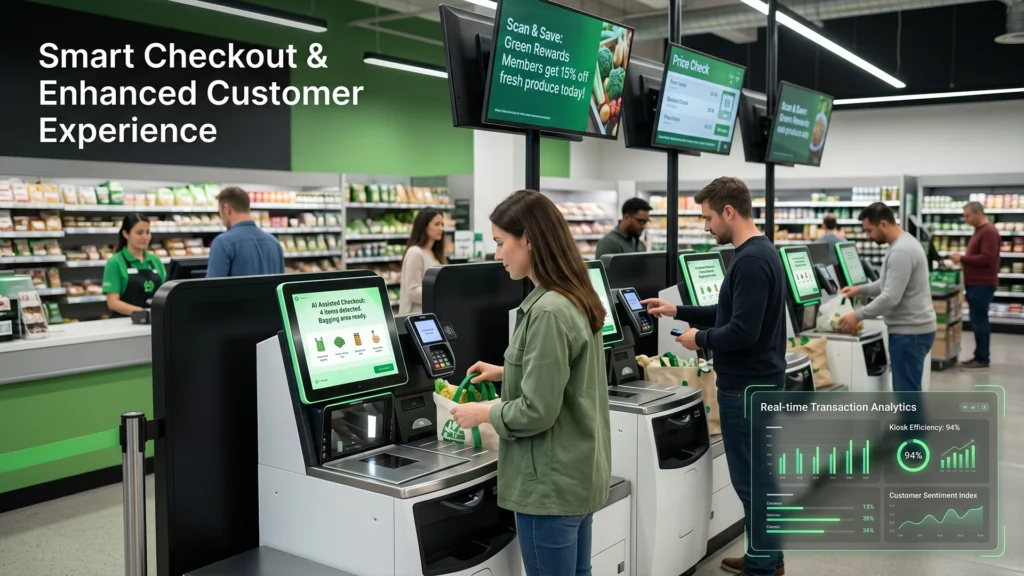
- Fast checkout experiences
- Consistent pricing across channels
At the same time, supermarket operators face challenges such as:
- Rising labor costs
- Inventory inaccuracies
- Food waste
- Supply chain disruptions
- Competitive pricing pressure
- Increasing operational complexity
Digital transformation helps supermarkets address these challenges while creating new growth opportunities.
Key Benefits of Digital Transformation for Supermarkets
Improved Inventory Management
Inventory is one of the most critical aspects of supermarket operations. Poor inventory visibility often leads to stockouts, overstocking, and unnecessary waste.
Digital inventory systems provide:
- Real-time stock visibility
- Automated replenishment
- Accurate demand forecasting
- Reduced inventory carrying costs
- Lower shrinkage rates
With better inventory control, supermarkets can improve product availability while reducing operational expenses.
Enhanced Customer Experience
Customer expectations continue to evolve, and supermarkets must adapt accordingly.
Digital transformation enables:
- Personalized shopping experiences
- Digital loyalty programs
- Mobile applications
- Self-service checkout options
- Customized promotions
- Faster customer support
These improvements increase customer satisfaction and encourage repeat purchases.
Better Decision-Making Through Data Analytics
Modern supermarkets generate large amounts of operational and customer data.
Advanced analytics tools help businesses:
- Understand customer behavior
- Identify sales trends
- Optimize pricing strategies
- Forecast future demand
- Measure store performance
Data-driven decisions often result in improved profitability and more effective business strategies.
Increased Operational Efficiency
Manual processes consume valuable time and increase the likelihood of errors.
Automation can streamline:
- Procurement
- Inventory management
- Financial reporting
- Workforce scheduling
- Supplier communication
This allows employees to focus on higher-value tasks that contribute directly to business growth.
We also support supermarkets through Business Process Outsourcing (BPO) services that help streamline routine operational tasks and improve overall efficiency. By outsourcing selected business functions to experienced professionals, supermarket operators can reduce administrative workloads, improve productivity, optimize costs, and allow internal teams to focus on strategic growth initiatives and customer experience improvements.
Essential Technologies Driving Digital Transformation for Supermarkets
Enterprise Resource Planning (ERP) Systems
ERP systems act as the foundation of modern supermarket operations.
A retail ERP integrates:
- Inventory management
- Procurement
- Finance
- Human resources
- Supply chain operations
- Reporting and analytics
With a centralized platform, supermarket managers gain complete visibility across the business.
Cloud Computing
Cloud technology enables supermarkets to access critical systems from anywhere while reducing infrastructure costs.
Benefits include:
- Enhanced scalability
- Improved security
- Lower maintenance costs
- Faster software updates
- Business continuity support
Cloud-based systems also facilitate easier integration with other digital solutions.
Artificial Intelligence and Machine Learning
AI is transforming how supermarkets forecast demand and optimize operations.
Common AI applications include:
- Demand forecasting
- Product recommendations
- Dynamic pricing
- Customer segmentation
- Fraud detection
AI-driven insights help supermarkets make smarter decisions while reducing waste and inefficiencies.
Internet of Things (IoT)
IoT devices provide real-time monitoring of critical assets and operations.
Examples include:
- Smart shelves
- Temperature sensors
- Refrigeration monitoring
- Asset tracking systems
These technologies help ensure compliance, reduce losses, and improve operational performance.
Customer Relationship Management (CRM)
CRM systems allow supermarkets to better understand and engage with customers.
Key benefits include:
- Personalized marketing
- Loyalty management
- Customer segmentation
- Retention strategies
Strong customer relationships often lead to higher customer lifetime value.
Omnichannel Retail: A Core Element of Digital Transformation
Today’s customers expect a seamless experience regardless of how they shop.
An omnichannel strategy integrates:
- Physical stores
- E-commerce platforms
- Mobile apps
- Social commerce
- Delivery services
Benefits include:
- Consistent customer experiences
- Increased customer loyalty
- Higher sales opportunities
- Better inventory utilization
Successful Digital Transformation for Supermarkets requires creating a unified shopping experience across all channels.
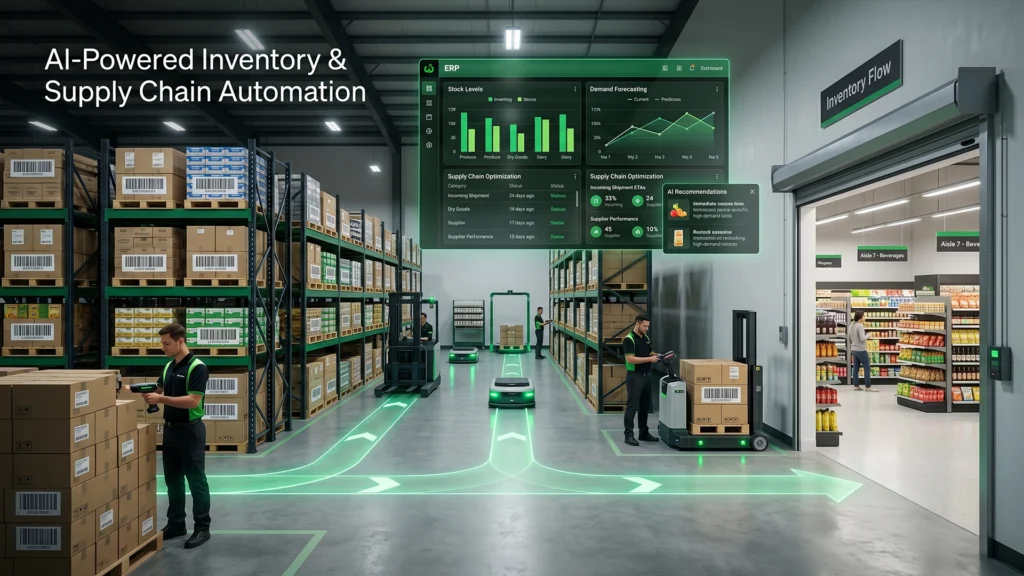
How ERP and POS Modernization Support Supermarket Growth
Many supermarkets continue to rely on outdated systems that limit visibility and scalability.
Modern ERP and POS solutions provide the following:
- Real-time inventory updates
- Faster checkout experiences
- Automated reporting
- Integrated customer data
- Improved pricing accuracy
By modernizing these systems, supermarkets can build a stronger foundation for future innovation.
As part of our digital transformation services, we help supermarkets modernize their retail operations through advanced POS and commerce solutions. Our Retail & Commerce POS Solutions are designed to improve checkout efficiency, integrate customer data, streamline inventory synchronization, and create seamless shopping experiences across both physical and digital channels. These capabilities help supermarkets increase operational visibility while enhancing customer satisfaction and loyalty.
Challenges of Digital Transformation for Supermarkets
While the benefits are significant, transformation projects can present challenges.
Common obstacles include:
- Legacy system limitations
- Data migration complexity
- Employee resistance
- Budget constraints
- Integration issues
- Staff training requirements
The key to overcoming these challenges is careful planning and selecting the right implementation partner.
Digital Transformation Roadmap for Supermarkets
Step 1: Assess Current Operations
Evaluate existing systems, processes, and pain points.
Focus on:
- Inventory management
- Customer experience
- Reporting capabilities
- Technology infrastructure
Step 2: Define Business Goals
Establish clear objectives such as:
- Reducing stockouts
- Improving customer retention
- Increasing operational efficiency
- Lowering costs
Step 3: Prioritize Technology Investments
Identify technologies that will deliver the greatest business impact.
Examples include:
- ERP implementation
- Inventory automation
- CRM deployment
- Cloud migration
Step 4: Develop an Implementation Plan
Create a structured roadmap with:
- Timelines
- Budgets
- Stakeholders
- Success metrics
Step 5: Train Employees
Successful transformation depends on employee adoption.
Training should focus on:
- New workflows
- System usage
- Process improvements
Step 6: Monitor and Optimize
Track key performance indicators and continuously improve processes.
Measure:
- Inventory accuracy
- Customer satisfaction
- Sales performance
- Operational efficiency
Cost Factors in Digital Transformation for Supermarkets
The cost of transformation varies based on:
- Number of store locations
- Existing infrastructure
- Technology requirements
- Integration complexity
- Customization needs
- Employee training requirements
While costs vary, many supermarkets achieve measurable returns through:
- Reduced waste
- Improved inventory turnover
- Increased customer retention
- Better operational efficiency
Signs Your Supermarket Is Ready for Digital Transformation
You may be ready to begin your transformation journey if you experience:
- Frequent stockouts
- Inventory inaccuracies
- Manual reporting processes
- Rising operational costs
- Poor customer insights
- Disconnected systems
- Slow decision-making
Addressing these issues through digital transformation can significantly improve business performance.
Why Choose Helionex as Your Digital Transformation Partner?
Implementing Digital Transformation for Supermarkets requires more than technology—it requires a strategic partner with the expertise to align technology with business goals.
Helionex helps supermarkets modernise operations through the following:
Industry-Focused Expertise
Our team understands the unique challenges faced by supermarkets, grocery chains, and retail businesses.
ERP and Technology Integration
We deliver integrated ERP solutions that connect inventory, finance, supply chain, and customer operations.
Scalable Solutions
Whether you operate a single location or multiple stores, our solutions are designed to grow with your business.
Dedicated Technical Teams
Our experienced professionals provide ongoing support throughout every stage of implementation.
Business-Centric Approach
We focus on measurable business outcomes, helping clients improve efficiency, customer satisfaction, and profitability.
Long-Term Partnership
From planning and implementation to optimization and support, Helionex remains committed to your success.
The Future of Digital Transformation for Supermarkets
The future of supermarket operations will be increasingly driven by:
- Artificial Intelligence
- Predictive analytics
- Autonomous inventory management
- Smart store technologies
- Advanced customer personalization
- Real-time supply chain visibility
Supermarkets that embrace digital transformation today will be better positioned to compete in tomorrow’s retail environment.
Conclusion
Digital Transformation for Supermarkets is no longer a future initiative—it is a business necessity. As customer expectations evolve and operational challenges become more complex, supermarkets must adopt modern technologies to remain competitive.
By investing in ERP systems, cloud solutions, AI-driven analytics, inventory automation, and omnichannel capabilities, supermarkets can improve efficiency, reduce costs, and create exceptional customer experiences.
The most successful transformation projects are those that combine the right technology, a clear implementation strategy, and an experienced partner. With the right approach, digital transformation can become a powerful driver of long-term growth, profitability, and operational excellence.
FAQ’s
What is digital transformation for supermarkets?
Digital transformation for supermarkets involves integrating digital technologies into retail operations to improve efficiency, customer experience, inventory management, and business performance.
How does digital transformation improve supermarket operations?
It automates manual processes, improves inventory accuracy, enhances customer experiences, and provides real-time business insights.
What technologies are commonly used in supermarket digital transformation?
Common technologies include ERP systems, POS modernization, cloud computing, AI, CRM platforms, IoT devices, and retail analytics solutions.
How long does digital transformation take?
Implementation timelines vary based on business size and complexity, but can range from several months to over a year for large supermarket chains.