Explore the main Types of SEO, including technical, onsite, offsite, local, and international strategies to boost visibility and rankings.
Introduction to Types of SEO
Understanding the Types of SEO is crucial for any business that wants to increase its online visibility, attract targeted users, and build long-term authority in search results. SEO (Search Engine Optimization) is the strategic process of enhancing a website’s technical setup, content quality, and overall digital presence to improve rankings on search engine results pages and drive organic traffic.
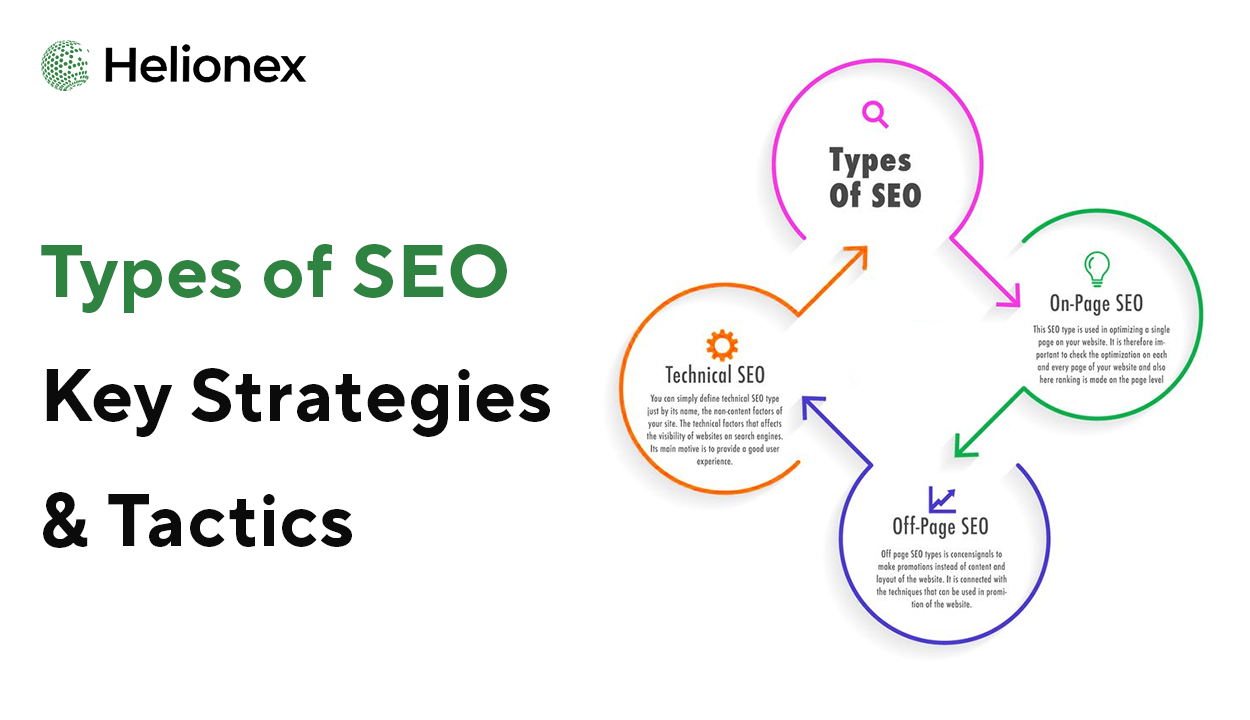
Each category of SEO contributes uniquely to this overall goal. Technical SEO focuses on optimizing website speed, mobile responsiveness, crawlability, indexing, and site architecture to ensure search engines can easily access and understand your website.
Onsite SEO (or on-page SEO) involves refining elements like keywords, meta tags, internal linking, headings, and content relevance to improve user experience and search visibility. In contrast, Offsite SEO strengthens your website’s credibility and authority through backlinks, brand mentions, and external signals across the web.
Meanwhile, Local SEO helps businesses rank in location-specific searches, map packs, and “near me” queries making it essential for companies with physical locations. For brands targeting audiences across multiple regions or languages, International SEO ensures the right content reaches the right users through strategies like hreflang tags and country-specific optimization.
Together, these different Types of SEO form a complete framework that supports sustainable growth, stronger visibility, and long-term success in the digital landscape.
In the sections ahead, we will explore each of these Types of SEO in depth explaining how they work, why they matter, and the specific strategies involved so you can better understand how to build a complete and effective SEO foundation for your website.
Technical SEO
Technical SEO is the foundation of any successful search engine optimization strategy. It focuses on optimizing the backend elements of your website so that search engines can efficiently crawl, interpret, and index your content. Without strong technical optimization, even high-quality content and powerful backlinks may fail to reach their full ranking potential. Technical SEO ensures that your website is fast, secure, well-structured, and aligned with search engine requirements ultimately improving both visibility and user experience.
Technical SEO covers a wide range of essential elements, each contributing to how search engines and users interact with your website:
1. Website Speed Optimization
A fast website is crucial for both SEO and conversions. Slow pages lead to higher bounce rates and poor user engagement. Technical SEO ensures:
- Images are compressed and properly formatted (WebP, AVIF).
- CSS and JavaScript files are minified.
- Lazy loading is applied to media files.
- Server response time is minimized with high-quality hosting or CDN integration.
A faster site not only ranks better but also boosts user satisfaction and trust.
2. Mobile-Friendly Design
With Google’s mobile-first indexing, your site’s mobile version is the primary basis for rankings. Technical SEO ensures:
- Responsive design across all screen sizes.
- Mobile-friendly navigation and layouts.
- Properly sized fonts, buttons, and spacing.
A seamless mobile experience helps increase session duration and reduces friction for users.
3. Crawlability and Indexing Control
Search engines need clear pathways to access and index your content. Technical SEO includes:
- Submitting and maintaining an accurate XML sitemap.
- Configuring a clean, error-free robots.txt file.
- Resolving crawl errors such as blocked resources or inaccessible pages.
- Ensuring important pages are not accidentally noindexed.
This ensures search engines fully understand your website and index the pages that matter most.
4. Site Architecture and Navigation
A logical and consistent site structure improves search engine understanding and user navigation. This includes:
- Creating a well-organized hierarchy of pages.
- Implementing clean, keyword-friendly URLs.
- Using breadcrumb navigation to show content relationships.
- Building a strong internal linking system to distribute authority.
Good architecture supports both ranking and user behavior metrics.
5. Core Web Vitals Optimization
Core Web Vitals are crucial performance metrics that reflect real user experience:
- LCP (Largest Contentful Paint): Measures loading speed.
- FID/INP (First Input Delay/Interaction to Next Paint): Measures how responsive the page feels.
- CLS (Cumulative Layout Shift): Measures visual stability.
Optimizing these helps improve rankings and ensures your site feels smooth and reliable across devices.
6. Website Security (HTTPS)
Security is now a ranking factor, and users prefer safe browsing. Technical SEO ensures:
- An SSL certificate is installed (HTTPS).
- Proper redirect from HTTP to HTTPS.
- No mixed content issues.
A secure site builds trust and prevents warnings that push users away.
7. Duplicate Content and Canonicalization
Duplicate content can mislead search engines and weaken your website’s ranking potential. Technical SEO helps:
- Identify and remove duplicate pages.
- Use canonical tags to specify the preferred version of content.
- Avoid unnecessary parameters or session IDs in URLs.
This keeps your indexing clean and focused.
8. Structured Data (Schema Markup)
Schema markup provides additional context to search engines about your content. Examples include:
- Product details
- FAQ sections
- Reviews and ratings
- Events
- Recipes
Using structured data can earn rich results (stars, FAQs, enhanced snippets), improving visibility and click-through rates.
9. Fixing Technical Errors
Technical SEO also involves constant monitoring and fixing of issues that affect performance, such as:
- Broken links (404 errors)
- Redirection loops or chains
- Server errors (5xx)
- Orphaned pages with no internal links
Regular audits ensure your site stays healthy and search-engine-friendly.
In summary, Technical SEO is the behind-the-scenes work that ensures your website functions smoothly, loads quickly, and communicates clearly with search engines. By strengthening the technical foundation, you allow your content and off-page efforts to perform at their best, resulting in higher rankings, improved user experience, and long-term organic growth.
Onsite SEO (On-Page SEO)
Onsite SEO, also known as On-Page SEO, focuses on optimizing the content and visual elements within your website to make it more relevant, user-friendly, and search-engine-ready. While Technical SEO ensures that search engines can access and understand your website, Onsite SEO ensures that each individual page is structured and written in a way that maximizes visibility and delivers value to users. Effective Onsite SEO improves rankings, increases engagement, and strengthens the overall credibility of your content.
Onsite SEO involves optimizing the elements that users see and interact with, as well as the hidden HTML elements that help search engines interpret page content.
1. High-Quality, Relevant Content
Content is at the core of Onsite SEO. Search engines reward pages that provide:
- Helpful, accurate, and in-depth information on the topic.
- Content that aligns with user search intent (informational, transactional, navigational).
- Clear formatting, headings, bullet points, and readability.
- Regular updates to keep content fresh and relevant.
Content should solve user problems, answer questions, and provide real value.
2. Keyword Research & Optimization
Keyword integration helps search engines understand what your content is about. Onsite SEO focuses on:
- Selecting primary and secondary keywords that match user intent.
- Using keywords naturally in headings (H1, H2, H3), meta tags, and throughout the content.
- Avoiding keyword stuffing and ensuring relevance.
- Including related topics and semantic keywords to improve context.
This ensures your page appears for the right search queries.
3. Meta Tags Optimization
Meta tags determine how your webpage is displayed in search engine results. Onsite SEO includes:
- Writing a compelling title tag with the primary keyword.
- Creating an engaging, accurate meta description that encourages clicks.
- Ensuring meta tags follow best practices for length and clarity.
These elements help improve CTR and communicate page intent to search engines.
4. Header Tags & Content Structure
Proper use of headings makes content easier for both users and search engines to understand. Onsite SEO ensures:
- A clear and descriptive H1 that reflects the page’s main topic.
- Logical use of H2, H3, and subheadings to organize information.
- Consistent formatting to improve readability and scanning.
A well-structured page helps search engines identify key sections and understand topic hierarchy.
5. Internal Linking
Internal links help distribute authority and guide users through your website. Onsite SEO includes:
- Linking to relevant pages to support navigation.
- Using descriptive anchor text.
- Ensuring important pages receive sufficient internal link support.
This strengthens topical authority and keeps users on your site longer.
6. Image Optimization
Images enhance user experience but must be optimized properly. Onsite SEO involves:
- Adding descriptive alt text to help search engines interpret images.
- Compressing images to maintain speed.
- Using proper file names and image formats.
Optimized images improve rankings and accessibility.
7. URL Structure
Clean and descriptive URLs improve user trust and search engine clarity. Onsite SEO ensures:
- Short, readable URLs with relevant keywords.
- Avoiding unnecessary parameters or numbers.
- Following a consistent and logical URL format.
A well-optimized URL enhances both usability and ranking potential.
8. User Experience (UX) Optimization
Search engines measure how users interact with your page. Onsite SEO focuses on:
- Clear page layout and easy navigation.
- Readable fonts and proper spacing.
- Engaging multimedia (images, videos, charts) to keep users interested.
- Reducing bounce rate by providing value quickly.
Good UX helps search engines trust your content as helpful and user-focused.
9. Content Freshness & Updates
Updating content signals relevancy. Onsite SEO includes:
- Adding new information and examples.
- Revising outdated facts or links.
- Keeping product pages, guides, or blogs current.
Fresh content often earns higher rankings and increased organic traffic.
In summary, Onsite SEO is all about optimizing the content, structure, and elements within your web pages to improve relevance, engagement, and visibility. When done well, it enhances user experience, boosts search rankings, and ensures your site delivers meaningful value to visitors while clearly communicating its topic to search engines.
Offsite SEO (Off-Page SEO)
Offsite SEO, also known as Off-Page SEO, refers to all the actions and strategies performed outside your website to improve its authority, credibility, and overall search engine rankings. While Onsite SEO focuses on optimizing the content within your site, Offsite SEO builds your website’s reputation across the internet. Search engines use external signals especially backlinks to determine whether your site is trustworthy, relevant, and valuable compared to competitors. The stronger your offsite signals, the more likely your pages are to rank higher.
Offsite SEO is fundamentally about establishing your brand’s authority through quality endorsements, social presence, and strong relationships across the digital ecosystem.
1. High-Quality Backlinks (Link Building)
Backlinks remain the strongest offsite ranking factor. They serve as endorsements from other websites, signaling trust and credibility. Effective link building focuses on:
- Earning links from authoritative, niche-relevant sites.
- Creating valuable content that naturally attracts links (guides, tools, research).
- Guest posting on established industry blogs.
- Avoiding spammy or low-quality links that harm rankings.
Quality is more important than quantity one strong backlink can outweigh dozens of weak ones.
2. Brand Mentions & Authority Signals
Even without a clickable link, online brand mentions help build trust. Search engines detect:
- Branded citations across blogs, forums, and publications.
- Discussions about your business on third-party platforms.
- News mentions or PR coverage.
These signals show that people recognize and discuss your brand, increasing perceived authority.
3. Social Signals & Engagement
While social media signals are not direct ranking factors, they strongly influence visibility and brand reach. Offsite SEO involves:
- Sharing content across major platforms (Facebook, LinkedIn, Instagram, X).
- Creating engagement through comments, shares, and interactions.
- Building a loyal audience that amplifies your content.
High social activity often leads to more backlinks and traffic, indirectly boosting SEO performance.
4. Local Citations & Business Listings
For location-based businesses, consistent citations strengthen credibility. Offsite SEO ensures:
- Accurate NAP (Name, Address, Phone) citations across directories.
- Listings on platforms like Google Business Profile, Yelp, and industry directories.
- Removal of duplicate or inconsistent citations.
These signals help search engines validate your business’s legitimacy and improve local rankings.
5. Online Reviews & Reputation Management
Customer reviews play a crucial role in offsite authority and trust. Strong Offsite SEO practices include:
- Encouraging customers to leave positive reviews on Google, Facebook, TripAdvisor, and niche platforms.
- Responding to reviews to show engagement and reliability.
- Managing negative reviews professionally to protect brand reputation.
Positive reviews also influence click-through rates and local SEO performance.
6. Influencer & Partnership Outreach
Building relationships with online influencers and industry experts can amplify your reach. This includes:
- Collaborations or interviews with influencers.
- Getting featured in podcasts, webinars, or expert roundups.
- Partnering with complementary brands for co-created content.
Such partnerships often result in high-authority backlinks and increased visibility.
7. Content Distribution & Promotion
Creating great content is not enough you must promote it. Offsite SEO focuses on:
- Sharing content through communities like Quora, Reddit, Medium.
- Distributing press releases or success stories.
- Submitting content to industry aggregators or newsletters.
Effective promotion increases reach, traffic, and link-building opportunities.
8. Forums, Q&A Platforms & Community Activity
Engaging in niche communities builds your expertise and visibility. Offsite SEO involves:
- Answering relevant questions on Quora or StackExchange.
- Participating in industry-specific forums or groups.
- Offering expert insights that build trust and awareness.
Genuine participation builds long-term authority and can lead to natural backlinks.
9. Digital PR & Media Outreach
Digital PR enhances brand presence across major publications. This includes:
- Reaching out to journalists and editors for features.
- Publishing data-driven content that media outlets love to reference.
- Running PR campaigns for events, launches, or studies.
Digital PR often produces the most powerful backlinks from news sites and high-authority domains.
In summary, Offsite SEO strengthens your website’s reputation, authority, and trust across the internet through backlinks, brand mentions, social engagement, citations, and strategic partnerships. By building a strong presence beyond your website, you signal to search engines that your brand is credible and valuable leading to higher rankings, increased organic traffic, and a stronger digital footprint.
Local SEO
Local SEO focuses on optimizing your online presence to attract customers from specific geographic areas, especially those searching for products or services “near me.” It is essential for businesses with physical locations or those serving customers within a defined region. Unlike general SEO, which targets a broad online audience, Local SEO helps your business appear in local search results, Google Maps, and the Local Pack making it easier for nearby customers to find and contact you. Effective Local SEO builds trust, increases foot traffic, and drives high-intent local leads.
Local SEO is all about relevance, accuracy, and visibility within the local digital ecosystem. It ensures that search engines confidently match your business with local search queries.
1. Google Business Profile Optimization
Your Google Business Profile (GBP) is the core of Local SEO. Optimizing it includes:
- Completing all business information (name, category, phone, address, hours, website).
- Uploading high-quality photos of your business, team, services, or location.
- Adding services, products, and a detailed business description.
- Posting regular updates, offers, or announcements.
A well-optimized GBP significantly increases your chances of appearing in Google Maps and the Local Pack.
2. Consistent NAP Information
NAP Name, Address, Phone Number must be accurate and consistent everywhere your business is listed. Local SEO ensures:
- Uniform NAP details across all directories, websites, and social platforms.
- Correction of outdated or conflicting information.
- Removal of duplicate listings that confuse search engines.
Consistency helps Google verify that your business is legitimate and trustworthy.
3. Local Citations & Directory Listings
Local citations strengthen your online footprint. This involves:
- Listing your business on authoritative directories like Yelp, Bing Places, Yellow Pages, and industry-specific directories.
- Including accurate NAP, business categories, and descriptions.
- Monitoring and updating listings regularly.
High-quality citations improve your credibility and visibility in local search results.
4. Location-Based Keywords
Local SEO targets keywords that include geographic terms. Strategies include:
- Using keywords like “near me,” city names, neighborhoods, or regions.
- Optimizing titles, meta tags, headings, and content with local intent.
- Creating location-specific landing pages for multi-location businesses.
Location-based keywords help your website appear for local customers searching nearby.
5. Online Reviews & Reputation Building
Customer reviews are among the most influential factors for local search rankings. Local SEO strategies include:
- Encouraging customers to leave reviews on Google, Facebook, Yelp, and niche platforms.
- Responding to reviews professionally and promptly.
- Managing negative feedback to maintain a positive reputation.
A business with strong, recent, and positive reviews stands out in the Local Pack and influences customer decisions.
6. Local Content Creation
Creating location-focused content boosts relevance. This includes:
- Writing blog posts about local topics, events, or community involvement.
- Publishing guides or resources relevant to your city or region.
- Highlighting local partnerships, projects, or case studies.
Local content signals that your business is active in and relevant to the community.
7. Local Link Building
Backlinks from local sources reinforce your presence. Effective strategies include:
- Partnering with local organizations, schools, charities, or events.
- Getting featured in local news websites or blogs.
- Working with community influencers.
Local backlinks validate your authority and strengthen rankings in geographic search results.
8. Schema Markup for Local Businesses
Adding local business schema helps search engines better understand your business details. This includes:
- Business name, logo, address, hours, services, phone number.
- Geo-coordinates for your location.
- Review and rating markup.
Structured data increases search engine confidence and visibility in rich results.
9. Google Maps & Local Pack Ranking Optimization
Local SEO ensures your business performs well on Google Maps by:
- Maintaining an optimized Google Business Profile.
- Gathering consistent and high-quality reviews.
- Updating business hours, holiday hours, and location info.
- Encouraging user interactions like photo uploads and Q&A participation.
Higher Map rankings drive more calls, visits, and direction requests.
In summary, Local SEO focuses on making your business more discoverable to customers in your geographic area by enhancing your Google Business Profile, maintaining accurate citations, earning positive reviews, building local authority, and targeting location-specific keywords. For businesses that rely on local foot traffic or community-based clientele, Local SEO is essential for increasing visibility, building trust, and converting nearby searchers into loyal customers.
International SEO
International SEO focuses on optimizing your website so it can effectively reach and rank for audiences in multiple countries, regions, or languages. While traditional SEO targets a single market, International SEO ensures that your content is correctly presented to global users based on their language preferences, search behavior, and geographic location. It helps search engines understand which version of your content should appear for users in different regions, ensuring a seamless and relevant experience for international audiences. Proper International SEO improves accessibility, trust, and visibility across global markets.
International SEO goes beyond simple translation it requires careful planning of technical elements, cultural nuances, language targeting, and geo-specific optimization.
1. Hreflang Tags Implementation
Hreflang tags are the backbone of International SEO. They help Google understand:
- Which language version of a page to show to users.
- Which country-specific version is most relevant.
- How duplicate or similar content across regions should be treated.
Correct implementation ensures the right content reaches the right audience and prevents indexing issues across multilingual sites.
2. Country-Specific Domains & URL Structure
Choosing the correct domain structure is crucial for international targeting. Options include:
- ccTLDs (e.g., .uk, .ca, .de) for country-specific targeting.
- Subdirectories (e.g., website.com/uk/, website.com/fr/).
- Subdomains (e.g., uk.website.com).
Each option has SEO implications. International SEO ensures you choose the most effective setup for authority, management, and long-term scalability.
3. Language Optimization & Accurate Translation
International SEO requires more than direct translation it demands localization. This includes:
- Adapting content for cultural relevance.
- Using the correct terminology and tone for each region.
- Avoiding machine translation without human review.
Localized content improves user trust, conversions, and engagement in global markets.
4. Geo-Targeting & Search Console Configuration
Google Search Console allows targeting specific countries for certain site sections. International SEO ensures:
- The correct geo-targeting settings are applied.
- Search engines understand which audience each regional version is intended for.
- Overlaps or misconfigurations are avoided.
Proper geo-targeting increases visibility in the chosen country’s search results.
5. Local Keyword Research
Search behavior varies greatly across countries even for the same language. International SEO includes:
- Conducting keyword research separately for each country.
- Understanding regional search volumes, slang, and user intent.
- Identifying differences between U.S., U.K., Australian, or Canadian English.
Localized keyword strategies make content more relevant and competitive globally.
6. Cultural Adaptation & User Experience
An effective international strategy considers cultural expectations. This involves:
- Using region-specific dates, currency, and measurements.
- Adapting design elements or imagery to fit cultural norms.
- Offering localized customer support or FAQs.
A culturally aligned user experience strengthens trust and satisfaction.
7. International Link Building
Backlinks from global authoritative sources strengthen your presence in each region. International SEO includes:
- Building links from country-specific websites.
- Collaborating with international partners, media outlets, and influencers.
- Earning citations and mentions in regional directories.
Localized backlinks help search engines recognize your authority in multiple markets.
8. Technical Performance for Global Users
Different countries may experience different load times. International SEO ensures:
- CDN usage for faster global delivery.
- Optimized images and media for different internet speeds.
- Server locations that support target regions.
Consistent performance improves rankings and user experience worldwide.
9. Compliance With Local Regulations
Global websites must follow region-specific laws, such as:
- GDPR in Europe
- Cookie consent requirements
- Local data privacy and security standards
Meeting compliance standards protects your brand and avoids penalties.
In summary, International SEO ensures your website delivers the correct language, experience, and content to users across different regions of the world. It combines technical optimization, localization, geo-targeting, and global authority-building to help your brand expand internationally and compete effectively in diverse markets. By tailoring your website to each audience’s cultural and linguistic needs, International SEO drives global visibility, trust, and sustained international growth.
Conclusion
Understanding the different Types of SEO is essential for building a strong, long-term digital presence. Each type Technical, On-Page, Off-Page, Local, and International SEO plays a unique role in helping a website perform better, reach the right audience, and compete effectively in search results. When these components work together, they create a complete SEO ecosystem that improves visibility, increases organic traffic, and strengthens brand authority.
Businesses that invest in all aspects of SEO build a foundation that is both scalable and future-proof. Technical SEO ensures the website is fast, crawlable, and secure. On-page SEO delivers high-quality, relevant content supported by optimized keywords and a strong user experience. Off-page SEO builds credibility and trust through strategic link-building and brand mentions. Local SEO helps businesses capture nearby customers and dominate regional searches, while International SEO allows brands to expand reach across languages, cultures, and global markets.
By combining these strategies into a unified approach, organizations can achieve sustainable rankings, higher engagement, and long-term growth. Ultimately, mastering the Types of SEO empowers brands to stay ahead of competitors, adapt to evolving algorithms, and continue delivering value to users in an ever-changing digital landscape.