
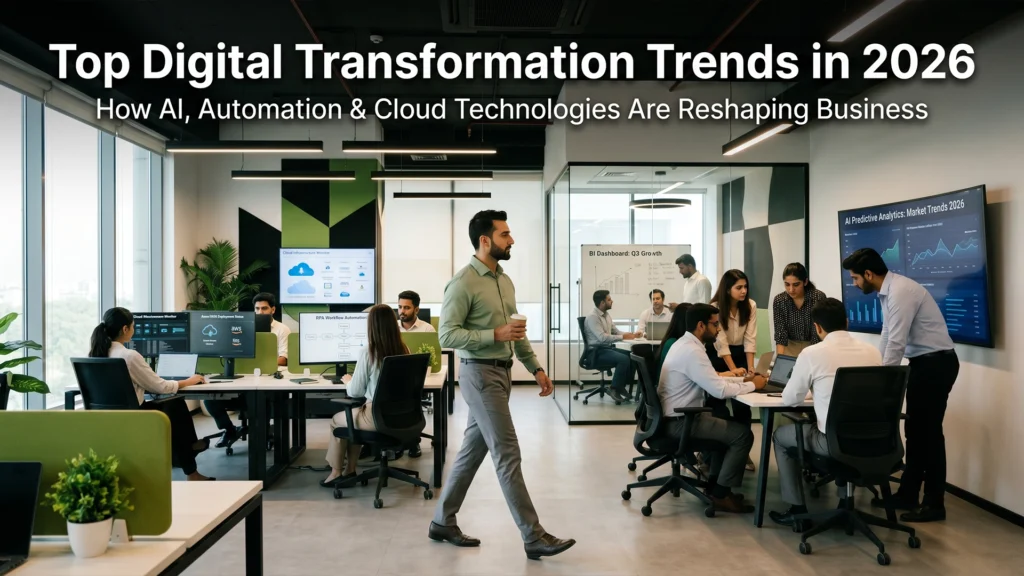
Digital transformation is no longer just about replacing manual work with digital tools. In 2026, it is about building smarter, faster, more secure, and more adaptable businesses that can respond to change with confidence. Companies are now using artificial intelligence, automation, cloud platforms, data analytics, cyber security, and modern digital workflows to improve performance across every department.
The Top Digital Transformation Trends in 2026 show that businesses are moving beyond basic technology adoption. The focus is now on intelligent operations, connected systems, better customer experiences, and stronger digital resilience. Whether a company is a startup, a growing mid-sized business, or an established enterprise, digital transformation has become a key part of long-term growth.
Organizations that invest in the right digital transformation strategy can reduce operational delays, improve team productivity, lower costs, and make better decisions using real-time data. However, success depends on more than technology. It requires the right planning, the right implementation partner, and a clear understanding of how each digital solution supports business goals.
What Are the Top Digital Transformation Trends in 2026?
The top digital transformation trends in 2026 include AI-led transformation, agentic AI, cloud modernization, cyber security, automation, data-driven decision-making, personalized customer experiences, low-code development, digital trust, and human-centered transformation. These trends are shaping how businesses operate, compete, and serve customers in a fast-changing digital economy.
In 2026, companies are not just asking which tools they should use. They are asking how technology can improve the entire business model. This includes how teams collaborate, how customers interact with the brand, how data is used for planning, and how secure the organization is against digital threats.
The most successful businesses will be those that connect these trends into one clear strategy. Instead of using disconnected tools, they will build integrated digital ecosystems that support efficiency, innovation, and long-term scalability.
How Is AI Changing Digital Transformation in 2026?
Artificial intelligence is one of the most important forces behind digital transformation in 2026. Businesses are using AI to automate routine work, analyze large amounts of data, improve customer service, support decision-making, and make operations more efficient.
AI is no longer limited to simple Chabot’s or content tools. It is now being used in sales, marketing, finance, HR, supply chain management, software development, and customer support. For example, AI can help sales teams identify high-quality leads, help marketing teams personalize campaigns, and help operations teams detect delays before they become serious problems.
The real value of AI comes when it is connected to business goals. Companies should not adopt AI just because it is popular. They should use AI where it can solve real problems, save time, improve accuracy, or create a better customer experience.
In 2026, businesses that use AI responsibly will gain a major advantage. However, they must also focus on data quality, employee training, security, and clear governance to make sure AI is used safely and effectively.
Why Is Agentic AI Becoming Important for Businesses?
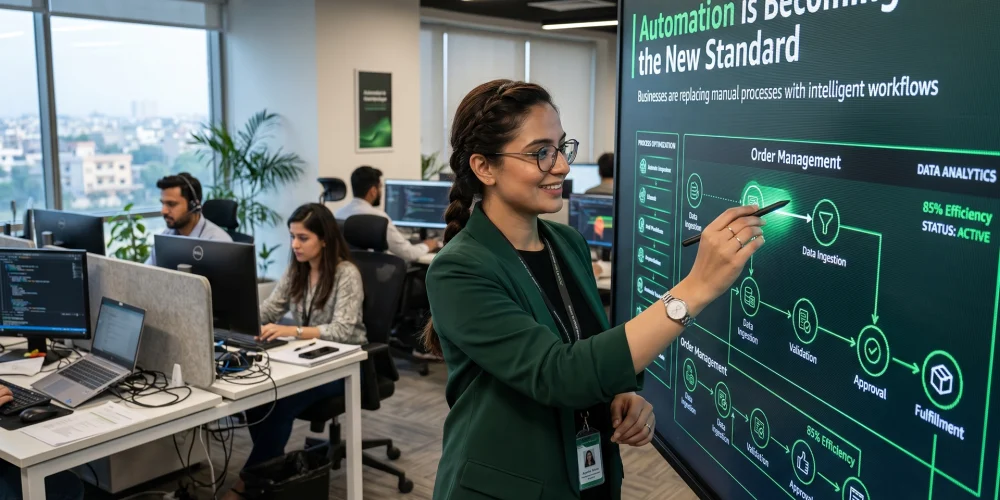
Agentic AI is becoming one of the biggest digital transformation trends in 2026 because it allows businesses to move from simple automation to intelligent task execution. Unlike traditional automation, which follows fixed rules, agentic AI can complete multi-step tasks, work across different systems, and support more complex workflows.
For example, an AI agent can help manage customer inquiries, update CRM records, schedule follow-ups, generate reports, and notify team members when action is needed. This makes business processes faster and more connected.
Agentic AI is especially useful for companies that deal with repetitive workflows, high customer volumes, or large amounts of operational data. It can reduce manual effort and allow employees to focus on higher-value tasks such as strategy, relationship building, and problem-solving.
However, businesses should implement agentic AI carefully. Human oversight, access control, performance monitoring, and clear approval processes are essential. The goal is not to replace people but to help teams work smarter and faster.
Why Does Cloud Modernization Matter in 2026?
Cloud modernization remains a major part of the Top Digital Transformation Trends in 2026 because modern businesses need flexible, scalable, and secure digital infrastructure. Many companies have already moved some systems to the cloud, but in 2026, the focus is shifting from simple cloud adoption to cloud optimization.
Cloud modernization means improving outdated systems, connecting applications, increasing performance, and making cloud environments more secure and cost-effective. It allows businesses to support remote teams, scale services faster, and access data from anywhere.
A modern cloud environment also supports AI, automation, analytics, and digital product development. Without strong cloud infrastructure, businesses may struggle to adopt advanced technologies effectively.
For growing companies, cloud modernization can reduce system downtime, improve collaboration, and make operations more agile. It also helps businesses avoid the limitations of outdated software and expensive on-premise infrastructure.
How Is Cyber security Evolving in Digital Transformation?
Cyber security is becoming more important as businesses become more digital. In 2026, companies are managing more data, more applications, more cloud systems, and more digital customer interactions than ever before. This creates new risks that must be addressed with stronger security strategies.
Cyber security is no longer only an IT responsibility. It is now a business priority. A single data breach can damage customer trust, disrupt operations, and create serious financial and legal consequences.
Modern cyber security includes identity protection, cloud security, AI security, endpoint protection, employee awareness, data encryption, and continuous threat monitoring. Businesses must also prepare for AI-powered cyber threats, which can make attacks faster and more sophisticated.
In 2026, companies need a proactive approach to cyber security. Instead of waiting for problems to happen, they should detect risks early, protect sensitive data, and build security into every digital system from the beginning.
How Can Automation Improve Business Operations?
Automation helps businesses reduce repetitive work, improve accuracy, and complete tasks faster. In 2026, automation is becoming more advanced because it is being combined with AI, cloud platforms, and business intelligence tools.
Companies can use automation in many areas, including customer onboarding, invoice processing, email follow-ups, reporting, employee task management, marketing campaigns, inventory tracking, and sales operations. When these processes are automated, teams can spend less time on manual work and more time on strategic activities.
Automation also improves consistency. Manual processes often lead to errors, delays, and missed steps. Automated workflows help ensure that tasks are completed on time and according to defined standards.
The best automation strategy starts with identifying bottlenecks. Businesses should look at where time is being wasted, where errors often happen, and where employees are handling tasks that software could manage more efficiently.
Why Is Data-Driven Decision-Making Essential in 2026?
Data-driven decision-making is essential because businesses can no longer rely only on assumptions or outdated reports. In 2026, companies need real-time insights to understand customers, track performance, forecast demand, and respond quickly to market changes.
Data helps businesses answer important questions. Which products are performing best? Which marketing channels are generating results? Where are customers dropping off? Which departments are facing delays? Which services are most profitable?
With the right dashboards and analytics tools, business leaders can make faster and more informed decisions. Instead of waiting weeks for reports, they can monitor performance continuously and adjust strategies when needed.
However, data is only valuable when it is accurate, organized, and easy to understand. Businesses need proper data management, clean reporting systems, and clear KPIs to turn information into action.
How are customer experiences becoming more personalised?
Customer expectations are rising in every industry. People now expect fast responses, smooth digital journeys, personalized recommendations, and consistent service across websites, apps, email, social media, and support channels.
In 2026, personalization is becoming a major part of digital transformation. Businesses are using AI, CRM systems, automation, and customer data to create more relevant experiences. This can include personalized emails, product recommendations, targeted offers, faster support, and better follow-up communication.
Personalization helps customers feel understood. It also improves conversion rates, customer loyalty, and long-term retention. When businesses provide the right message at the right time, customers are more likely to engage.
However, personalization must be handled responsibly. Companies should respect privacy, protect customer data, and be transparent about how information is used.
Why Are Low-Code and AI-Native Development Platforms Growing?
Low-code and AI-native development platforms are growing because businesses need faster ways to build applications, automate workflows, and launch digital solutions. Traditional software development can be time-consuming and expensive, especially for companies that need quick improvements.
Low-code platforms allow teams to create internal tools, dashboards, forms, and workflow systems with less manual coding. AI-native development platforms go further by helping developers generate, test, and improve software more efficiently.
This trend is important because speed matters. Businesses that can launch digital solutions faster can respond to customer needs, improve operations, and test new ideas before competitors.
These platforms do not remove the need for skilled developers. Instead, they help technical and non-technical teams work together more effectively. Developers can focus on complex architecture and security, while business teams can support faster innovation.
What Is Digital Trust and Why Does It Matter?
Digital trust is becoming more important as businesses rely more on online platforms, AI-generated content, digital payments, customer data, and automated systems. Customers want to know that the companies they work with are secure, transparent, and responsible.
In 2026, digital trust includes data protection, secure transactions, verified content, ethical AI use, compliance, and transparency. Businesses must prove that their digital systems are reliable and that customer information is handled carefully.
Digital trust also affects brand reputation. A company that protects data, communicates clearly, and uses technology responsibly can build stronger customer relationships.
As misinformation, fraud, and cyber risks increase, businesses that invest in digital trust will stand out. Trust will become a competitive advantage, not just a compliance requirement.
Why Is Human-Centered Digital Transformation Important?
Human-centered digital transformation focuses on people, not just technology. Many digital transformation projects fail because companies introduce new tools without preparing employees, improving processes, or explaining the purpose behind the change.
In 2026, businesses need to involve employees in digital transformation from the beginning. Teams should understand how new systems work, why they matter, and how they make daily work easier.
A human-centered approach includes training, communication, leadership support, change management, and continuous feedback. When employees feel supported, they are more likely to adopt new tools successfully.
Technology should make work better, not more complicated. The best digital transformation strategies improve both business performance and employee experience.
How Can Businesses Prepare for Digital Transformation in 2026?
Businesses can prepare for digital transformation in 2026 by starting with a clear strategy. Before investing in new tools, leaders should identify business goals, current challenges, customer needs, and operational gaps.
A strong digital transformation plan should include:
- A clear assessment of current systems
- Defined business goals and KPIs
- A practical technology roadmap
- Employee training and change management
- Cybersecurity and data protection planning
- Automation opportunities
- Cloud and infrastructure improvements
- Ongoing performance measurement
Digital transformation should not be treated as a one-time project. It is an ongoing process of improvement. Businesses should regularly review their systems, measure results, and adjust their strategy as technology and customer expectations change.
Why Choose Helionex as Your Digital Transformation Partner?
Helionex helps businesses move from outdated systems to smarter, scalable, and future-ready digital operations. Our approach is practical, strategic, and focused on real business outcomes.
We understand that digital transformation is not just about installing new software. It is about improving how your business works. That includes streamlining processes, improving team collaboration, strengthening security, connecting systems, and helping your organization make better decisions.
Helionex supports businesses with:
- Digital transformation strategy
- AI and automation planning
- Cloud-based business solutions
- Workflow optimization
- Software and platform development
- Data-driven decision systems
- Secure and scalable digital infrastructure
- Long-term technology support
At Helionex, we focus on solutions that are useful, measurable, and aligned with your business goals. Whether you want to automate internal workflows, modernize your systems, improve customer experience, or build a stronger digital foundation, our team can help you move forward with confidence.
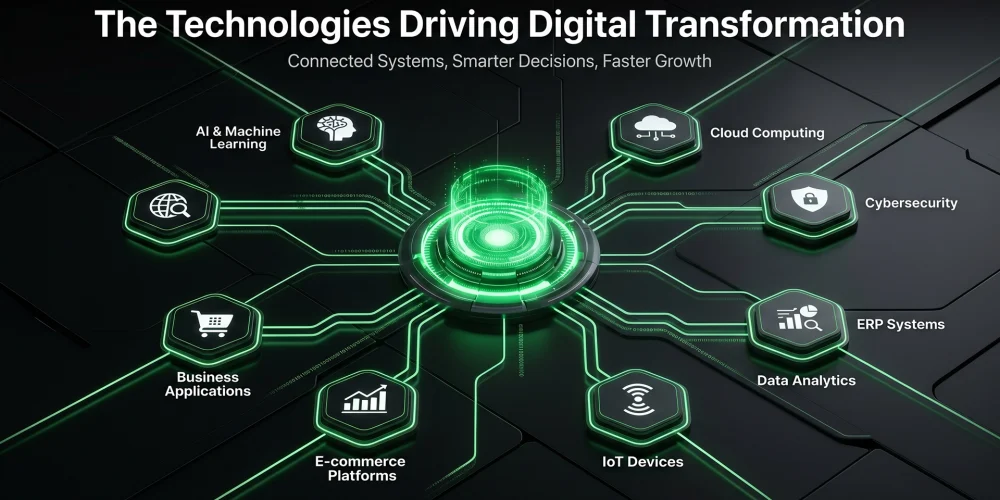
How Helionex Supports Digital Transformation in 2026
We are introducing our services to help businesses turn digital transformation trends into real business growth. At Helionex, we don’t just explain transformation we implement it through performance-driven digital solutions that improve visibility, traffic, and customer acquisition.
SEO Services for Digital Growth
Our SEO service helps businesses improve search visibility, organic traffic, and online authority in an AI-driven search landscape. We optimize websites for modern search engines, user intent, and long-term digital growth strategies.
PPC Advertising for Fast Market Impact
Our PPC advertising service helps businesses generate instant traffic, qualified leads, and measurable conversions through targeted paid campaigns. It is ideal for companies looking to scale quickly in competitive digital markets.
Conclusion
The Top Digital Transformation Trends in 2026 show that businesses must become more intelligent, secure, automated, and customer-focused. AI, agented systems, cloud modernization, cyber security, automation, data analytics, personalization, and digital trust are no longer optional. They are now essential for long-term competitiveness.
Companies that act early will be better prepared to reduce costs, improve efficiency, serve customers better, and scale with confidence. However, successful digital transformation requires more than technology. It requires the right strategy, the right execution, and the right partner.
Helionex helps businesses adopt digital transformation solutions that are practical, secure, and built for sustainable growth. As 2026 continues to reshape the digital landscape, the businesses that invest wisely today will be the ones leading tomorrow.