Growth is exciting — until you need 10 signs your business needs an ERP system now, and your business operations start becoming difficult to control. At first, the problems seem manageable. A few spreadsheets here. Manual reporting there. Departments use different software to manage daily operations. But as your business grows, these small inefficiencies slowly …
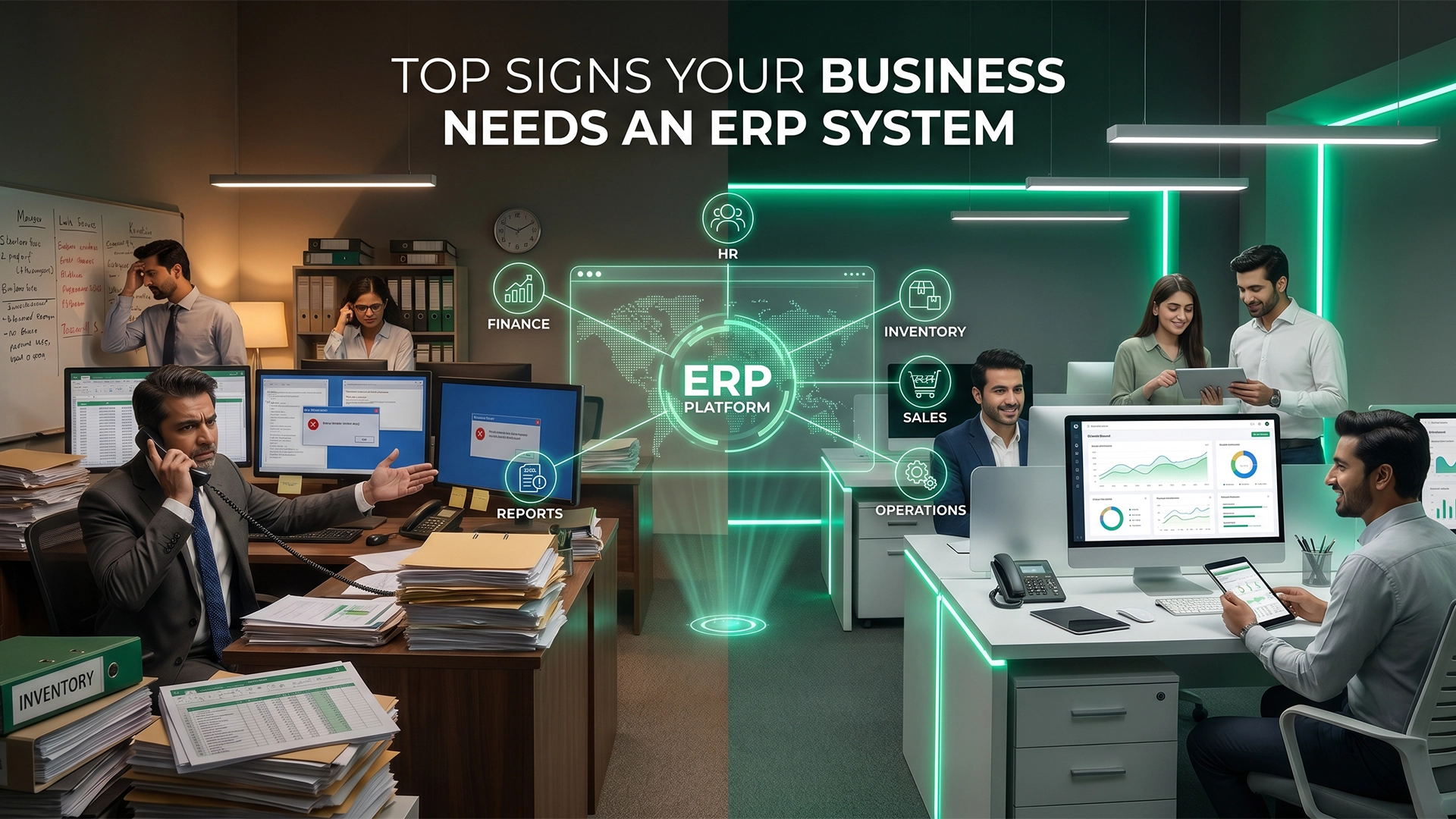
Growth is exciting — until you need 10 signs your business needs an ERP system now, and your business operations start becoming difficult to control.
At first, the problems seem manageable. A few spreadsheets here. Manual reporting there. Departments use different software to manage daily operations. But as your business grows, these small inefficiencies slowly turn into operational bottlenecks that impact productivity, profitability, customer experience, and decision-making.
Many companies don’t realize they’ve outgrown their current systems until operational chaos begins affecting revenue, employee performance, and customer satisfaction.
If your teams are struggling with disconnected systems, reporting delays, inventory issues, communication gaps, or manual workflows, these may be clear signs your business needs an ERP system.
An ERP (Enterprise Resource Planning) system centralizes your business operations into one connected platform, helping organizations improve visibility, automate workflows, streamline reporting, and scale efficiently.
In this guide, we’ll explore the top signs your business needs an ERP system, the hidden risks of delaying implementation, how to evaluate ERP readiness, and how the right ERP strategy can help your business grow smarter and faster.
What Is an ERP System for Businesses That Need an ERP System Now?
An ERP system is a centralized software platform designed to integrate and manage core business operations across multiple departments.
Instead of using disconnected applications for accounting, inventory, sales, procurement, HR, customer management, and reporting, ERP software creates a single unified ecosystem that improves operational visibility and business efficiency.
Modern ERP systems typically include:
- Finance and accounting
- Inventory management
- Supply chain management
- Procurement
- Customer relationship management (CRM)
- Human resources
- Reporting and analytics
- Workflow automation
- Business intelligence dashboards
ERP platforms help businesses:
- Reduce operational inefficiencies
- Eliminate duplicate data entry
- Improve decision-making
- Increase scalability
- Enhance collaboration
- Automate repetitive tasks
- Improve customer experiences
- Strengthen reporting accuracy
As organizations grow, ERP systems become increasingly important for maintaining operational control and supporting long-term business scalability. Explore Helionex’s end-to-end D365 Finance & Operations implementation services to build a scalable, enterprise-grade ERP ecosystem.
Why Businesses Delay ERP Implementation When a Business Needs an ERP System Now?
Many businesses know their operations are becoming inefficient but still delay ERP adoption because they believe:
- “Our current systems still work.”
- “ERP implementation is too expensive.”
- “We’re not large enough for ERP yet.”
- “Implementation sounds complicated.”
- “We’ll fix it later.”
Unfortunately, delaying ERP implementation often creates larger operational problems over time.
The longer businesses rely on disconnected systems and manual processes, the more difficult it becomes to manage operations efficiently.
This leads to:
- Increased labor costs
- Reporting delays
- Inventory inaccuracies
- Customer dissatisfaction
- Poor operational visibility
- Scaling limitations
- Decision-making challenges
In many cases, the hidden cost of operational inefficiency becomes far greater than the cost of ERP implementation, especially when businesses reach the point where they need an ERP system now to stay competitive and scalable.
Top Signs Your Business Needs an ERP System
-
Your Teams Depend Heavily on Spreadsheets
One of the biggest signs your business needs an ERP system is excessive spreadsheet dependency.
Spreadsheets may work during early business stages, but as operations become more complex, they create:
- Data inconsistencies
- Manual reporting delays
- Formula errors
- Duplicate information
- Collaboration challenges
- Version control issues
When employees spend hours updating spreadsheets manually, productivity suffers.
Real Operational Problem
Many businesses manage:
- inventory in spreadsheets,
- accounting in separate software,
- customer data in CRMs,
- procurement manually.
How ERP Solves This
ERP systems centralize data into one unified database, giving departments access to accurate real-time information.
-
Your Business Systems Don’t Integrate Properly
Disconnected systems are one of the clearest indicators that your business has outgrown its current operational infrastructure.
Many growing companies use separate tools for:
- Accounting
- Sales
- Inventory
- CRM
- Procurement
- Payroll
- Reporting
When these systems don’t communicate, employees often:
- Enter data multiple times
- Create manual workarounds
- Export/import spreadsheets
- Struggle with inconsistent information
Warning Signs
- Data silos
- Duplicate records
- Inventory mismatches
- Reporting inaccuracies
- Communication gaps between departments
ERP Benefit
ERP software integrates business functions into one centralized platform, improving operational visibility and reducing inefficiencies—especially for organizations that are beginning to realize their business needs an ERP system now to manage growing complexity and scale effectively.
-
Reporting Takes Too Long
If your leadership team waits days or weeks for operational reports, your current systems may be slowing business growth.
Delayed reporting impacts:
- Forecasting
- Strategic planning
- Financial visibility
- Decision-making
- Operational agility

Common Reporting Challenges
- Manual data collection
- Multiple report sources
- Inconsistent KPIs
- Outdated information
- Human reporting errors
How ERP Improves Reporting
ERP systems provide:
- Real-time dashboards
- Automated reporting
- Business intelligence tools
- KPI tracking
- Centralized analytics
Executives gain faster access to actionable insights that improve business performance, which becomes critical when a business needs an ERP system now to support faster, data-driven decision-making.
-
Manual Processes Are Consuming Too Much Time
Manual workflows become operational bottlenecks as businesses scale.
Examples of Manual Inefficiencies
- Invoice processing
- Purchase approvals
- Inventory updates
- Order management
- Employee onboarding
- Financial reconciliation
These repetitive tasks reduce productivity and increase operational costs.
Hidden Business Impact
Over time, manual processes:
- Slow customer response times
- Increase employee burnout
- Create operational delays
- Reduce scalability
ERP Automation Benefits
ERP software automates repetitive processes, improving:
- Workflow speed
- Accuracy
- Productivity
- Process consistency
- Department coordination
-
Inventory Problems Are Increasing
Common Inventory Challenges
- Overstocking
- Stock shortages
- Delayed fulfillment
- Inventory inaccuracies
- Poor warehouse visibility
- Supply chain confusion
Without centralized inventory management, businesses struggle to maintain operational efficiency.
ERP Inventory Advantages
ERP systems help businesses:
- Track inventory in real time
- Improve warehouse visibility
- Automate stock updates
- Forecast demand accurately
- Optimize supply chain management
This improves customer satisfaction while reducing operational waste.
-
Your Business Growth Feels Harder to Manage
Growth should improve business performance — not create operational chaos.
As companies expand, they often experience:
- Process duplication
- Department misalignment
- Communication breakdowns
- Slow approvals
- Reduced visibility
- Operational confusion
Why This Happens
The systems that supported your business at startup stage often fail to support scaling operations.
ERP Scalability Benefits
ERP systems support growth by providing:
- Standardized workflows
- Centralized operations
- Better collaboration
- Scalable infrastructure
- Operational consistency
-
Customer Service and Fulfilment Are Suffering
Customer experience problems often reveal deeper operational inefficiencies.
Warning Signs
- Delayed deliveries
- Incorrect orders
- Slow customer responses
- Lack of order visibility
- Customer complaints increasing
Operational Risk
Poor customer experiences damage:
- Brand reputation
- Customer retention
- Revenue growth
- Competitive positioning
ERP Customer Service Benefits
ERP software improves:
- Order tracking
- Fulfillment accuracy
- Customer communication
- Delivery coordination
- Response times
Connected operations lead to stronger customer experiences.
-
Financial Reporting Has Become Complicated
If your finance department struggles with month-end closing, reconciliation, or forecasting, your systems may no longer support operational complexity.
Common Financial Challenges
- Manual reconciliation
- Delayed reporting
- Cash flow visibility issues
- Compliance difficulties
- Forecasting inaccuracies
ERP Financial Benefits
ERP platforms improve:
- Financial visibility
- Budgeting accuracy
- Audit preparation
- Cash flow management
- Compliance reporting
This helps leadership make more informed financial decisions.
-
Compliance and Security Risks Are Growing
As businesses expand, compliance requirements become more demanding.
Manual systems often create:
- Missing audit trails
- Inconsistent documentation
- Security vulnerabilities
- Data management risks
ERP Compliance Advantages
ERP systems support:
- User access controls
- Audit tracking
- Centralized records
- Data governance
- Compliance monitoring
This reduces operational risk while improving accountability.
-
Leadership Lacks Real-Time Visibility
When executives lack accurate operational visibility, business growth becomes harder to manage strategically.
Common Symptoms
- Conflicting reports
- Unclear KPIs
- Delayed decisions
- Limited forecasting visibility
- Operational blind spots
ERP Decision-Making Benefits
ERP systems provide:
- Real-time analytics
- Business intelligence dashboards
- Centralized reporting
- Operational transparency
- Strategic visibility
Signs You’ve Outgrown Your Current ERP System
Some businesses already use ERP software but still experience operational limitations.
You may have outgrown your current ERP if:
- The system feels outdated
- Vendor support is weak
- Reporting remains difficult
- Excessive customization creates problems
- Integrations fail frequently
- Scalability becomes limited
- User adoption is poor
Modern cloud ERP solutions offer greater flexibility, automation, scalability, and reporting capabilities than many legacy ERP systems.
The Hidden Cost of Delaying ERP Implementation
Many organizations underestimate the true cost of operational inefficiency.
Delaying ERP implementation can lead to:
- Increased operational expenses
- Missed business opportunities
- Reduced employee productivity
- Inventory losses
- Customer dissatisfaction
- Slower growth
- Poor strategic visibility
Example
A growing business may spend:
- hundreds of hours on manual reporting,
- excessive labor on data entry,
- additional costs correcting operational mistakes.
ERP Readiness Assessment Framework
Not every business requires ERP immediately. However, certain operational conditions indicate growing ERP necessity.
|
Business Stage |
Operational Complexity |
ERP Readiness |
|
Startup |
Simple workflows |
Low |
|
Growing Business |
Multiple departments |
Moderate |
|
Scaling Company |
Data silos + reporting issues |
High |
|
Multi-Location Operations |
Complex processes |
Critical |
You’re Likely ERP-Ready If:
- Departments lack visibility
- Reporting takes too long
- Manual processes dominate workflows
- Inventory issues increase
- Scaling operations feel difficult
- Operational inefficiencies affect customers
Growing SMEs and mid-sized businesses often prefer flexible and cost-effective ERP solutions like Odoo for faster digital transformation.
When Your Business May NOT Need ERP Yet
Implementing ERP too early can create unnecessary complexity.
Your business may not need ERP yet if:
- Operations remain simple
- Your team is very small
- Transaction volume is low
- Current systems still scale effectively
- Departments operate efficiently
However, businesses planning rapid growth should begin evaluating ERP readiness before operational inefficiencies become severe.
Common ERP Implementation Mistakes Businesses Make
Many ERP projects fail because businesses focus only on software instead of operational strategy.
Common Mistakes
- Choosing ERP based only on price
- Ignoring scalability requirements
- Failing to standardize processes
- Poor employee training
- Weak change management
- Over-customizing the platform
- Selecting the wrong implementation partner
How to Avoid These Problems
Successful ERP implementation requires:
- Strategic planning
- Operational assessment
- Stakeholder alignment
- Clear business goals
- Experienced ERP consultants
Industry-Specific ERP Challenges
Manufacturing Businesses
Manufacturers often struggle with:
- Supply chain visibility
- Production scheduling
- Inventory tracking
- Procurement coordination
ERP improves operational control and production planning.
Retail & Ecommerce Companies
Retail businesses commonly experience:
- Inventory synchronization issues
- Omnichannel reporting gaps
- Customer data fragmentation
ERP systems centralize inventory, sales, and customer management.
Distribution Companies
Distributors need:
- Real-time inventory visibility
- Warehouse coordination
- Delivery tracking
ERP software improves logistics and fulfillment management.
Service-Based Businesses
Service companies often struggle with:
- Resource planning
- Project tracking
- Financial visibility

Why Choose Helionex as Your ERP Partner?
Our ERP specialists help businesses:
- Evaluate ERP readiness
- Identify operational bottlenecks
- Optimize workflows
- Select scalable ERP solutions
- Improve reporting visibility
- Streamline implementation
- Reduce operational inefficiencies
What Makes Helionex Different?
Strategic ERP Consultation
We focus on business outcomes, not just software deployment.
Customized ERP Solutions
Every organization has unique operational requirements. We tailor ERP strategies around your business goals and workflows.
Scalable ERP Implementation
Our ERP solutions are designed to support long-term growth and operational flexibility.
Process Optimization Expertise
Long-Term ERP Partnership
From consultation to implementation and optimization, Helionex supports your ERP and for your understanding, you can get more info about ERP transformation journey at every stage.
Whether your business struggles with disconnected systems, reporting delays, operational inefficiencies, or scalability limitations, Helionex helps you implement ERP solutions that support smarter business growth.
Conclusion
Recognizing the top signs your business needs an ERP system can help your organization avoid costly operational inefficiencies and prepare for sustainable growth.
When spreadsheets, disconnected systems, delayed reporting, manual workflows, and operational confusion begin slowing your business, it’s often a strong signal that your company has outgrown its current processes.
An ERP system helps businesses centralize operations, improve visibility, automate workflows, strengthen reporting, and scale more efficiently.
The key is acting before inefficiencies become major operational risks.
By evaluating ERP readiness early, businesses can improve decision-making, reduce operational costs, enhance customer experiences, and build a stronger foundation for long-term growth.
FAQ’s
-
What are the top signs your business needs an ERP system?
Common signs include spreadsheet dependency, disconnected systems, reporting delays, inventory inaccuracies, manual workflows, and limited operational visibility.
-
How does ERP software improve operational efficiency?
ERP systems centralize business operations, automate repetitive tasks, improve reporting accuracy, and streamline communication across departments.
-
Is ERP software suitable for small businesses?
Yes. Many small and mid-sized businesses implement ERP systems to support scalability, improve efficiency, and prepare for future growth.
-
How long does ERP implementation typically take?
ERP implementation timelines vary based on business size, operational complexity, customization needs, and deployment scope.
-
What happens if businesses delay ERP implementation?
Delaying ERP implementation can increase operational inefficiencies, labor costs, reporting delays, customer dissatisfaction, and scalability challenges.
-
Can ERP systems integrate with existing business software?
Yes. Modern ERP platforms often integrate with accounting systems, CRM software, inventory tools, e-commerce platforms, and third-party applications.
-
What industries benefit most from ERP systems?
Manufacturing, retail, ecommerce, distribution, healthcare, logistics, and service-based businesses commonly benefit from ERP implementation.
-
Why should businesses choose Helionex for ERP implementation?
Helionex provides strategic ERP consultation, customized implementation, workflow optimization, scalability planning, and long-term ERP support tailored to business growth.