Choosing the right ERP approach is one of the most important decisions businesses make during digital transformation. ERP systems help organizations manage finance, operations, inventory, sales, customer relationships, and other critical business processes. However, every organization has unique workflows and operational requirements.This is where ERP Customization vs Configuration becomes an important consideration. Although these terms …
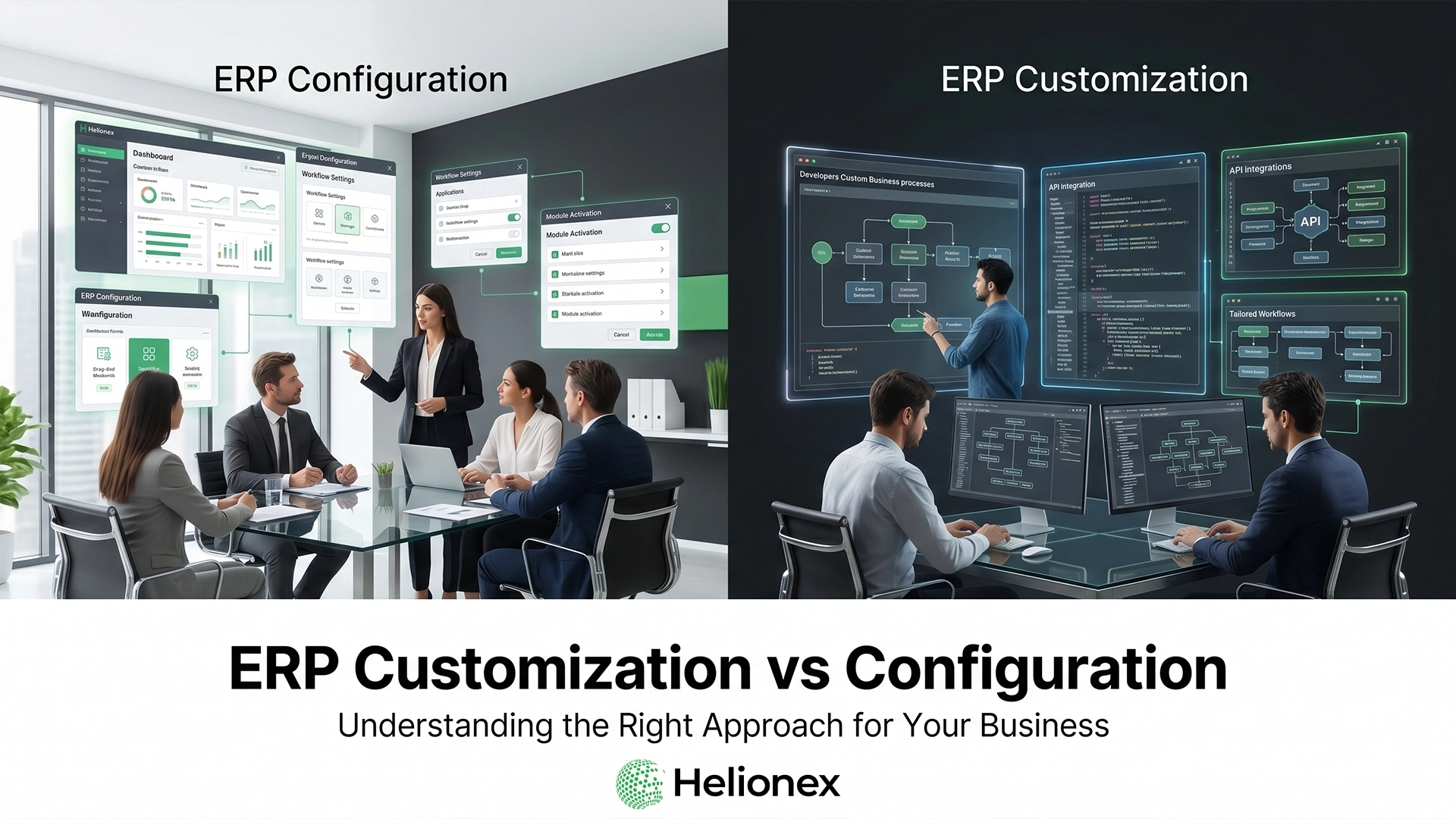
Choosing the right ERP approach is one of the most important decisions businesses make during digital transformation. ERP systems help organizations manage finance, operations, inventory, sales, customer relationships, and other critical business processes. However, every organization has unique workflows and operational requirements.
This is where ERP Customization vs Configuration becomes an important consideration. Although these terms are often used together, they represent two different ways of adapting an ERP system to match business needs.
ERP configuration involves adjusting existing ERP features, settings, and workflows to support business operations. On the other hand, ERP customization involves modifying or extending the system when standard functionality cannot meet specific requirements.
Selecting the right approach depends on business complexity, growth objectives, budget, and long-term technology plans. A well-planned ERP strategy helps businesses improve efficiency while avoiding unnecessary costs and technical challenges.
What Is ERP Configuration and How Does It Work?
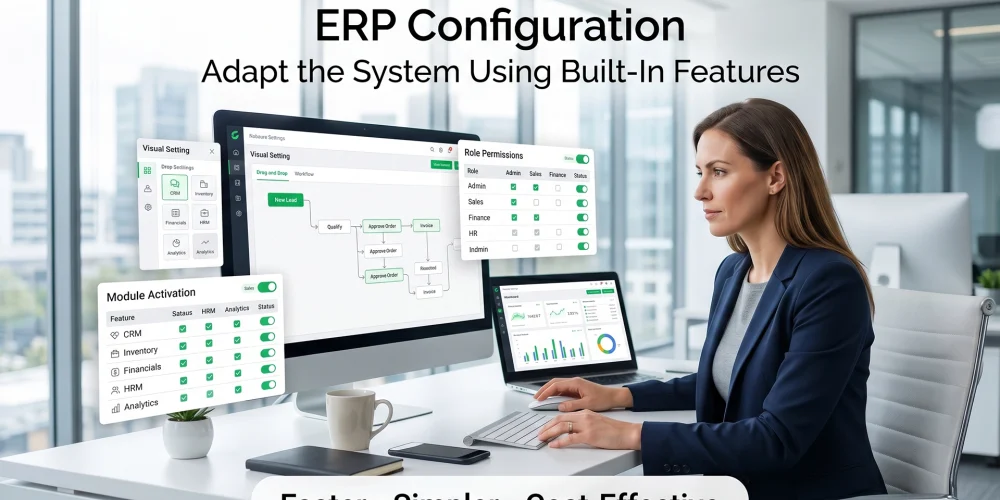
ERP configuration is the process of adjusting an ERP system’s existing features, settings, and workflows to align with a company’s operational requirements without changing the core software.
Modern ERP platforms are designed with flexible configuration options that allow businesses to adapt the system according to their processes. Instead of developing new features, organizations use the tools and functionality already available within the ERP solution.
Businesses can configure ERP systems by modifying:
- User roles and permissions
- Approval workflows
- Inventory management settings
- Financial rules
- Tax calculations
- Reporting dashboards
- Sales processes
- Purchase management workflows
The goal of ERP configuration is to make the system work effectively within the organization while maintaining the stability of the original platform.
A properly configured ERP system helps businesses reduce manual work, improve operational efficiency, and create standardized processes across departments.
ERP configuration is usually preferred when business requirements can be fulfilled through existing ERP capabilities because it provides faster implementation, easier maintenance, and smoother upgrades.
What Is ERP Customization and When Is It Needed?
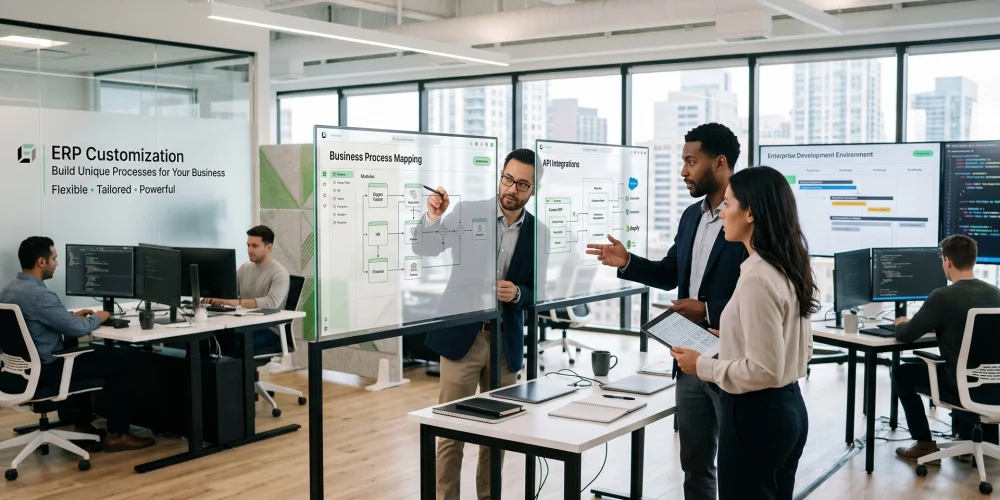
ERP customization involves modifying or extending an ERP system beyond its standard capabilities to meet specific business requirements. Understanding the difference between ERP customization and configuration helps businesses choose the right approach for creating a flexible, efficient, and scalable ERP solution. While configuration focuses on adjusting existing features, customization involves developing additional functionality to support unique workflows and operational needs.
While ERP platforms provide many built-in features, some businesses operate with unique workflows, specialized processes, or industry-specific requirements that cannot be achieved through configuration alone.
ERP customization may include:
- Developing custom modules
- Creating specialized workflows
- Building custom reports
- Modifying existing functionalities
- Integrating third-party applications
- Automating complex business processes
For example, a manufacturing company may require a customized production tracking system because its operational processes differ from standard manufacturing workflows.
ERP customization allows organizations to build a system that supports their exact business processes instead of forcing their operations to fit a generic ERP structure.
However, customization should be carefully planned. Excessive customization can increase maintenance requirements, create upgrade challenges, and add unnecessary complexity.
The purpose of customization is not to change everything, but to improve areas where additional functionality creates real business value.
ERP Customization vs Configuration: What Are the Main Differences?
The main difference between ERP customization and configuration is the level of change made to the ERP system. Configuration involves adjusting existing settings and features within the system, while customization requires modifying or extending the ERP software to meet specific business requirements. Understanding this difference helps businesses select the right approach for improving efficiency, scalability, and workflow management.
ERP configuration works within the existing framework of the software, while ERP customization extends or modifies that framework.
Configuration focuses on adjusting available features, while customization focuses on creating new capabilities.
Factor | ERP Configuration | ERP Customization |
Approach | Adjust existing features | Develop new functionality |
Development Required | Usually no coding required | Often requires development |
Implementation Time | Faster | Longer |
Cost | Lower investment | Higher investment |
Flexibility | Limited to available features | Highly flexible |
Maintenance | Easier to manage | Requires ongoing support |
Upgrades | Usually simpler | May require additional testing |
Businesses should evaluate their current processes, future goals, and operational challenges before deciding which approach provides the best long-term value.
Which Is Better: ERP Configuration or ERP Customization?
There is no single answer to whether ERP configuration or customization is better. The right choice depends on the organization’s requirements and long-term objectives.
ERP configuration is generally better for businesses that want faster implementation, lower complexity, and processes that already match industry standards.
ERP customization is more suitable for organizations that require unique workflows, advanced automation, or specialized functionality.
Before choosing an approach, businesses should ask:
- Does the ERP system already support our requirements?
- Is this functionality essential for our operations?
- Will customization provide measurable business value?
- Can the same outcome be achieved through configuration?
A successful ERP strategy often combines both approaches. Companies can configure standard processes while customizing only the areas where additional flexibility is necessary.
When Should a Business Choose ERP Configuration Instead of Customization?
Businesses should choose ERP configuration when their operational requirements can be supported through existing ERP features.
Configuration is ideal when:
- The organization follows standard industry processes
- Faster deployment is important
- Budget control is a priority
- Future upgrades need to remain simple
- Existing ERP modules already meet business requirements
For example, a retail business may configure inventory settings, sales workflows, user permissions, and reporting dashboards without requiring custom development. This type of ERP configuration allows businesses to adapt the system to their existing processes while maintaining the standard functionality of the ERP platform.
ERP configuration allows organizations to benefit from proven ERP functionality while maintaining a stable and manageable system.
Many successful ERP implementations rely heavily on configuration because it balances efficiency, cost, and flexibility.
When Should a Business Invest in ERP Customization?
ERP customization becomes necessary when standard ERP functionality cannot effectively support important business processes.
Organizations may need customization when they require:
- Unique workflows
- Industry-specific solutions
- Advanced automation
- Specialized reporting
- Complex system integrations
For example, a logistics company may require customized tracking features to support specific delivery processes that are not available in standard ERP modules.
Customization enables businesses to maintain their competitive advantages while improving efficiency and productivity. Through ERP customization, organizations can tailor their systems to support unique workflows, industry-specific requirements, and business processes that standard ERP configurations may not fully address.
However, companies should evaluate the long-term impact before investing in customization. A well-planned customization strategy ensures that added functionality supports future growth rather than creating unnecessary complexity.
We are introducing our Odoo ERP implementation service, ideal for businesses looking for flexible ERP configuration with modular customization options.
It enables companies to adapt workflows, automate processes, and scale operations efficiently without over-complicating system architecture.
Does ERP customisation cost more than configuration?
Yes, ERP customization usually costs more than configuration because it involves additional development, testing, and maintenance.
ERP configuration mainly involves adjusting existing settings, while customization may require:
- Software development
- Technical planning
- Quality assurance testing
- Documentation
- Long-term support
The total cost depends on factors such as:
- Project complexity
- Number of customized features
- Integration requirements
- Future maintenance needs
Although customization requires a larger investment, it can deliver significant returns when it solves critical business challenges or improves operational efficiency.
The best approach is to customize only when the expected business benefits justify the additional cost.
What Are the Risks of ERP Customization?
ERP customization provides flexibility, but poor planning can create long-term challenges. A well-structured ERP customization strategy helps businesses improve system efficiency, reduce operational issues, and ensure the solution remains scalable as business needs evolve.
Some common risks include:
Increased Maintenance Requirements
Customized features require continuous monitoring, updates, and technical support to remain effective.
Upgrade Challenges
Future ERP upgrades may require additional testing to ensure customized components continue working properly.
Higher System Complexity
Too many custom changes can make the ERP environment difficult to manage and troubleshoot.
Technical Dependency
Organizations may become dependent on specific developers or technical teams who understand the customized system.
A successful ERP customization strategy focuses on solving important business problems while maintaining system stability and scalability.
How Does ERP Customization Affect Scalability and Future Growth?
Scalability is an important factor when deciding between ERP configuration and customization.
A strong ERP system should support business expansion, new processes, increased users, and changing market demands.
ERP configuration often supports scalability by maintaining the standard structure of the platform.
ERP customization can also support growth when it is developed with proper planning and future requirements in mind.
Strategic customization can help businesses:
- Automate growing operations
- Support new business models
- Improve customer experiences
- Increase productivity
- Manage complex workflows
The objective should always be to build an ERP environment that grows alongside the organization.
Why Choose Helionex for ERP Customisation and Configuration?
Selecting the right ERP partner is essential for successful implementation. A reliable ERP provider understands that every business has different processes, challenges, and growth objectives.
Helionex helps organizations identify whether ERP configuration, ERP customization, or a combination of both is the right solution. By evaluating business requirements, operational complexity, and long-term scalability needs, Helionex ensures that companies choose the most efficient and cost-effective approach. This strategic guidance helps businesses avoid unnecessary development, reduce implementation risks, and build ERP systems that align with both current workflows and future growth objectives.
Our ERP services focus on creating scalable, efficient, and business-driven solutions.
Business-Focused ERP Strategy
We analyze your existing workflows, challenges, and goals to recommend an ERP approach that aligns with your business objectives.
Smart ERP Customization
Our team develops custom solutions only when they provide measurable improvements and long-term value.
Effective ERP Configuration
We optimize existing ERP features to improve workflows, reduce complexity, and maximize system performance.
Seamless Integration
We connect ERP systems with essential business applications to improve data visibility and operational efficiency.
Scalable ERP Solutions
Our solutions are designed to support future expansion, changing business needs, and long-term growth.
With Helionex, businesses gain an ERP partner focused on practical solutions, sustainable performance, and continuous improvement.
We are introducing our Microsoft Dynamics 365 Finance & Operations implementation service, designed for enterprises that need scalable ERP systems with strong configuration and controlled customization.
This service helps businesses streamline finance, supply chain, and operations while maintaining a balanced approach between ERP configuration and customization.
Final Thoughts
Understanding ERP Customization vs Configuration helps businesses make informed ERP decisions.
ERP configuration is the right choice when existing ERP capabilities can support business requirements. It provides faster implementation, easier maintenance, and lower complexity.
ERP customization is valuable when businesses need unique functionality that standard ERP solutions cannot provide.
The ideal ERP strategy is not about choosing one approach over the other. It is about identifying where configuration provides efficiency and where customization creates additional business value.
With the right ERP planning and expertise, businesses can build a system that improves productivity today while supporting future growth.
Helionex helps organizations create ERP solutions that are flexible, scalable, and aligned with real business needs.
FAQs
What is the difference between ERP customization and configuration?
ERP configuration adjusts existing ERP settings, while ERP customization modifies or adds new functionality.
Which is better: ERP customization or configuration?
Configuration is better for standard processes; customization is better for unique business needs.
Which is cheaper: ERP customization or configuration?
ERP configuration is cheaper because it uses built-in system features without development work.
When should we use ERP customization?
Use customization when standard ERP features cannot support your business processes.
Can ERP configuration meet all business needs?
No, it works for most standard needs but may not support complex or unique requirements.
Does ERP customization affect upgrades?
Yes, it can make upgrades more complex and require extra testing.