
Technology has become the backbone of modern businesses. Organizations now rely on cloud platforms, digital applications, remote work solutions, online payment systems, and connected tools to improve productivity and serve customers more efficiently.However, as businesses grow, their digital environments become more complex. With this growth comes an increased risk of cyber threats that can impact …
Technology has become the backbone of modern businesses. Organizations now rely on cloud platforms, digital applications, remote work solutions, online payment systems, and connected tools to improve productivity and serve customers more efficiently.
However, as businesses grow, their digital environments become more complex. With this growth comes an increased risk of cyber threats that can impact operations, customer trust, and business continuity.
The cybersecurity risks every growing business faces are no longer limited to large enterprises. Small and mid-sized businesses are becoming attractive targets because attackers often look for organizations with valuable data but limited security resources.
A single cybersecurity incident can lead to financial losses, operational disruptions, data exposure, and reputational damage. For growing businesses, cybersecurity is not just an IT concern; it is a critical part of building a stable and resilient organization.
Understanding these risks and implementing proactive security measures helps businesses protect their systems, employees, and customers.
What Are the Biggest Cybersecurity Risks Every Growing Business Should Know?
Growing businesses often focus on expansion, customer acquisition, and operational improvements. However, cybersecurity is sometimes overlooked until a security incident occurs.
As organizations scale, they introduce more employees, devices, applications, and third-party services. Each addition can increase the potential attack surface and create new opportunities for cybercriminals.
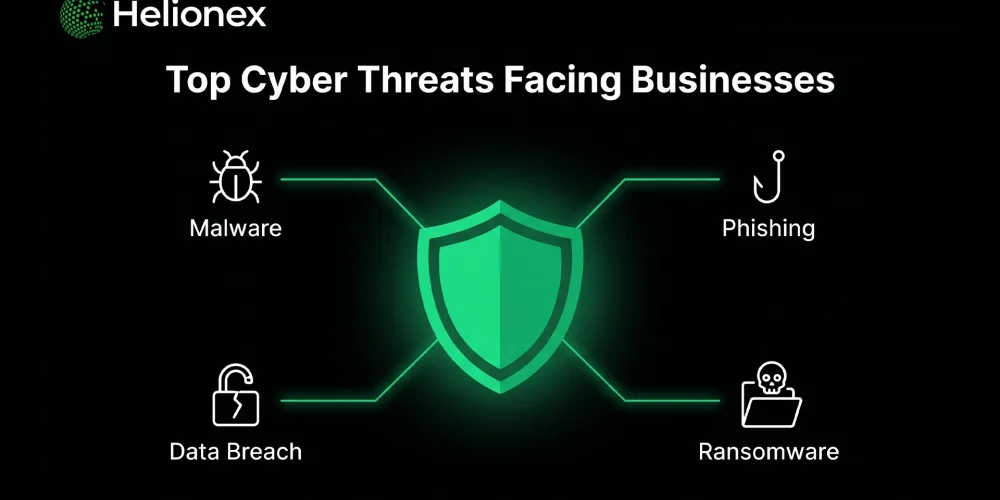
Some of the most common cybersecurity risks affecting growing businesses include:
- Phishing and social engineering attacks
- Ransomware and malware threats
- Weak passwords and poor access management
- Cloud security vulnerabilities
- Data breaches
- Employee-related security risks
- Third-party vendor risks
- Outdated software and systems
Identifying these risks early allows businesses to strengthen their security posture before attackers take advantage of vulnerabilities.
Why Are Growing Businesses Targeted by Cybercriminals?
Many businesses assume that cybercriminals only target large corporations. However, growing companies are often targeted because they may have valuable information but fewer security resources compared to larger enterprises.
As businesses expand, they usually adopt new technologies, onboard more employees, and connect with external partners. Without proper security controls, these changes can create weaknesses that attackers can exploit.
Cybercriminals commonly target growing businesses because of:
- Limited cybersecurity monitoring
- Weak internal security processes
- Poor access control practices
- Lack of employee security awareness
- Outdated technology infrastructure
A strong cybersecurity foundation helps businesses continue growing without exposing themselves to unnecessary Cybersecurity Risks Every Growing Business faces, without exposing themselves to unnecessary risks.
How Do Phishing Attacks Affect Growing Businesses?
Phishing attacks are among the most common cybersecurity threats because they target human behavior instead of relying only on technical weaknesses.
Attackers use emails, messages, and fake websites to trick employees into revealing sensitive information or providing access to company systems.
Common phishing attempts include:
- Fake login pages
- Fraudulent invoices
- Fake password reset requests
- Impersonation of business partners
- Malicious email attachments
A successful phishing attack can compromise employee accounts, expose confidential information, and allow attackers to move deeper into business systems.
Businesses can reduce phishing risks by:
- Training employees regularly
- Using multi-factor authentication (MFA)
- Implementing email security solutions
- Creating clear security reporting procedures
Why Is Ransomware a Serious Threat for Growing Companies?
Ransomware is one of the most damaging cybersecurity threats facing modern businesses. It occurs when attackers encrypt company files or restrict access to systems and demand payment to restore access.
For growing businesses, ransomware can create serious operational challenges. Employees may lose access to essential systems, customer services may be interrupted, and recovery efforts can become expensive, making it one of the most critical cybersecurity risks every growing business must prepare for.
The impact of ransomware may include:
- Business downtime
- Lost productivity
- Data recovery costs
- Customer trust issues
- Financial losses
Businesses can reduce ransomware risks by maintaining secure backups, monitoring their systems, protecting endpoints, and preparing an incident response plan.
How Can Weak Passwords and Poor Access Control Create Security Problems?
Weak passwords and poor access management remain common security issues for businesses of all sizes.
When employees use simple passwords or have unnecessary access to sensitive systems, attackers have a greater chance of gaining unauthorized entry.
Poor access control can expose:
- Customer information
- Financial records
- Internal documents
- Business applications
A strong access management strategy includes:
- Multi-factor authentication
- Role-based access permissions
- Regular access reviews
- Strong password policies
Businesses should ensure that employees have access only to the information they need to perform their responsibilities.
Moreover, Helionex’s Identity & Access Management (IAM) service ensures that only the right individuals have access to the right systems at the right time. It strengthens authentication controls, reduces insider risks, and helps businesses enforce strict access policies across all users and applications.
What Cloud Security Risks Should Growing Businesses Watch For?
Cloud technology allows businesses to scale quickly, improve collaboration, and reduce infrastructure costs. However, cloud environments require proper security management to avoid introducing Cybersecurity Risks Every Growing Business commonly faces as they expand their digital operations.
A common misconception is that cloud platforms are automatically secure. In reality, incorrect configurations and poor access management can create vulnerabilities.
Common cloud security risks include:
- Misconfigured cloud settings
- Exposed databases
- Weak authentication controls
- Poor monitoring practices
- Unsecured integrations
Growing businesses should protect their cloud environments through:
- Strong identity management
- Data encryption
- Continuous monitoring
- Regular security reviews
How Do Employees Impact Business Cybersecurity?
Employees are an important part of every company’s cybersecurity strategy. While technology solutions provide protection, human mistakes can still create security weaknesses.
Common employee-related security risks include:
- Clicking suspicious links
- Sharing sensitive information
- Using unsecured networks
- Installing unauthorized applications
- Ignoring security policies
A strong security culture helps employees recognize threats and respond appropriately.
Regular cybersecurity awareness training can help employees become a strong line of defense against cyber threats.
How Can Businesses Protect Against Data Breaches?
A data breach occurs when unauthorized individuals gain access to sensitive business information. For growing companies, a breach can damage customer relationships and affect long-term business reputation, making it one of the most serious Cybersecurity Risks Every Growing Business must actively prevent.
Sensitive information may include:
- Customer data
- Payment information
- Employee records
- Business documents
To protect valuable information, businesses should implement:
- Data encryption
- Secure storage practices
- Access restrictions
- Continuous security monitoring
Protecting data requires knowing where information is stored, who can access it, and how it is being protected.
Therefore, Helionex’s Network Monitoring & Security service provides real-time visibility into your IT infrastructure, helping detect suspicious activity, performance issues, and potential cyber threats before they escalate. It ensures continuous monitoring so your business stays protected against downtime, intrusions, and hidden vulnerabilities.
Why Should Businesses Manage Third-Party Cybersecurity Risks?
Many businesses rely on external vendors for software, cloud services, payment solutions, and operational support. While these partnerships provide value, they can also introduce security risks.
A third-party provider with weak security practices can create vulnerabilities within a business ecosystem.
Companies should evaluate vendors based on:
- Security standards
- Data protection practices
- Compliance requirements
- Access permissions
Regular vendor assessments help businesses reduce risks caused by external partners.
How Can Growing Businesses Build a Strong Cybersecurity Strategy?
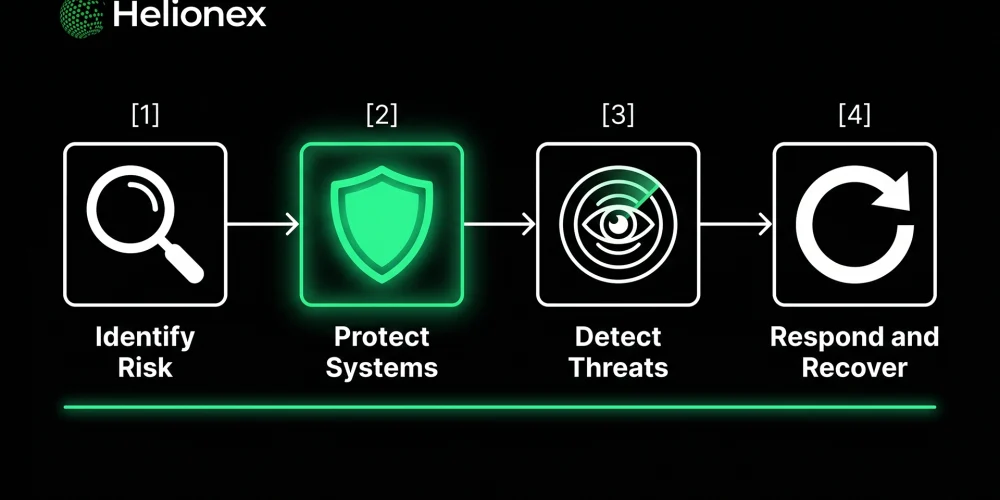
A successful cybersecurity strategy requires more than installing security tools. Businesses need a structured approach that identifies risks, protects critical assets, and prepares for possible incidents, especially the Cybersecurity Risks Every Growing Business encounters as they scale and adopt new technologies.
A strong cybersecurity strategy includes:
Security Assessments
Regular security assessments help identify vulnerabilities, weak points, and areas that require improvement.
Strong Security Controls
Businesses should implement security measures such as:
- Endpoint protection
- Identity management
- Network security
- Data protection controls
Employee Security Training
Employees should understand common threats and know how to respond when they encounter suspicious activity.
Incident Response Planning
A response plan ensures businesses know what actions to take during a security incident, reducing downtime and recovery challenges.
How Should Growing Businesses Prioritize Cybersecurity Risks?
Not every cybersecurity issue carries the same level of impact. Growing businesses should prioritize risks based on their likelihood and potential damage.
A simple risk-based approach:
Cybersecurity Risk | Business Impact | Priority |
Ransomware | Operational disruption | Critical |
Data breach | Customer trust loss | High |
Weak passwords | Unauthorized access | High |
Outdated systems | Exploitation risk | Medium |
Poor backups | Recovery challenges | Critical |
Prioritizing cybersecurity risks allows businesses to focus resources on the areas that provide the greatest protection.
Why Choose Helionex as Your Cybersecurity Partner?
Selecting the right cybersecurity partner helps businesses move from reactive security measures to proactive protection.
Helionex helps growing businesses identify vulnerabilities, strengthen security processes, and develop cybersecurity strategies aligned with their business goals.
Businesses choose Helionex because we provide:
Customized Security Solutions
Every business has unique technology requirements and security challenges. Helionex creates strategies based on your infrastructure, operations, and risk profile to help reduce the Cybersecurity Risks Every Growing Business faces while scaling and adopting new digital systems.
Proactive Risk Management
Helionex helps businesses identify potential security issues before they become serious problems.
Scalable Cybersecurity Protection
As your business grows, your security needs evolve. Helionex provides solutions designed to support long-term growth and changing technology environments.
Business-Focused Security Guidance
Cybersecurity should support business growth, not slow it down. Helionex focuses on practical security approaches that protect operations while enabling innovation.
What Steps Can Growing Businesses Take to Improve Cybersecurity Today?
Businesses can strengthen their security by taking simple but effective steps:
- Enable multi-factor authentication
- Update software regularly
- Train employees on security practices
- Maintain secure backups
- Review user permissions
- Monitor systems for suspicious activity
- Create cybersecurity policies
- Evaluate third-party risks
Small improvements implemented consistently can significantly reduce cybersecurity exposure.
Conclusion
The cybersecurity risks every growing business faces continue to evolve as technology advances. Threats such as phishing attacks, ransomware, cloud vulnerabilities, weak access controls, and data breaches can affect businesses regardless of their size.
Cybersecurity is not only about preventing attacks; it is about protecting business operations, customer trust, and future growth.
By taking a proactive approach, businesses can identify vulnerabilities, strengthen their defenses, and create a safer digital environment.
With the right strategy and expert guidance, growing businesses can continue expanding confidently while protecting their systems, data, and customers.
Helionex helps organizations build cybersecurity solutions that align with their business needs, technology environment, and long-term goals