
IT Challenges in Logistics & Distribution: Common Problems and Practical Fixes
The logistics and distribution industry has evolved dramatically over the past decade. Businesses are no longer managing a few warehouses and delivery vehicles; they are coordinating complex networks of suppliers, transportation providers, fulfillment centers, and customers across multiple locations. As operations become more connected, technology becomes more critical.
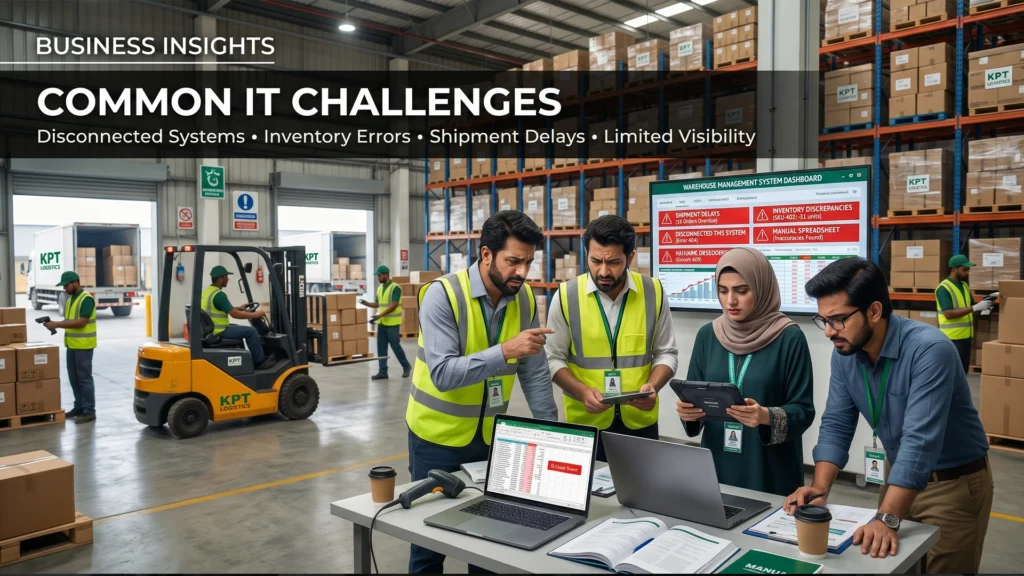
Today, even a minor IT issue can create a chain reaction across the supply chain. A network outage can prevent warehouse teams from processing orders. A software integration failure can result in inventory discrepancies. A cybersecurity incident can halt operations entirely. These disruptions not only affect internal productivity but also customer satisfaction and revenue generation.
One of the reasons IT Challenges in Logistics & Distribution have become more significant is the growing reliance on digital systems. Most organizations now depend on ERP platforms, Warehouse Management Systems (WMS), Transportation Management Systems (TMS), cloud applications, mobile devices, and real-time tracking tools to maintain operational efficiency. When these systems fail to work together, businesses face delays, higher costs, and reduced visibility.
For logistics companies aiming to remain competitive, addressing technology challenges is no longer optional. It is a fundamental requirement for business growth, operational resilience, and customer retention.
What Are the Most Common IT Challenges in Logistics & Distribution?
While every IT challenges in Logistics & Distribution has unique requirements, several technology-related challenges consistently affect companies across the industry.
These challenges include:
- Lack of real-time supply chain visibility
- Legacy systems and outdated infrastructure
- Poor software integration
- Cybersecurity threats
- Network downtime
- Data silos
- Scalability limitations
- Excessive manual processes
- Disaster recovery weaknesses
- Difficulty adopting emerging technologies
What makes these challenges particularly dangerous is that they rarely exist in isolation. A company struggling with outdated infrastructure often experiences security vulnerabilities, integration issues, and operational inefficiencies simultaneously.
Understanding these challenges is the first step toward building a more resilient and scalable logistics operation.
How Does Limited Supply Chain Visibility Affect Logistics Performance?
Visibility has become one of the most valuable assets in modern logistics. Decision-makers need immediate access to accurate information regarding inventory levels, shipment locations, warehouse activity, and customer orders.
When real-time visibility is lacking, organizations are forced to make decisions based on incomplete or outdated information. This can lead to inventory shortages, excess stock, delayed deliveries, and dissatisfied customers.
Many companies still operate with disconnected systems that update information at different intervals. Warehouse managers may see one inventory count while transportation teams see another. Customer service representatives often struggle to provide accurate shipment updates because data is scattered across multiple platforms.
Improved visibility helps logistics companies reduce delays, optimize inventory levels, improve forecasting accuracy, and enhance customer satisfaction.
Why Do Legacy Systems Continue to Create Problems for Logistics Companies?
Many logistics organizations still rely on technology platforms that were implemented years—or even decades—ago. While these systems may continue to function, they often struggle to support modern business requirements.
As businesses grow, these systems become operational bottlenecks. Employees spend more time working around technology limitations than focusing on strategic initiatives.
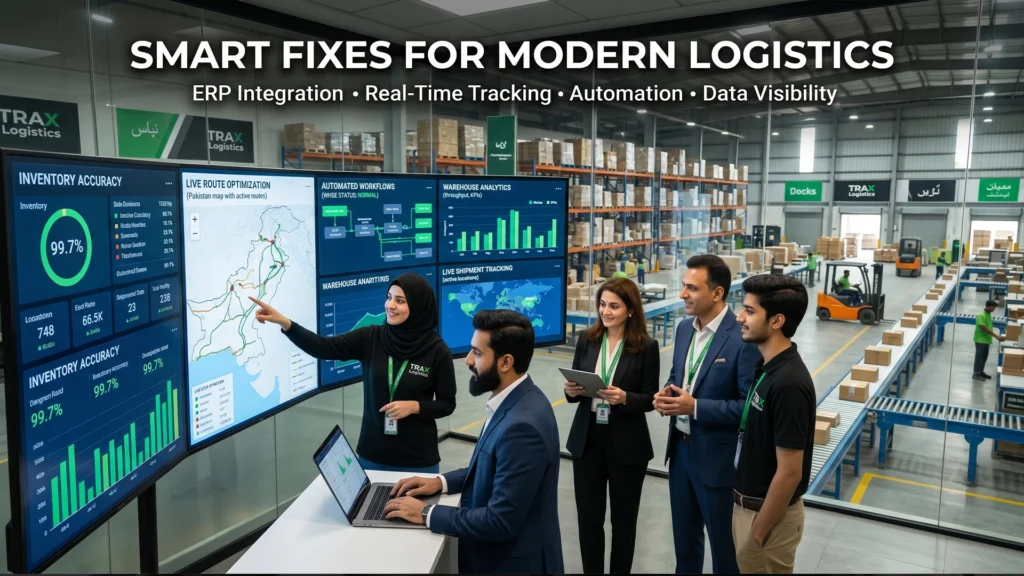
Modernization does not necessarily require replacing every system at once. A phased approach often delivers better results. Companies can begin by identifying critical systems, migrating workloads to cloud environments, and implementing modern APIs to improve connectivity between applications.
Organizations that successfully modernize their infrastructure often experience improved performance, lower maintenance costs, greater scalability, and stronger security.
How Do Integration Challenges Impact Logistics and Distribution Operations?
One of the most persistent IT Challenges in Logistics & Distribution is the inability of different systems to communicate effectively.
When these systems operate independently, data becomes fragmented. Employees are forced to manually transfer information between platforms, increasing the likelihood of errors and delays.
Integration challenges often result in:
- Duplicate data entry
- Reporting inconsistencies
- Inventory inaccuracies
- Delayed order processing
- Poor customer communication
A successful integration strategy focuses on creating a seamless flow of information across the organization. API-driven integrations, middleware platforms, and centralized data management solutions can help eliminate data silos and improve operational efficiency.
Why Is Cybersecurity a Growing Concern for Logistics Organizations?
Cybersecurity has become one of the fastest-growing concerns in the logistics sector. As operations become increasingly digital, cybercriminals have more opportunities to exploit vulnerabilities.
Common threats include ransomware attacks, phishing schemes, malware infections, insider threats, and unauthorized access to critical systems.
A strong cybersecurity strategy should include:
- Multi-factor authentication
- Endpoint protection
- Security awareness training
- Continuous network monitoring
- Vulnerability assessments
- Disaster recovery planning
Rather than viewing cybersecurity as a compliance requirement, logistics companies should treat it as a core business protection strategy.
How Does Network Downtime Affect Logistics and Distribution Businesses?
In logistics, every minute matters. When systems go offline, operations often come to a standstill.
Warehouse workers may lose access to inventory systems. Transportation teams may be unable to track shipments. Customer service representatives may struggle to provide order updates.
The financial impact of downtime extends far beyond lost productivity. Delayed shipments can trigger customer complaints, contract penalties, and lost business opportunities.
How Can 24×7 IT Support Reduce Downtime in Logistics Operations?
As logistics operations increasingly run around the clock, technology issues can occur at any time not just during business hours. A warehouse management system failure, network outage, or integration issue during peak fulfillment hours can disrupt operations and impact customer deliveries.
To help organizations maintain uninterrupted operations, we offer our 24×7 IT Support Service, providing continuous monitoring, rapid issue resolution, and proactive infrastructure support. Our team works around the clock to identify and address potential problems before they affect critical logistics processes, helping businesses improve uptime, operational reliability, and workforce productivity.
Why Do Data Silos Continue to Cause Operational Inefficiencies?
Data is only valuable when it is accessible, accurate, and actionable.
Unfortunately, many logistics companies store information across multiple disconnected systems. As a result, different departments often work with different versions of the truth.
For example, inventory teams may rely on warehouse data while sales teams use separate reporting systems. These discrepancies create confusion and make decision-making more difficult.
Breaking down data silos requires a company-wide approach to information management. Centralized databases, integrated software platforms, and automated synchronization processes can improve data consistency and visibility across departments.
Organizations that eliminate data silos often experience faster decision-making, improved reporting accuracy, and stronger collaboration.
Can Logistics Technology Scale as Your Business Grows?
Growth is positive, but it often exposes weaknesses in existing technology infrastructure.
As order volumes increase, warehouses expand, and distribution networks become more complex, organizations need systems capable of handling greater workloads. Unfortunately, many businesses discover that their existing infrastructure cannot keep pace with growth.
Scalability challenges frequently lead to slower system performance, increased downtime, and rising support costs.
Cloud-based infrastructure provides one of the most effective solutions. Unlike traditional environments, cloud platforms can scale resources up or down based on business requirements, helping organizations maintain performance without significant capital investment.
Companies that prioritize scalability are better prepared to support future expansion while maintaining operational efficiency.
How Can Cloud Infrastructure Improve Scalability in Logistics and Distribution?
Many logistics companies struggle with technology environments that cannot keep pace with growing order volumes, expanding warehouse networks, and increasing customer expectations. Traditional infrastructure often requires significant upfront investment and can become difficult to scale efficiently.
To address these challenges, we offer Cloud Infrastructure Services that help logistics organizations build secure, flexible, and scalable technology environments. Our cloud solutions enable businesses to improve system performance, support multi-location operations, enhance disaster recovery capabilities, and scale resources as operational demands evolve. Whether you’re modernizing legacy systems or planning long-term growth, cloud infrastructure provides the foundation for greater agility and resilience.
How Can Logistics Companies Reduce Manual Processes Through Automation?
Despite significant advances in technology, many logistics operations still rely heavily on manual workflows.
Employees often spend valuable time entering data, processing paperwork, updating spreadsheets, and generating reports. These repetitive tasks increase labor costs and create opportunities for human error.
Automation helps eliminate inefficiencies by streamlining routine activities and improving process consistency.
Examples include:
- Automated inventory updates
- Electronic document management
- Workflow automation
- Shipment tracking notifications
- Automated reporting systems
By reducing manual work, organizations can improve productivity, increase accuracy, and allow employees to focus on higher-value activities.
What Should Logistics Companies Look for in an IT Partner?
Technology challenges are becoming increasingly complex, making it difficult for internal teams to manage everything alone.
The right IT partner should provide more than technical support. They should understand logistics workflows, supply chain operations, warehouse environments, and the unique challenges facing distribution businesses.
When evaluating an IT provider, organizations should consider:
- Industry experience
- Scalability capabilities
- Security expertise
- 24/7 monitoring services
- Integration experience
- Strategic consulting support
A strong technology partner helps businesses move beyond reactive problem-solving and build a long-term roadmap for growth and innovation.
Why Choose Helionex as Your Technology Partner?
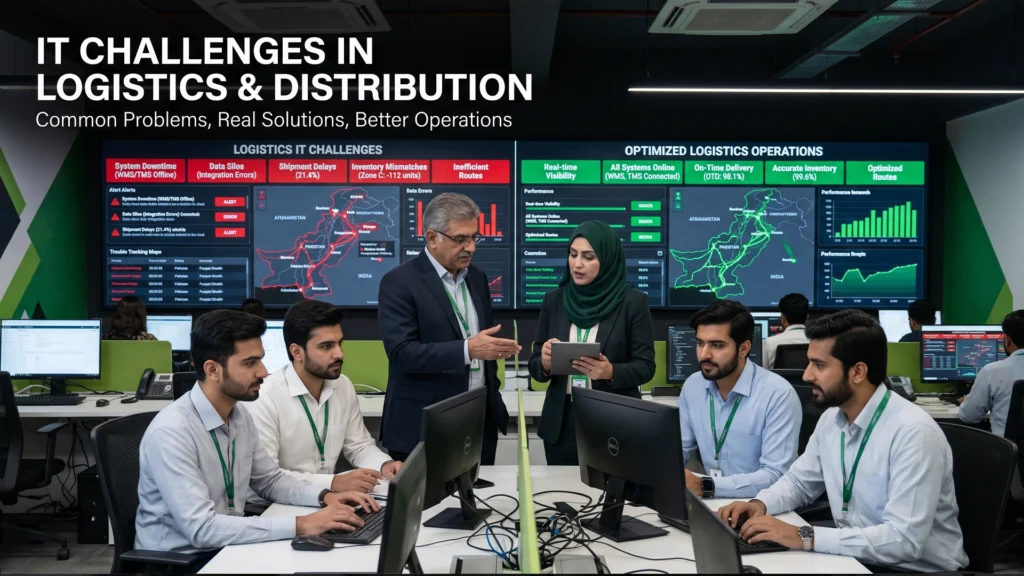
At Helionex, we understand that logistics and distribution companies operate in highly demanding environments where downtime, security risks, and technology limitations can directly impact profitability and customer satisfaction.
Our team works closely with organizations to identify and solve critical IT Challenges in Logistics & Distribution through tailored technology solutions that support operational efficiency, security, and scalability.
Whether you need infrastructure modernization, network monitoring, workforce scaling, cybersecurity support, cloud migration, or system integration assistance, Helionex provides strategic guidance and practical solutions designed around your business goals.
We focus on helping logistics companies create resilient technology environments that support long-term growth while reducing operational risk.
How Can Logistics Companies Future-Proof Their Technology Infrastructure?
Technology will continue to evolve, and logistics organizations that fail to adapt risk falling behind competitors.
Future-proofing begins with building a flexible, scalable, and secure technology foundation. This includes modern infrastructure, cloud-based platforms, integrated systems, strong cybersecurity practices, and a commitment to continuous improvement.
Companies that proactively address IT Challenges in Logistics & Distribution position themselves for greater operational efficiency, improved customer experiences, and sustainable business growth.
The most successful organizations are not those with the most technology—they are the ones that strategically align technology with operational goals and continuously adapt to changing market demands.
Conclusion
Technology has become the backbone of modern logistics and distribution operations. However, organizations that fail to address critical IT Challenges in Logistics & Distribution often face downtime, security risks, poor visibility, and rising operational costs.
By focusing on areas such as system integration, cybersecurity, cloud adoption, automation, scalability, and disaster recovery, businesses can build a more resilient and efficient logistics ecosystem.
The key is not simply adopting new technologies but implementing them strategically. Organizations that prioritize modernization, strengthen infrastructure, and work with experienced technology partners are better positioned to improve performance, reduce risk, and deliver exceptional customer experiences in an increasingly competitive marketplace.
FAQ’s
What are the biggest IT Challenges in Logistics & Distribution?
The most common challenges include cybersecurity threats, system integration issues, lack of real-time visibility, legacy infrastructure, network downtime, and scalability limitations.
How can logistics companies improve supply chain visibility?
Companies can improve visibility through cloud-based platforms, IoT tracking devices, integrated ERP, WMS, and TMS systems, and real-time analytics dashboards.
Why are legacy systems a problem in logistics?
Legacy systems often create performance issues, security vulnerabilities, integration limitations, and higher maintenance costs that hinder operational efficiency.
How does cybersecurity impact logistics operations?
Cybersecurity incidents can disrupt shipments, compromise sensitive data, cause financial losses, and damage customer trust.
Should logistics companies use managed IT services?
Many logistics companies benefit from managed IT services because they provide specialized expertise, proactive monitoring, enhanced security, and scalable support without the cost of building a large internal IT team.