
Before exploring how AI is transforming ERP systems beyond automation, it is important to understand the limitations of traditional ERP automation.Conventional ERP systems automate repetitive and structured processes such as:Invoice processingPayroll managementInventory updatesPurchase order generationFinancial reportingEmployee record managementThese automations follow predefined rules and workflows. While they reduce manual effort, they cannot adapt to changing business …
Before exploring how AI is transforming ERP systems beyond automation, it is important to understand the limitations of traditional ERP automation.
Conventional ERP systems automate repetitive and structured processes such as:
- Invoice processing
- Payroll management
- Inventory updates
- Purchase order generation
- Financial reporting
- Employee record management
These automations follow predefined rules and workflows. While they reduce manual effort, they cannot adapt to changing business conditions or learn from historical data.
For example, a traditional ERP system can automatically reorder inventory when stock levels fall below a specified threshold. However, it cannot predict future demand spikes caused by seasonal trends, market disruptions, or customer behavior changes.
This is where AI introduces a transformative advantage.
How AI is Transforming ERP Systems Beyond Automation
Enterprise Resource Planning (ERP) systems have long been the foundation of business operations. They help organizations manage critical functions such as finance, procurement, inventory, human resources, and supply chain management from a centralized platform. Traditionally, ERP systems were designed to automate repetitive tasks, standardize workflows, and improve operational efficiency.
While automation remains an important capability, modern businesses require more than automated processes. AI Transforming ERP Systems Beyond Automation is becoming a key focus as organizations face increasingly complex challenges, including changing customer expectations, global supply chain disruptions, rising operational costs, and growing volumes of business data. In this environment, simply automating tasks is no longer enough to maintain a competitive advantage. AI-powered ERP solutions enable businesses to analyze data, predict trends, optimize workflows, and make smarter decisions beyond traditional automation.
This is where Artificial Intelligence (AI) is reshaping the role of ERP systems. Rather than functioning solely as systems that process transactions and generate reports, modern ERP platforms are becoming intelligent business tools capable of learning from data, predicting outcomes, identifying risks, and supporting strategic decision-making.
Understanding how AI is transforming ERP systems beyond automation is essential for organizations that want to improve efficiency, increase agility, and make more informed business decisions. AI-powered ERP solutions are helping businesses move from reactive operations to proactive management, creating opportunities for innovation, growth, and long-term success.
What Does AI in ERP Mean Beyond Traditional Automation?
Traditional ERP automation is built around predefined rules. For example, an ERP system can automatically generate purchase orders when inventory falls below a specified threshold or process invoices according to established workflows. These capabilities reduce manual effort and improve consistency, but they are inherently limited because they only perform tasks they have been programmed to execute.
Artificial Intelligence introduces a new level of intelligence to ERP systems. Instead of simply following rules, AI analyzes historical and real-time data to uncover patterns, generate insights, and make recommendations. This allows organizations to anticipate future events rather than merely respond to them.
Consider inventory management as a practical example of AI Transforming ERP Systems Beyond Automation. A traditional ERP system may notify managers when stock levels are low, but an AI-powered ERP platform goes much further. It can analyze historical sales data, forecast future demand, identify seasonal buying patterns, predict potential supply chain disruptions, and recommend optimal inventory levels before shortages occur. This proactive approach helps businesses reduce waste, improve stock availability, and make smarter inventory decisions.
The key difference is that automation focuses on executing tasks, while AI focuses on improving decisions. As a result, ERP systems are evolving from operational tools into strategic assets that help organizations navigate uncertainty and identify new opportunities.
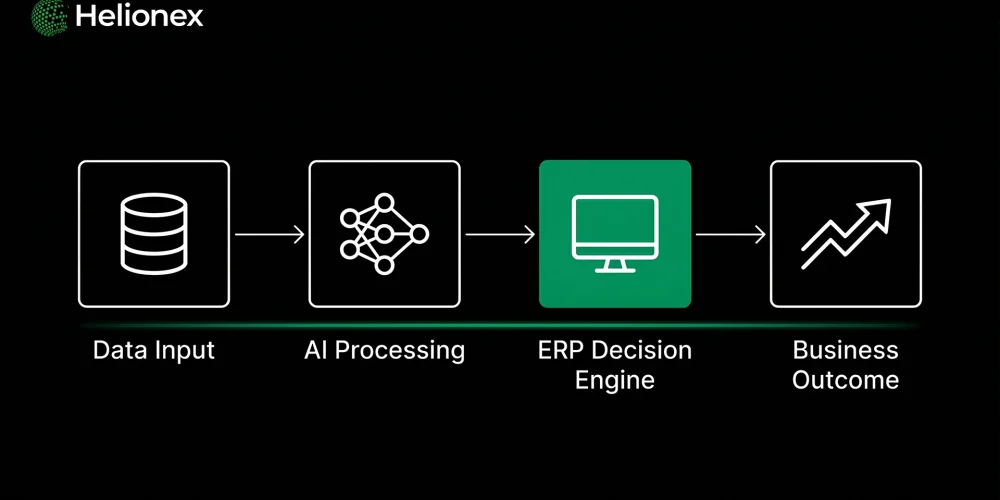
AI in ERP goes beyond automation by enabling systems to analyze data, predict outcomes, identify patterns, recommend actions, and support decision-making in real time. Instead of simply executing predefined tasks, AI-powered ERP systems help organizations become more proactive, agile, and data-driven.
How Is AI Transforming ERP Systems Beyond Automation?
One of the most significant changes AI brings to ERP systems is the ability to turn data into actionable intelligence. Businesses generate enormous amounts of information every day, but extracting meaningful insights from that data can be challenging. AI helps bridge that gap.
Modern ERP systems equipped with AI can analyze business performance continuously, identify emerging trends, detect anomalies, and forecast future outcomes. Rather than relying solely on historical reports, decision-makers gain access to predictive insights that help them act before problems arise.
For example, if sales begin to decline in a particular region, a traditional ERP system may simply highlight the drop in performance. However, an AI-powered ERP solution transforms this process by analyzing the reasons behind the decline, identifying hidden patterns, predicting potential revenue impact, and recommending the right corrective actions.
Instead of only reporting what has already happened, AI enables businesses to understand why it happened and what steps they can take next. This allows organizations to respond faster, improve operational strategies, and make smarter, data-driven decisions.
AI also improves over time. Through machine learning, ERP systems continuously refine their models as new information becomes available, increasing the accuracy of forecasts and recommendations. This ongoing learning capability enables businesses to adapt more effectively to changing market conditions.
Which AI Technologies Are Driving Modern ERP Systems?
Several advanced technologies work together to make intelligent ERP systems possible. These technologies enable ERP platforms to move beyond automation and deliver greater business value.
Machine Learning (ML)
Machine Learning allows ERP systems to learn from historical data and improve performance over time. By analyzing patterns and trends, machine learning models can predict future outcomes and recommend actions that support business objectives.
Common applications include:
- Demand forecasting
- Inventory optimization
- Sales prediction
- Customer behavior analysis
- Fraud detection
As additional data becomes available, machine learning models become increasingly accurate, helping organizations make more confident decisions.
Predictive Analytics
Predictive analytics uses historical and real-time data to forecast future events. Rather than focusing exclusively on past performance, businesses can gain visibility into potential opportunities and risks.
Organizations use predictive analytics to:
- Forecast customer demand
- Anticipate supply chain disruptions
- Improve financial planning
- Optimize resource allocation
- Reduce operational risks
By identifying trends before they become problems, businesses can take proactive measures to improve outcomes.
Natural Language Processing (NLP)
Natural Language Processing enables ERP systems to understand and respond to human language. This technology simplifies user interactions and improves accessibility.
Examples include:
- AI-powered virtual assistants
- Conversational reporting
- Intelligent search functions
- Automated document processing
- Voice-enabled ERP interfaces
NLP helps employees access information faster and reduces the learning curve associated with complex ERP systems.
Generative AI
Generative AI is one of the latest innovations transforming ERP platforms beyond traditional automation. It helps users work more efficiently by creating content, summarizing complex information, analyzing available data, and generating intelligent recommendations. By bringing conversational AI capabilities into ERP systems, businesses can access insights faster, simplify decision-making, and improve overall productivity.
Common use cases include:
- Executive report generation
- Financial summary creation
- Procurement recommendations
- Customer communication drafts
- Business performance insights
By reducing the time spent on administrative tasks, generative AI allows employees to focus on higher-value strategic activities.
What Challenges Should Businesses Expect When Implementing AI in ERP Systems?
While the benefits of AI-powered ERP systems are substantial, successful implementation requires careful planning and realistic expectations. One of the most common misconceptions is that AI can be added to an ERP environment without addressing underlying process and data issues.
In reality, the effectiveness of AI depends heavily on the quality, consistency, and accessibility of business data. Organizations with fragmented systems, outdated processes, or poor data governance may struggle to achieve meaningful results from AI initiatives.
Another challenge is organizational change management. Employees who are accustomed to traditional workflows may be hesitant to trust AI-generated recommendations or adopt new ways of working. Businesses must invest in training, communication, and stakeholder engagement to ensure successful adoption.
Technical challenges can also emerge when implementing AI Transforming ERP Systems Beyond Automation, especially when integrating AI capabilities with legacy ERP platforms that were not originally built to support advanced analytics, machine learning, or intelligent automation.
Organizations must also carefully manage security, compliance, and data governance requirements, particularly in highly regulated industries where sensitive business information is involved.
Businesses that adopt a strategic AI implementation approach, define clear objectives, and follow a structured roadmap are more likely to achieve sustainable results, improve operational efficiency, and maximize their return on investment.
Is Your ERP System Ready for AI Adoption?
Before investing in advanced AI capabilities, organizations should evaluate whether their existing ERP environment is prepared to support intelligent technologies. AI delivers the greatest value when it operates on clean, accurate, and well-structured data.
If business information is inconsistent, incomplete, or spread across multiple disconnected systems, AI-generated insights may be unreliable. As a result, data readiness is often one of the most important factors determining the success of an AI-powered ERP initiative.
Businesses should also assess their technological infrastructure, process maturity, and organizational readiness. Cloud-based ERP platforms generally provide greater flexibility and scalability for AI integration, while older on-premises systems may require modernization before advanced capabilities can be implemented effectively. Beyond technology, leadership support and cross-functional collaboration play a critical role in successful adoption.
Organizations that have standardized processes, strong data governance practices, and a clear digital transformation strategy are typically in a better position to leverage AI successfully. Conducting a comprehensive readiness assessment before implementation helps reduce risks, identify potential obstacles, and create a more effective deployment strategy.
Businesses looking to modernize their ERP environment can explore Odoo ERP implementation services to create a flexible and scalable foundation for AI-driven operations. A properly implemented ERP system helps organizations unify business processes, improve data accuracy, and prepare their workflows for future AI integration.
With the right ERP implementation approach, companies can streamline finance, inventory, CRM, and operational processes while building a stronger foundation for intelligent automation, predictive analytics, and data-driven decision-making.
What Does the Future of AI-Powered ERP Systems Look Like?
The future of ERP is becoming increasingly intelligent, predictive, and autonomous. As AI technologies continue to evolve, ERP systems are expected to move beyond providing recommendations and begin actively optimizing business operations in real time.
Future platforms will be capable of continuously monitoring performance, identifying inefficiencies, and suggesting corrective actions with minimal human intervention. This shift will allow organizations to make faster decisions while improving operational agility and responsiveness.
Generative AI is expected to play a major role in the next generation of ERP systems, transforming how businesses interact with enterprise platforms.
Instead of navigating complex dashboards or reports, business users will increasingly engage with ERP systems through conversational interfaces. This will allow them to ask complex, data-driven questions in natural language and receive instant, context-aware insights and recommendations.
As a result, decision-making will become faster, more intuitive, and far more accessible across all levels of an organization.
Instead of manually building reports or analyzing large datasets, executives and managers will be able to access actionable insights through simple natural-language queries. Additionally, AI-powered ERP solutions will continue to improve forecasting, resource planning, financial management, and supply chain optimization.
As organizations generate larger volumes of data, intelligent ERP systems will become essential tools for transforming that information into strategic value. Businesses that begin investing in AI capabilities today will be better positioned to adapt to future market demands and maintain a competitive advantage in an increasingly data-driven economy.
Enterprises adopting advanced digital transformation strategies can benefit from Microsoft Dynamics 365 Finance & Operations implementation services to optimize financial management, supply chain processes, and enterprise operations. A modern ERP platform provides the structured data environment required for AI-powered insights and automation.
By combining ERP implementation with AI capabilities, organizations can improve operational visibility, enhance forecasting accuracy, and support smarter decision-making across departments.
How Does AI Improve Financial Management in ERP Systems?
Finance departments have traditionally relied on ERP systems to record transactions, manage budgets, and generate reports. While these functions remain important, AI significantly expands the value ERP systems provide to finance teams.
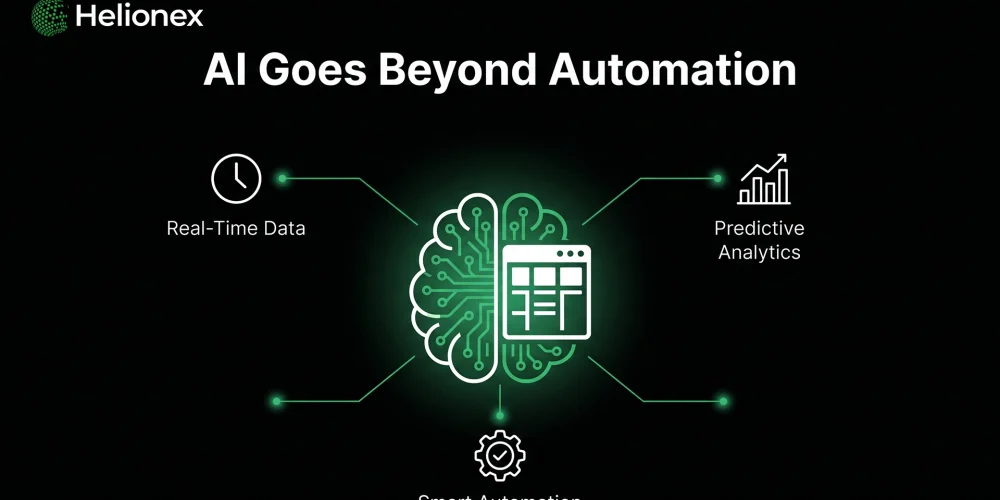
AI-powered ERP solutions can analyze financial data continuously, identify unusual patterns, and detect potential risks before they become major issues. Rather than waiting for month-end reports, finance leaders receive real-time insights that support faster and more informed decision-making.
AI also significantly enhances forecasting capabilities within modern ERP systems. By analyzing historical performance, economic trends, customer behavior, and operational data, intelligent ERP platforms can generate far more accurate financial projections.
This improved accuracy enables organizations to strengthen budgeting processes, optimize cash flow management, and make more confident strategic planning decisions based on reliable, data-driven insights.
Additionally, AI can assist with fraud detection, compliance monitoring, and anomaly identification. By automatically flagging suspicious transactions or unusual spending patterns, organizations can reduce risk while improving financial oversight.
The result is a finance function that is not only more efficient but also more strategic and proactive.
How Is AI Revolutionizing Supply Chain Management Through ERP?
Supply chain management is one of the areas where the impact of AI is most visible. Traditional ERP systems provide valuable visibility into inventory levels, supplier performance, and logistics operations. However, they often struggle to anticipate disruptions before they occur.
AI changes this by analyzing large volumes of data from multiple sources, including supplier networks, transportation systems, market trends, and customer demand patterns.
With AI-powered ERP systems, organizations can:
- Predict inventory shortages
- Forecast demand fluctuations
- Optimize warehouse operations
- Improve procurement planning
- Reduce supply chain risks
- Enhance delivery performance
Instead of reacting to disruptions after they occur, businesses can proactively address potential challenges and maintain operational continuity.
This predictive capability has become increasingly valuable in today’s global business environment, where supply chain disruptions, market volatility, and shifting customer demand can significantly impact both revenue and customer satisfaction. By anticipating risks in advance, AI-enabled ERP systems help organizations respond proactively rather than reactively, ensuring greater stability and continuity in operations.