When optimising operational costs, small and medium-sized enterprises (SMEs) face a crucial decision: should they hire in-house teams or outsource certain functions? This decision has a significant impact on productivity, scalability, and long-term growth. In this guide, we'll break down the costs of both models, in-house vs outsourcing, and provide you with a detailed decision …
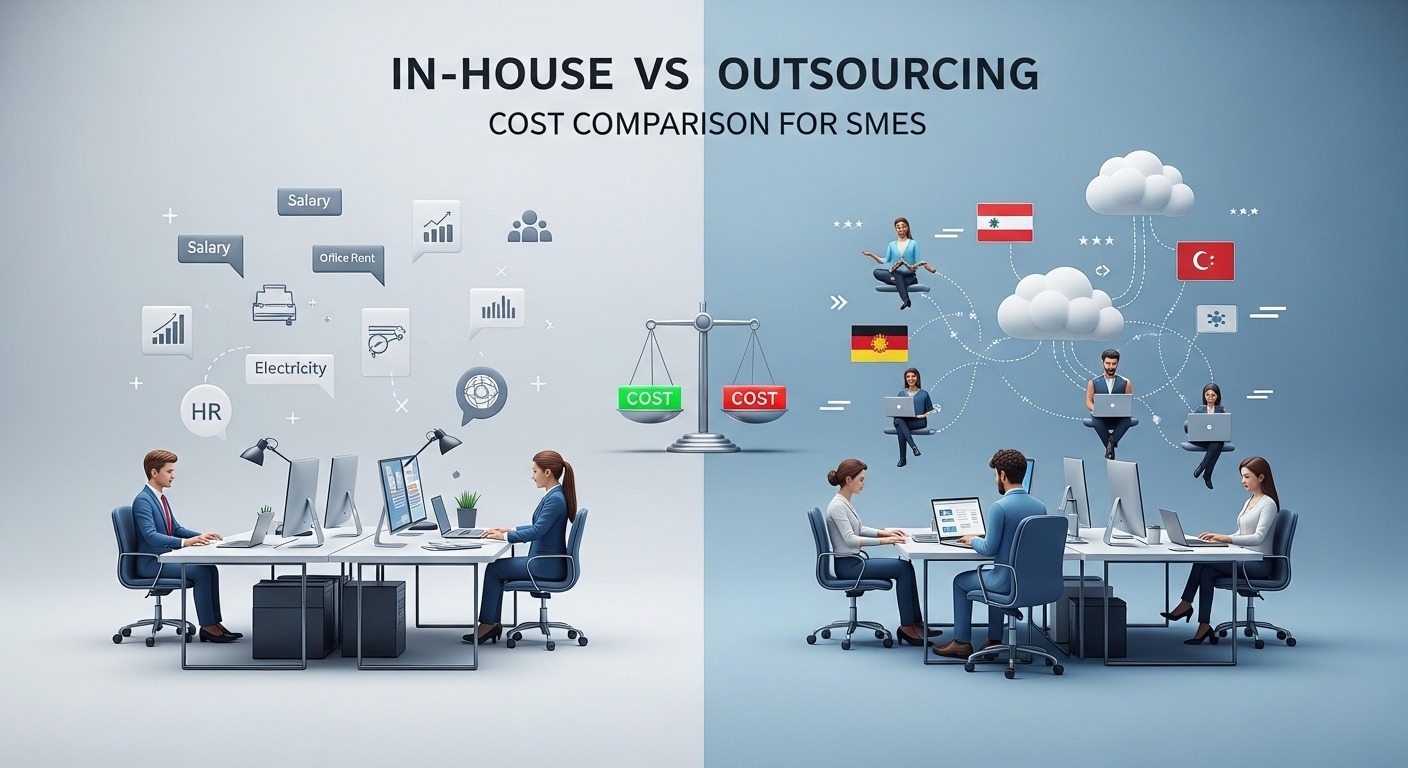
In-House vs Outsourcing: Definitions
- In-House: The process of building an internal team to manage specific business functions, such as HR, IT, or customer support.
- Outsourcing: Hiring external service providers or vendors to manage business functions that can be done more cost-effectively or efficiently outside the organisation.
What’s the Real Cost of In-House vs. Outsourcing?
On the other hand, outsourcing offers a more flexible and cost-efficient solution, particularly when businesses need specialised skills or wish to scale quickly without heavy investments in infrastructure. However, outsourcing carries its own set of costs, including vendor fees. contractual obligations, and potential hidden costs like language barriers, cultural mismatches, or unexpected service charges.
To accurately assess the real cost, SMEs must not only compare upfront costs but also consider long-term impacts such as quality control, scalability, and risk management. Ultimately, the best choice depends on the SME’s specific needs, industry, and growth goals.
Breakdown of In-House Costs
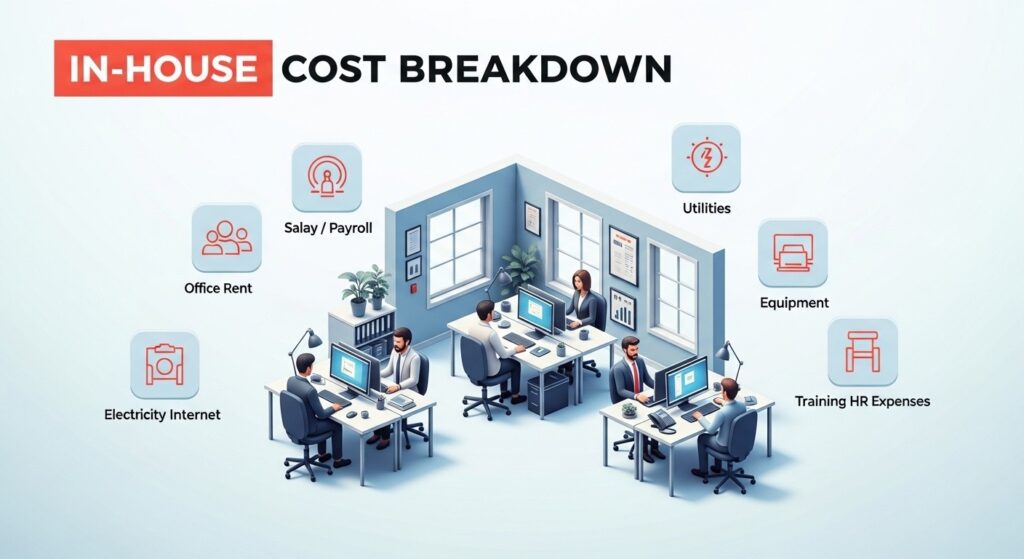
Additionally, there are training and onboarding costs, which involve recruitment fees, employee training programs, and integration into the company culture. Infrastructure costs include office space, equipment, software, and utilities necessary to support internal teams.
Salaries and Benefits
In-house teams require competitive salaries, health insurance, retirement benefits, and bonuses, which can become significant expenses over time.
Training and Onboarding
The recruitment and training process is costly, especially when scaling the business. These include recruitment agency fees, training programs, and administrative overhead.
Infrastructure
Employee Turnover
Employee turnover is a hidden cost. When employees leave, the costs of recruiting, training, and reorienting new hires can have a significant impact on both time and money.
Breakdown of Outsourcing Costs
These fees can vary depending on the complexity of the task and the level of expertise required. Additionally, contractual obligations often come with hidden costs, such as renewal terms, penalties for early termination, and performance-based clauses.
Outsourcing Fees
Outsourcing typically involves a base fee that can vary depending on the complexity and scope of the services. Fees can range from a fixed price per task or an hourly rate to a performance-based fee.
Contractual Obligations
Hidden Fees
Additional costs may arise from unexpected services, administrative tasks, or vendor issues, such as language or cultural barriers.
Vendor Lock-In Risks
Long-term contracts can limit flexibility, leaving businesses with fewer options to change vendors if the service isn’t up to par.
What Are the Main Risks of Outsourcing for SMEs?
Additionally, SMEs face the risk of hidden costs, such as unexpected service charges, penalties in contracts, or vendor fees that may not be clear at the outset. Vendor lock-in is another risk, where long-term contracts make it challenging to change service providers if the outsourced team fails to meet expectations. Finally, data security is a major consideration; SMEs must ensure that their outsourcing partners comply with data protection laws to safeguard sensitive information. Thus, SMEs must carefully vet outsourcing vendors to minimise these risks.
Total Cost of Ownership (TCO) Comparison
While outsourcing can save on immediate costs, it introduces potential hidden fees, such as vendor charges, service contracts, and long-term contract obligations. SMEs should consider both the direct and indirect costs to assess which model provides the best long-term value for their needs.
Here’s a direct comparison of the annual costs for in-house vs outsourcing in different business functions:
Function | In-House Costs | Outsourcing Costs |
IT | $75,000/year | $50,000/year |
HR | $65,000/year | $45,000/year |
Customer Support | $50,000/year | $35,000/year |
When Should SMEs Choose In-House Over Outsourcing?
In-House is Better When:
New Addition:
- Direct Control Over Quality or Confidential Information
If a function requires strict oversight or access to sensitive company data, an in-house team may be more appropriate. - Sufficient Infrastructure and Resources
If the company has the infrastructure and resources to support an internal team, it may be more cost-effective to handle the work in-house. - Consistency and Cultural Fit are Paramount
In industries that require a high level of alignment with the company’s culture, an in-house team is better suited to maintain consistency.
When Is Outsourcing the Smarter Choice for SMEs?
Outsourcing is often the smarter choice for SMEs when cost-efficiency is a priority, and the company needs specialised expertise without significant upfront investment.
Outsourcing is Better When:
New Addition:
- Cost Efficiency with Minimal Upfront Investment
- Repetitive or Specialised Work
- Scalability Without Increasing Overhead
Helionex’s Business Process Outsourcing (BPO) services help SMEs reduce operational burden by managing time‑consuming business functions like customer support, HR administration, and back‑office tasks with industry‑proven efficiency and cost control. This allows small and medium companies to focus on strategic growth while expert teams handle repetitive but essential processes.
What Are the Advantages of Outsourcing for Small Businesses?
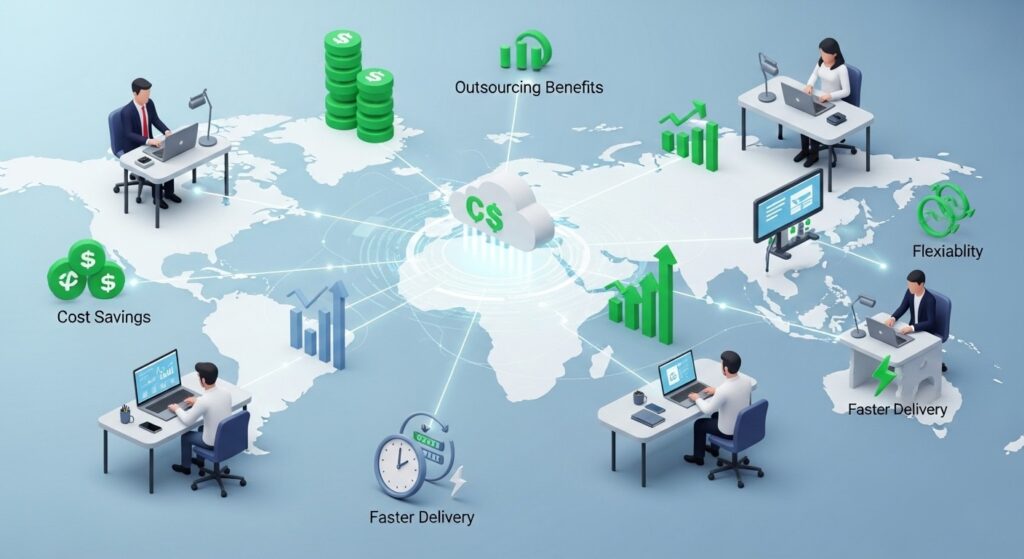
Outsourcing provides numerous advantages for small businesses, particularly in terms of cost efficiency and scalability. One of the main benefits is cost savings, as outsourcing eliminates the need for significant investments in infrastructure, employee salaries, and training. This is especially valuable for SMEs that need specialised expertise in areas such as IT, customer service, or marketing but do not have the budget to hire full-time professionals.
Helionex offers Dedicated ERP & IT Teams that help SMEs manage complex technology needs without the burden of building an in‑house IT department. These teams provide expertise in ERP implementation, system integration, support, and maintenance — empowering businesses with technology that scales.
Hidden Costs and Mistakes to Avoid
In outsourcing, hidden costs often arise from unexpected service fees, contract renewals, or additional charges for services not initially included in the agreement. Another common mistake is failing to account for quality control issues or vendor communication delays, which can affect service consistency.
Helionex’s Workforce Scaling & Management solutions help SMEs scale their operational teams quickly and effectively, whether by augmenting internal capacity or managing flexible remote staffing. This service is ideal for growing companies that need to balance workload surges without long‑term HR commitments or overhead costs.
Case Example: Real-World Cost Comparison for SMEs
Imagine a mid-sized tech company that has to decide between outsourcing customer support or handling it in-house. The company opts to outsource, saving $20,000 annually on operational costs. However, they face challenges in maintaining consistent service quality and managing communication effectively. Despite these challenges, outsourcing was the more cost-effective decision in the long run.
Why You Should Choose Helionex as Your Partner
Our team is highly experienced in delivering top-notch IT, customer support, and HR solutions, making us a reliable partner for a variety of business needs. We prioritise clear communication and customised service to ensure that your business’s unique needs are met with precision and care.
Conclusion
In conclusion, SMEs must carefully weigh the cost-benefit of in-house versus outsourcing models. While in-house teams offer more control and cultural alignment, they come with higher fixed costs, including salaries, benefits, and infrastructure.
Outsourcing, on the other hand, offers cost savings, scalability, and access to specialised expertise, but it also introduces risks such as quality control issues, communication delays, and potential vendor lock-in. By considering these factors carefully and choosing the right outsourcing partner like Helionex, SMEs can enjoy the benefits of outsourcing without sacrificing service quality or long-term growth.
Helionex is committed to providing a seamless, cost-effective outsourcing experience that supports your business goals while mitigating the inherent risks of outsourcing. Whether you’re looking to enhance customer support, improve IT services, or optimise business operations, Helionex is the trusted partner to help your SME succeed.
FAQs
1. What are the hidden costs of in-house teams?
Hidden costs of in-house teams include employee turnover, training delays, and significant management overhead.
2. How do I calculate the cost of outsourcing?
3. What is the ROI for outsourcing customer support?
Outsourcing customer support offers significant savings on staffing and infrastructure, but the ROI depends on choosing the right vendor and managing service quality.
4. When is it better to keep a function in-house?
Keeping a function in-house is ideal when it requires direct control over quality or sensitive data or when company culture alignment is essential.
5. What are the risks of outsourcing?
The main risks include unexpected costs, quality control issues, communication delays, and vendor lock-in.
6. How do I calculate the total cost of ownership for in-house staff?
Total cost includes salaries, benefits, training, office space, and any turnover-related costs.