Retail businesses today operate in a fast-moving and highly competitive environment where efficiency, customer experience, inventory accuracy, and operational visibility can directly impact profitability.Whether you manage a small retail shop, an e-commerce brand, or a multi-location retail chain, choosing the best ERP software for retail businesses can help you streamline operations, improve decision-making, and scale …
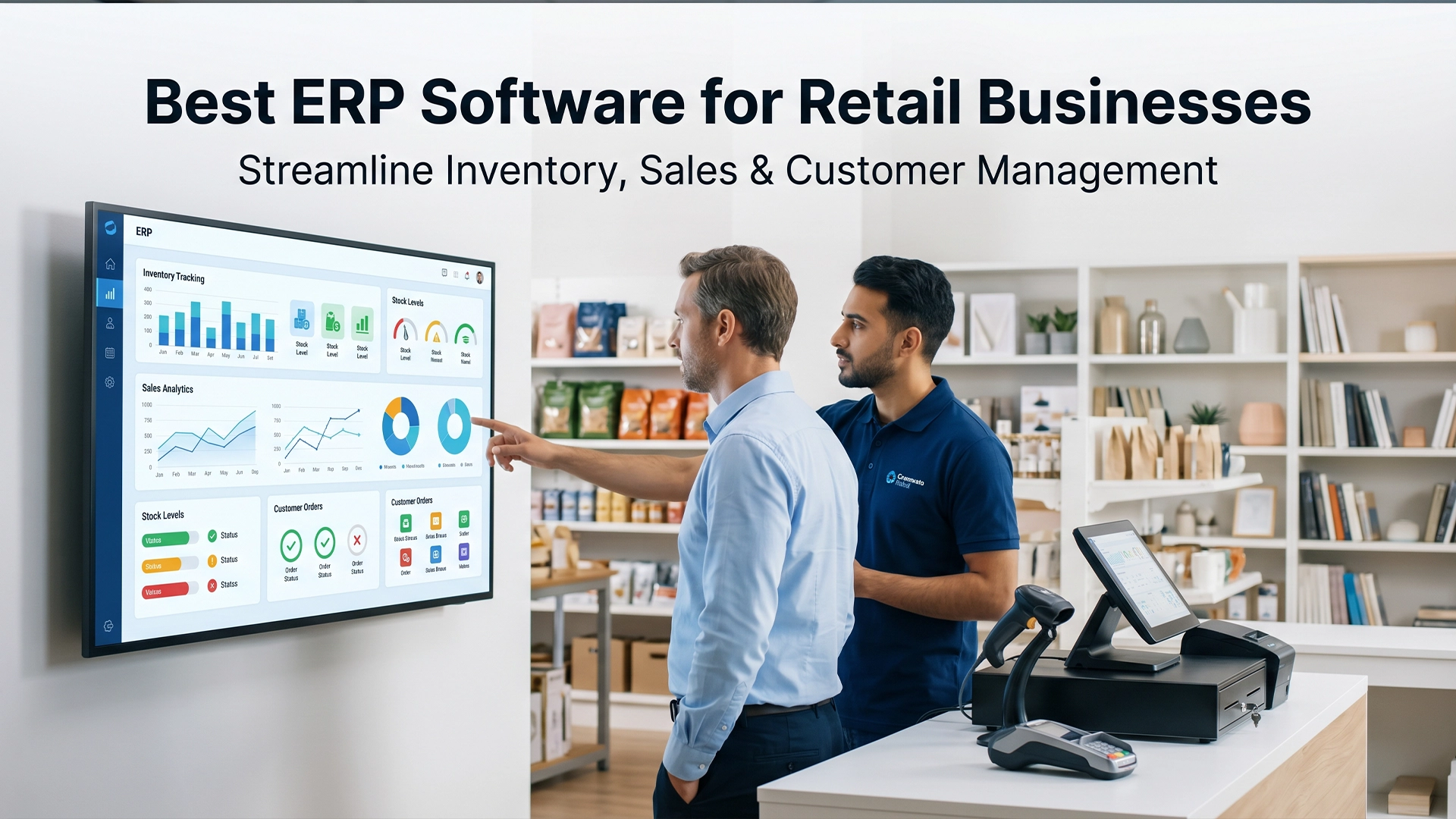
Retail businesses today operate in a fast-moving and highly competitive environment where efficiency, customer experience, inventory accuracy, and operational visibility can directly impact profitability.
Whether you manage a small retail shop, an e-commerce brand, or a multi-location retail chain, choosing the best ERP software for retail businesses can help you streamline operations, improve decision-making, and scale more effectively.
Modern retailers can no longer depend on disconnected spreadsheets, outdated inventory tools, or standalone software systems to manage day-to-day operations. As customer expectations continue to grow and omnichannel retail becomes the standard.
Businesses need centralised platforms that connect inventory management, procurement, accounting, ecommerce, warehouse operations, reporting, customer data, and point-of-sale systems into a unified ecosystem.
This is where retail ERP software becomes essential.
The best ERP software for retail businesses helps retailers simplify workflows, reduce manual errors, improve reporting accuracy, automate repetitive processes, and gain complete visibility into their operations. Instead of juggling multiple systems, retailers can manage everything from a single centralised platform designed to support long-term growth and operational efficiency.
In this comprehensive guide, we’ll explore the best ERP software for retail businesses, compare leading ERP platforms, discuss key retail ERP features, explain implementation considerations, and help you determine which ERP solution aligns best with your business goals and operational requirements.
What Is Retail ERP Software?
Retail ERP software is an enterprise resource planning system specifically designed to help retailers manage core business operations from a centralized platform. It connects various departments and workflows into one integrated system, allowing retailers to manage operations more efficiently and make data-driven decisions in real time.
Instead of relying on separate tools for inventory management, accounting, procurement, sales tracking, ecommerce, and reporting, retailers can use a single ERP platform to unify all operational processes.
The best ERP software for retail businesses enables companies to automate workflows, improve operational visibility, optimize inventory management, reduce inefficiencies, and support sustainable business growth.
Core Functions of Retail ERP Software
Retail ERP systems commonly include:
- Inventory management
- Point-of-sale (POS) integration
- Ecommerce integration
- Supply chain management
- Warehouse management
- Financial management
- Procurement management
- Customer relationship management (CRM)
- Reporting and analytics
- Order management
- Vendor management
- Multi-store retail management
By implementing ERP software, retail businesses gain better operational control, improved inventory accuracy, faster reporting capabilities, and a more streamlined customer experience.
Why Retail Businesses Need ERP Software
Retail operations involve multiple moving parts that must work together seamlessly. Without a centralized ERP system, businesses often struggle with operational inefficiencies, disconnected systems, inaccurate reporting, and inventory challenges.
Some of the most common retail challenges include:
- Inventory inaccuracies
- Overstocking and stock shortages
- Delayed financial reporting
- Poor supply chain visibility
- Disconnected ecommerce and POS systems
- Manual procurement processes
- Limited forecasting capabilities
- Difficulty managing multiple store locations
- Operational inefficiencies
- Inconsistent customer data
The best ERP software for retail businesses helps eliminate these challenges by centralizing data, automating workflows, improving visibility, and streamlining retail operations.
Benefits of Retail ERP Software
Real-Time Inventory Visibility
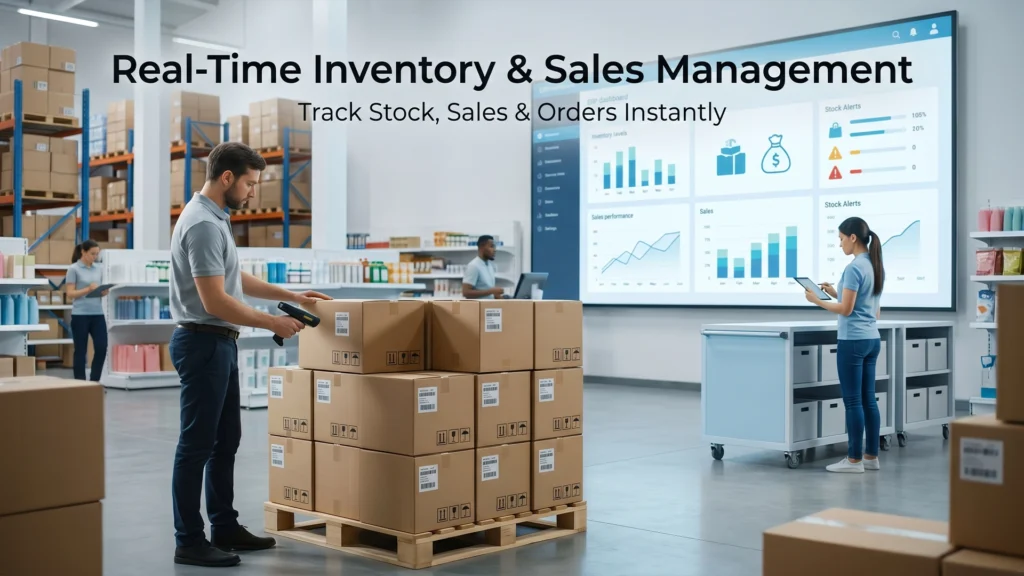
Retail ERP systems provide centralized inventory tracking across warehouses, retail stores, and ecommerce channels. This helps retailers avoid stock shortages, reduce overstocking, and improve demand forecasting.
Improved Operational Efficiency
ERP software automates repetitive tasks such as inventory updates, procurement workflows, reporting, and order processing, allowing teams to focus on higher-value business activities.
Better Customer Experience
Integrated ERP systems improve order fulfillment, product availability, customer communication, and omnichannel service experiences.
Omnichannel Retail Support
Modern ERP platforms synchronize ecommerce stores, POS systems, online marketplaces, warehouses, and customer data to create a seamless omnichannel retail experience.
Stronger Financial Management
ERP systems centralize accounting, budgeting, forecasting, tax management, and financial reporting into one unified platform.
Business Scalability
The best ERP software for retail businesses supports expansion, new store locations, larger inventory catalogs, and increased transaction volumes without operational disruption.
Key Features to Look for in the Best ERP Software for Retail Businesses
Choosing the right ERP platform requires understanding which features are most important for retail operations. Not every ERP solution is designed specifically for retail businesses, so evaluating functionality carefully is essential.
Inventory Management
Inventory management is one of the most critical ERP capabilities for retailers. Strong inventory functionality improves stock accuracy, forecasting, and warehouse efficiency.
Look for features such as:
- Real-time inventory tracking
- SKU management
- Barcode scanning
- Automated stock updates
- Inventory forecasting
- Multi-warehouse support
- Batch and serial tracking
- Low-stock alerts
- Demand forecasting
POS Integration
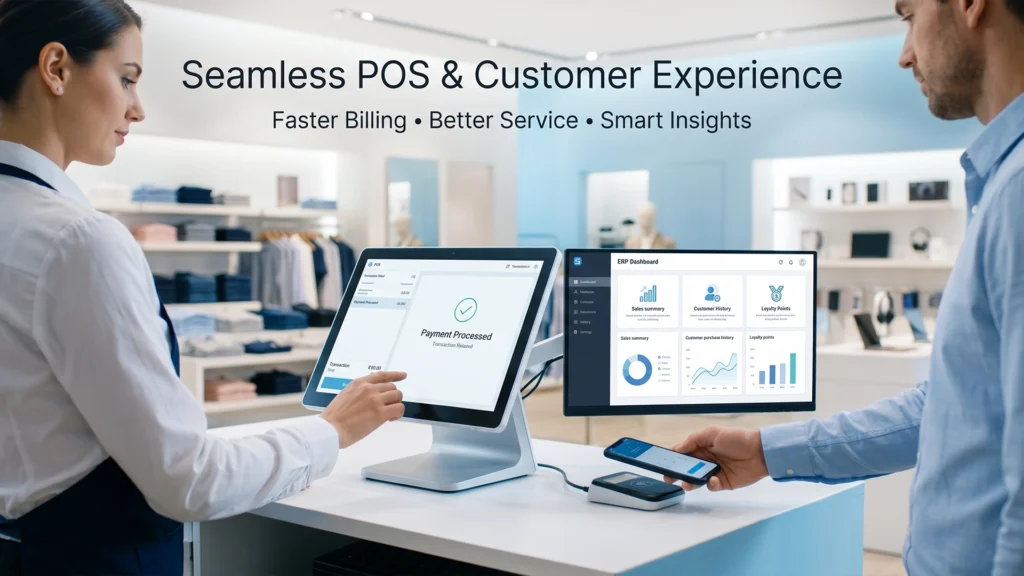
The best ERP software for retail businesses should integrate seamlessly with POS systems to ensure consistent sales and inventory data across all channels.
Benefits of POS integration include:
- Real-time sales synchronization
- Faster transaction processing
- Improved inventory accuracy
- Unified operational reporting
- Better customer data management
Omnichannel Commerce Integration
Retailers selling across multiple sales channels need ERP systems capable of synchronizing:
- Ecommerce stores
- Physical retail outlets
- Online marketplaces
- Warehouse inventory
- Mobile commerce platforms
This helps ensure consistent inventory visibility and customer experiences across every sales channel.
Financial Management
Strong ERP platforms typically include:
- General ledger
- Accounts payable
- Accounts receivable
- Budget forecasting
- Tax management
- Financial reporting
- Expense tracking
Centralized financial management improves reporting accuracy and supports better business decision-making.
Procurement and Supply Chain Management
Retail ERP software should support:
- Purchase order automation
- Vendor management
- Supplier tracking
- Procurement workflows
- Shipment tracking
- Supply chain visibility
Efficient procurement processes help retailers reduce delays, improve supplier relationships, and optimize inventory planning.
Reporting and Analytics
The best ERP software for retail businesses should provide advanced analytics and reporting capabilities, including:
- Real-time dashboards
- Retail analytics
- Sales reporting
- Inventory forecasting
- Demand forecasting
- Profitability analysis
- Business intelligence reporting
Access to accurate operational data helps retailers make smarter decisions and improve overall performance.
Scalability and Flexibility
Retail businesses should choose ERP systems capable of supporting future growth, including:
- Business expansion
- Multiple store locations
- Increased transaction volumes
- Additional integrations
- Larger product catalogs
A scalable ERP system prevents the need for costly migrations as the business grows.
Best ERP Software for Retail Businesses in 2026
Below are some of the top ERP systems for retail businesses based on functionality, scalability, integration capabilities, reporting strength, and operational flexibility.
- Oracle NetSuite
Oracle NetSuite is one of the most widely used cloud ERP platforms for retail businesses. It offers comprehensive inventory management, financial management, ecommerce integration, and omnichannel retail capabilities.
Best For
- Mid-sized retailers
- Ecommerce businesses
- Multi-location retail companies
- Growing retail brands
Key Features
- Cloud ERP deployment
- Inventory management
- Omnichannel commerce support
- Warehouse management
- Procurement automation
- Ecommerce integration
- Real-time reporting
- Financial management
Advantages
- Highly scalable
- Strong reporting capabilities
- Excellent inventory visibility
- Large integration ecosystem
Limitations
- Higher implementation costs
- Complex setup for smaller businesses
- Requires onboarding and training
- SAP Business One
SAP Business One is a reliable ERP platform for small and medium-sized retail businesses seeking better operational visibility and financial control.
Best For
- Small retail businesses
- Mid-sized retailers
- Businesses requiring advanced accounting functionality
Key Features
- Inventory tracking
- Financial reporting
- Procurement management
- CRM functionality
- Sales analytics
- Retail reporting
Advantages
- Strong financial management
- Reliable reporting capabilities
- Good operational visibility
- Scalable infrastructure
Limitations
- Complex user interface
- Longer implementation timeline
- Customization may require specialists
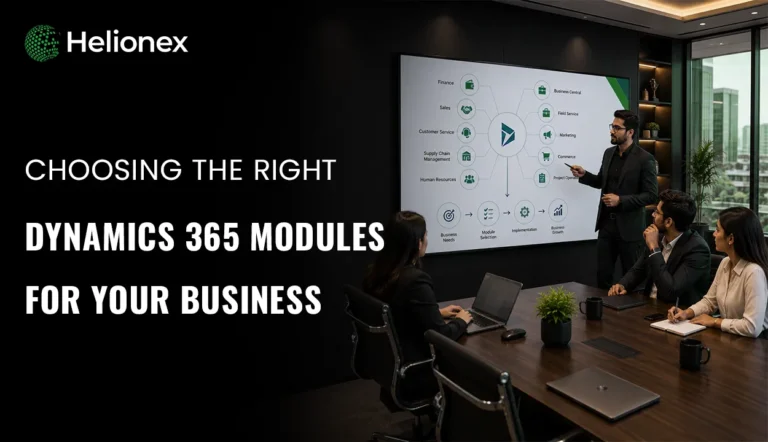
- Microsoft Dynamics 365
Microsoft Dynamics 365 combines ERP and CRM functionality into one powerful business platform. It is especially suitable for retailers already using Microsoft products and seeking omnichannel operational support.
Many retailers choosing Microsoft Dynamics 365 also require expert implementation, integration, and customization support to fully optimize their operations. Explore Helionex’s Microsoft Dynamics 365 implementation services to streamline deployment, improve operational visibility, and support long-term retail scalability.
Best For
- Omnichannel retailers
- Enterprise retail businesses
- Retailers using Microsoft ecosystems
Key Features
- AI-driven analytics
- Inventory management
- Retail commerce support
- Financial management
- Cloud deployment
- Customer insights
Advantages
- Strong Microsoft ecosystem integration
- Advanced analytics and reporting
- Flexible deployment options
- Scalable infrastructure
Limitations
- Can become expensive
- Requires detailed implementation planning
- Steeper learning curve for teams
- Acumatica Retail ERP
Acumatica is known for its flexibility, usability, and cloud-based ERP capabilities for growing retail businesses.
Best For
- Mid-market retailers
- Ecommerce-focused businesses
- Growing retail operations
Key Features
- Inventory management
- Ecommerce integration
- Warehouse management
- Financial reporting
- Business dashboards
Advantages
- Flexible pricing model
- User-friendly interface
- Strong cloud infrastructure
- Good integration support
Limitations
- Smaller ecosystem than larger ERP vendors
- Limited advanced enterprise functionality
- Infor Retail ERP
Infor delivers enterprise-grade ERP functionality designed for complex retail operations and large retail chains.
Best For
- Enterprise retailers
- Retail chains
- Businesses with advanced supply chain requirements
Key Features
- Supply chain management
- Demand forecasting
- AI-powered analytics
- Inventory optimization
- Procurement automation
Advantages
- Advanced enterprise functionality
- Strong analytics capabilities
- Excellent supply chain visibility
Limitations
- Higher implementation complexity
- Enterprise-level pricing
ERP Comparison Table
ERP Platform | Best For | Deployment | Main Strength | Complexity |
Oracle NetSuite | Growing retailers | Cloud | Scalability | Medium-High |
SAP Business One | SMB retailers | Cloud/On-Premise | Financial management | Medium |
Microsoft Dynamics 365 | Omnichannel retail | Cloud | Ecosystem integration | High |
Acumatica | Mid-market retail | Cloud | Flexibility | Medium |
Infor Retail ERP | Enterprise retail | Cloud | Supply chain visibility | High |
How to Choose the Best ERP Software for Retail Businesses
Selecting the best ERP software for retail businesses requires evaluating operational needs, integrations, scalability, implementation complexity, and long-term business goals. The right ERP platform should not only solve your current operational challenges but also support future growth, omnichannel expansion, and evolving customer expectations.
Retail businesses should focus on selecting ERP software that aligns with their inventory complexity, sales channels, reporting requirements, operational workflows, and scalability objectives.
Retail businesses looking for flexible and cost-effective ERP solutions often consider Odoo for inventory management, ecommerce integration, and operational automation. Learn how Helionex’s Odoo ERP implementation services help retailers simplify workflows, improve reporting, and scale operations efficiently.
Why Choose Helionex as Your ERP Partner
Choosing the best ERP software for retail businesses is only one part of a successful digital transformation strategy. Proper implementation, migration planning, employee adoption, system optimization, and operational alignment are equally important.
Helionex helps retail businesses implement scalable ERP solutions designed to improve operational efficiency, streamline workflows, and support long-term growth.
Retail-Focused ERP Expertise
Helionex understands the unique operational challenges retailers face, including:
- inventory management complexity
- multi-store operations
- ecommerce integration
- omnichannel retail management
- supply chain inefficiencies
- procurement bottlenecks
- inconsistent reporting
Our team delivers ERP strategies specifically tailored to retail business operations.
End-to-End ERP Consulting
We support businesses through every stage of the ERP journey, including:
- ERP evaluation
- software selection
- implementation planning
- migration strategy
- workflow optimization
- employee onboarding
- post-deployment support
Customized ERP Implementation
Every retail business operates differently. Helionex provides customized ERP implementation strategies based on:
- business size
- operational complexity
- inventory structure
- ecommerce requirements
- reporting needs
- growth objectives
Scalable Retail ERP Solutions
Our ERP solutions are designed to support:
- business growth
- additional store locations
- centralized inventory management
- operational automation
- improved forecasting
- enhanced reporting visibility
Ongoing Support and Optimization
Our partnership continues beyond deployment through:
- technical support
- workflow optimization
- ERP performance improvements
- scalability planning
- system monitoring
With Helionex, retailers gain a long-term ERP partner focused on efficiency, scalability, and sustainable growth.
Conclusion
Selecting the best ERP software for retail businesses involves much more than simply comparing software features or pricing. Retailers must carefully evaluate operational requirements, scalability, integration capabilities, implementation complexity, reporting functionality, and long-term business goals.
Modern ERP systems help retailers centralize operations, improve inventory visibility, automate workflows, optimize procurement, streamline ecommerce integration, and deliver better customer experiences.
Whether you operate a small retail store, an ecommerce business, or a large multi-location retail chain, the right ERP solution can significantly improve operational efficiency, profitability, and long-term scalability.
Solutions like Oracle NetSuite, SAP Business One, Microsoft Dynamics 365, Acumatica, and Infor each provide unique advantages depending on your retail business model and operational complexity.
However, ERP success depends not only on choosing the right software but also on partnering with experienced ERP consultants who understand implementation strategy, migration planning, scalability, and operational alignment.
By partnering with Helionex, retail businesses can reduce implementation risks, improve operational visibility, and build scalable ERP ecosystems designed for long-term success.
FAQ’s
What is the best ERP software for retail businesses?
The best ERP software for retail businesses depends on business size, operational complexity, integrations, scalability requirements, and reporting needs. Popular ERP solutions include Oracle NetSuite, SAP Business One, Microsoft Dynamics 365, Acumatica, and Infor.
Why do retailers need ERP software?
Retail ERP software helps businesses centralize inventory management, procurement, accounting, ecommerce integration, reporting, and customer data into one unified operational system.
What features should retailers prioritize in ERP software?
Retailers should prioritize:
- inventory management
- POS integration
- ecommerce integration
- cloud accessibility
- reporting and analytics
- supply chain management
- scalability
- automation capabilities
Is cloud ERP better for retail businesses?
For most retailers, cloud ERP systems provide better scalability, lower infrastructure costs, remote accessibility, automatic updates, and faster deployment compared to traditional on-premise ERP systems.
How long does ERP implementation take?
ERP implementation timelines vary depending on business size and operational complexity. Smaller retailers may complete deployment within a few months, while enterprise retail businesses may require longer implementation periods.
How can Helionex help with ERP implementation?
Helionex provides ERP consulting, implementation planning, migration support, integration services, workflow optimization, employee training, and post-deployment support to help retail businesses successfully implement and optimize ERP systems.