Businesses today operate in an increasingly competitive environment where controlling operational expenses is just as important as increasing revenue. Rising labour costs, growing administrative workloads, evolving customer expectations, and the pressure to scale efficiently have made operational efficiency a major priority for organisations across all industries.Whether you run an e-commerce business, retail operation, finance department, …
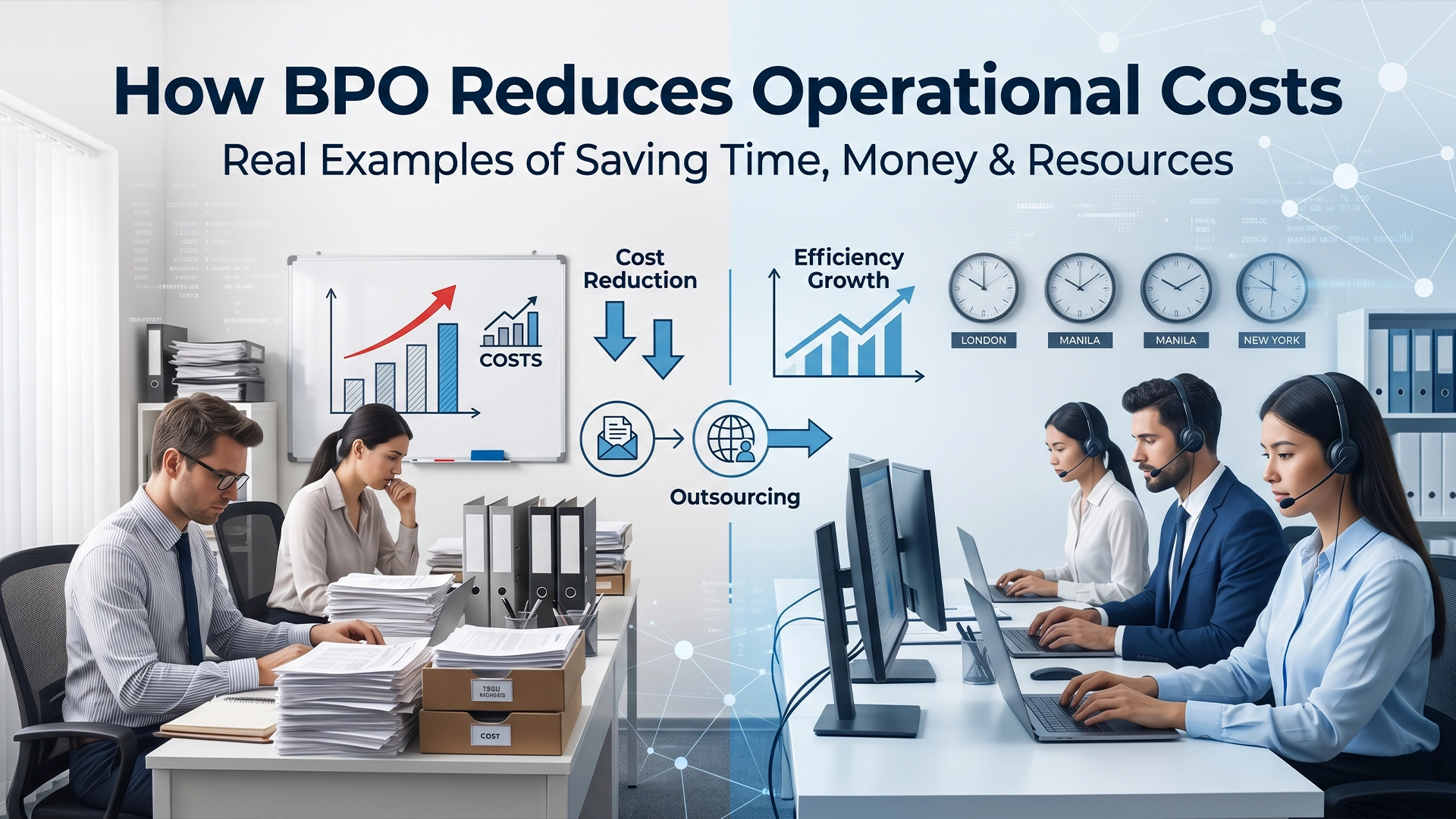
Businesses today operate in an increasingly competitive environment where controlling operational expenses is just as important as increasing revenue. Rising labour costs, growing administrative workloads, evolving customer expectations, and the pressure to scale efficiently have made operational efficiency a major priority for organisations across all industries.
Whether you run an e-commerce business, retail operation, finance department, startup, or enterprise-level company, managing day-to-day operations internally can quickly become expensive, time-consuming, and difficult to scale.
This is where Business Process Outsourcing (BPO) creates significant value.
Understanding how BPO reduces operational costs (with examples) helps businesses identify smarter ways to improve efficiency, reduce overhead, optimize internal resources, and focus more effectively on growth-oriented activities. Today, BPO is no longer viewed as a simple cost-cutting tactic. It has evolved into a strategic business solution that helps companies improve operational agility, strengthen process execution, and increase long-term scalability.
Instead of allocating internal teams to repetitive administrative tasks and operational workflows, businesses can outsource selected functions to experienced service providers with specialized expertise, trained resources, established systems, and scalable delivery models.
The result is lower operational costs, faster execution, improved accuracy, and better resource utilization.
In this comprehensive guide, we’ll explore how BPO reduces operational costs, explain the key financial and operational benefits of outsourcing, provide real-world examples, discuss outsourcing challenges, and help businesses understand how to maximize long-term outsourcing ROI.
What Is Business Process Outsourcing (BPO)?
Business Process Outsourcing (BPO) refers to the practice of outsourcing specific operational functions or recurring business processes to an external service provider. These outsourced functions may include customer support, finance operations, administrative support, order processing, procurement coordination, reporting, payroll management, data entry, and back-office workflows.
The primary goal of BPO is to improve operational efficiency while reducing the cost and complexity of managing these processes internally.
Rather than building large in-house operational teams, businesses can leverage outsourced expertise and infrastructure to streamline execution and improve scalability.
Most companies outsource tasks that are:
- Repetitive
- Time-consuming
- Resource-intensive
- Administrative in nature
- Difficult to scale internally
- Non-core to strategic growth
By outsourcing these operational functions, internal teams can focus more on business growth, customer experience, innovation, strategic planning, and revenue generation.
This is one of the key reasons why businesses continue exploring how BPO reduces operational costs (with examples) across different industries and operational models.
Why Businesses Are Increasingly Adopting BPO
As organisations grow, operational complexity naturally increases. Businesses begin managing larger transaction volumes, expanding teams, multiple operational systems, procurement workflows, customer requests, reporting requirements, and administrative processes.
Without proper operational support, companies often experience:
- Rising labor expenses
- Reduced operational efficiency
- Workflow bottlenecks
- Delayed reporting cycles
- Employee burnout
- Process inconsistencies
- Increased operational errors
- Difficulty scaling operations
- Poor visibility across departments
- Slower customer response times
These challenges not only impact operational performance but also reduce profitability and limit business scalability.
This is exactly where understanding how BPO reduces operational costs (with examples) becomes valuable. Outsourcing allows businesses to replace expensive internal operational structures with flexible, scalable, and process-driven outsourcing solutions that improve execution while lowering costs.
How BPO Reduces Operational Costs (With Examples)
Reduced Labor Costs
One of the most significant advantages of BPO is workforce cost reduction. And its important to find out that how BPO reduces operational costs?
Hiring and maintaining internal teams involves much more than employee salaries. Businesses must also manage:
- Recruitment costs
- Employee benefits
- Insurance expenses
- Payroll taxes
- Training programs
- Office infrastructure
- Hardware and equipment
- HR management
- Employee retention costs
These operational expenses can become substantial, especially for businesses managing large administrative workloads.
BPO providers already maintain trained operational teams, established systems, and scalable staffing models. This allows businesses to access skilled support resources without carrying the full financial burden of in-house staffing.
Example
An ecommerce business processing thousands of monthly orders may require:
- Order processing staff
- Customer support representatives
- Inventory coordinators
- Administrative support teams
Hiring an internal team for these functions could significantly increase payroll and operational costs. By outsourcing these processes to a BPO provider, the company can reduce staffing expenses while improving operational efficiency and turnaround times.
This is a practical example of how BPO reduces operational costs (with examples) through workforce optimization and operational scalability.
Lower Infrastructure and Technology Costs
Managing internal operational departments requires significant investment in infrastructure and technology.
Businesses often need:
- Office space
- Computer systems
- Operational software
- Cybersecurity tools
- Internet infrastructure
- Maintenance support
- Workflow management platforms
- Communication systems
These infrastructure costs continue growing as operations expand.
BPO providers already operate using enterprise-grade infrastructure and operational systems, allowing businesses to benefit from advanced operational capabilities without large capital investments.
Many businesses also rely on reliable IT operations to maintain workflow continuity, data accessibility, and operational uptime. Its necessary to figure out about how BPO reduces operational costs? But Helionex offers 24/7 IT Support Services help businesses minimise downtime, improve technical response times, and maintain uninterrupted operational performance across critical systems and business functions.
Example
A finance company outsourcing invoice processing and reconciliation may avoid expenses related to:
- Additional office expansion
- Finance software licensing
- IT support infrastructure
- Administrative hardware
- Internal workflow systems
This allows the company to reduce overhead while maintaining operational quality and reporting accuracy.
Improved Operational Efficiency
It is always a question that how BPO reduces operational costs? Specialized BPO providers focus entirely on operational execution and workflow optimization. Their teams are trained to follow structured operational processes, performance KPIs, service-level agreements (SLAs), and quality control frameworks.
As a result, outsourced teams often perform tasks:
- Faster
- More consistently
- With higher accuracy
- Using optimized workflows
Example
A retailer outsourcing procurement coordination and vendor communication can improve inventory replenishment cycles, reduce supplier delays, and minimize administrative inefficiencies.
Instead of internal teams manually managing repetitive procurement follow-ups, outsourced specialists handle workflows more efficiently using standardised operational procedures.
This improves execution speed while reducing internal resource strain.
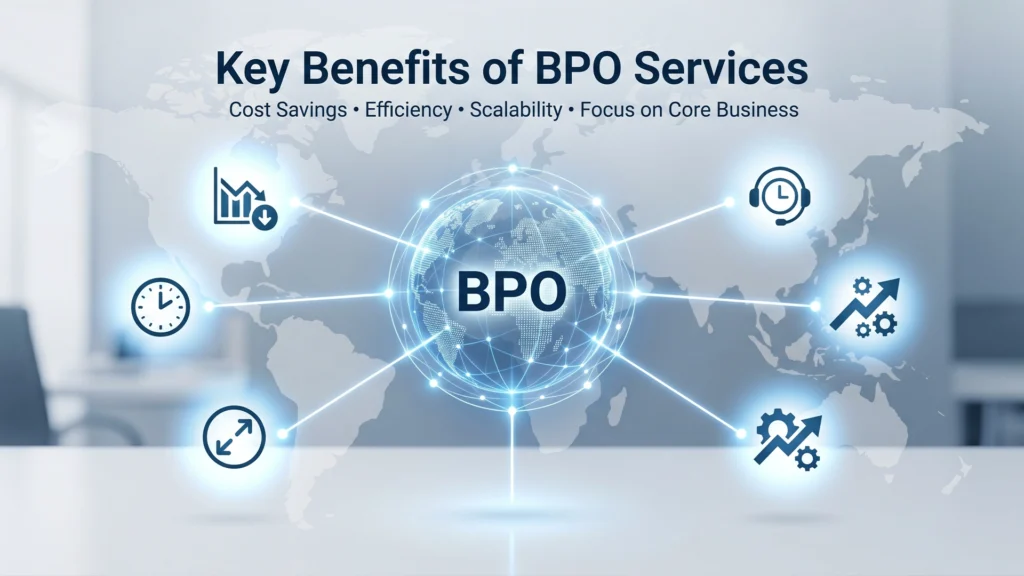
Reduced Recruitment and Employee Training Costs
Recruiting, onboarding, and training employees is both time-consuming and expensive.
Businesses must invest in:
- Hiring campaigns
- Interviews
- HR management
- Employee onboarding
- Operational training
- Performance management
- Ongoing development
To find out how BPO reduces operational costs? BPO providers eliminate much of this burden because they already maintain trained operational teams ready to support business functions immediately.
Example
A startup outsourcing customer support operations can avoid the costs associated with building an internal support department from scratch.
Instead of spending months hiring and training employees, the business gains immediate access to experienced support teams capable of managing customer operations efficiently.
This accelerates growth while controlling operational expenses.
Scalability Without Major Operational Disruption
Scalability is another major reason businesses explore how BPO reduces operational costs (with examples).
As companies grow, operational demands fluctuate based on:
- Seasonal demand
- Product launches
- Market expansion
- Sales growth
- New customer acquisition
- Regional expansion
Scaling internal teams quickly can be difficult and expensive.
BPO providers offer flexible resource models that allow businesses to scale operational support without significantly increasing long-term payroll commitments.
Example
An ecommerce retailer experiencing seasonal sales spikes during holiday periods may temporarily increase outsourced operational support for:
- Order management
- Customer support
- Inventory coordination
- Returns processing
Once demand stabilizes, the business can reduce outsourcing capacity without the financial burden of maintaining large permanent teams.
This flexibility significantly improves operational efficiency and cost management.
Reduced Errors and Improved Accuracy
Manual operational processes often lead to:
- Reporting inaccuracies
- Data entry mistakes
- Procurement errors
- Inventory discrepancies
- Customer service issues
- Financial inconsistencies
Experienced BPO providers implement structured workflows, SOPs, quality assurance systems, and operational controls designed to reduce errors and improve process consistency.
Example
A finance outsourcing provider managing reconciliation workflows may implement automated validation systems and multi-level quality checks that significantly reduce accounting discrepancies.
Fewer operational errors lead to:
- Lower financial losses
- Improved compliance
- Better reporting accuracy
- Higher customer satisfaction
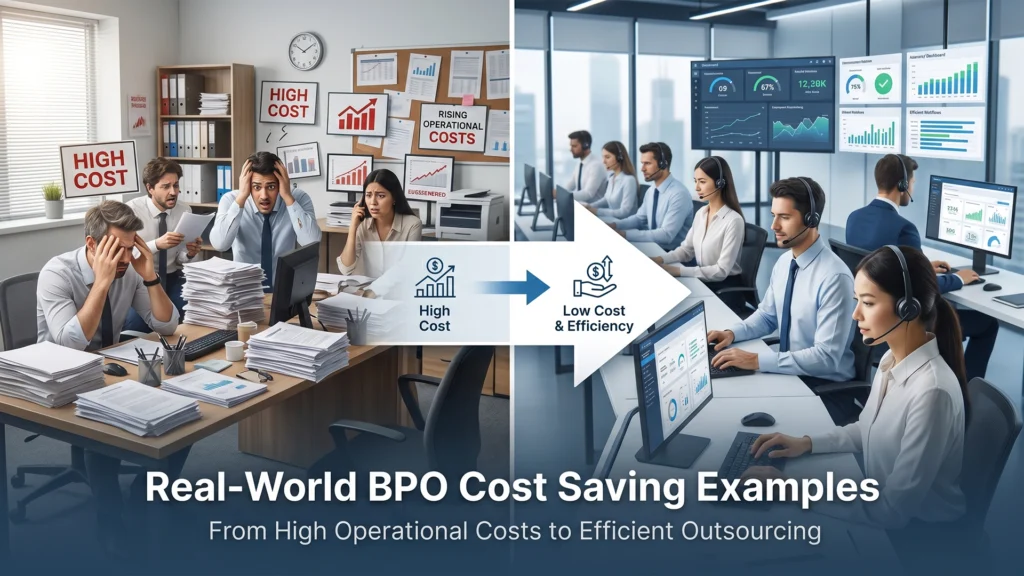
Real Examples of BPO Cost Savings
Example 1: Ecommerce Order Processing
Challenge
An ecommerce company struggled with increasing order volumes, delayed fulfillment, rising staffing costs, and operational inefficiencies.
BPO Solution
The business outsourced:
- Order processing
- Customer communication
- Returns management
- Inventory updates
Results
- Faster order fulfillment
- Lower operational expenses
- Improved customer satisfaction
- Better scalability during peak seasons
Example 2: Finance and Administrative Support
Challenge
A growing company experienced delays in invoicing, reconciliation, and reporting due to limited internal finance resources.
BPO Solution
The organization outsourced:
- Invoice management
- Financial reporting support
- Accounts payable processes
- Administrative workflows
Results
- Reduced administrative workload
- Faster financial reporting
- Improved reporting accuracy
- Lower staffing costs
Example 3: Retail Back-Office Operations
Challenge
A multi-location retailer struggled with procurement coordination and supplier communication across multiple operational sites.
BPO Solution
The company outsourced:
- Vendor communication
- Procurement follow-ups
- Documentation management
- Reporting coordination
Results
- Improved procurement efficiency
- Reduced operational delays
- Better supplier management
- Lower operational overhead
Additional Benefits of BPO Beyond Cost Reduction
Although businesses often focus on financial savings, outsourcing also delivers long-term strategic advantages.
Access to Specialized Expertise
BPO providers bring industry experience, operational expertise, and process knowledge that many internal teams may not possess.
Faster Workflow Execution
Dedicated outsourcing teams improve turnaround times and process consistency.
Greater Focus on Core Business Activities
Internal teams can focus on:
- Business growth
- Strategic planning
- Product development
- Customer experience
- Revenue generation
Better Process Standardization
BPO providers typically follow structured operational frameworks that improve consistency and accountability.
Increased Operational Agility
Businesses can adapt more quickly to operational changes without major internal restructuring.
Industries That Benefit Most From BPO
Many industries rely heavily on outsourcing to improve operational efficiency and scalability.
Common Industries Using BPO
- Ecommerce businesses
- Retail companies
- Finance organizations
- Healthcare providers
- Logistics businesses
- SaaS companies
- Manufacturing firms
- Professional service providers
Commonly Outsourced Business Functions
Businesses outsource a wide variety of operational functions depending on their needs.
Frequently Outsourced Operations
- Customer support
- Finance and accounting
- Data entry
- Payroll processing
- Procurement coordination
- Order management
- Administrative support
- Technical support
- Documentation workflows
- Back-office operations
Challenges Businesses Should Consider Before Outsourcing
While understanding how BPO reduces operational costs (with examples) is important, businesses should also evaluate potential outsourcing risks and operational considerations.
Common BPO Challenges
- Communication gaps
- Vendor dependency
- Data security concerns
- Workflow transition complexity
- Integration challenges
- Quality management issues
Data protection and infrastructure security are critical when outsourcing operational workflows and handling sensitive business information. Helionex’s Network Monitoring & Security Services help businesses strengthen cybersecurity, monitor operational infrastructure, and reduce risks related to system vulnerabilities, unauthorized access, and operational disruptions.
These risks can be minimized through careful vendor evaluation, structured onboarding, operational governance, and clearly defined SLA agreements.
How to Maximize BPO ROI
Businesses should approach outsourcing strategically rather than viewing it only as a short-term cost-saving initiative.
Best Practices for Successful BPO
Define Clear Operational Goals
Businesses should identify:
- Process inefficiencies
- Cost reduction targets
- Scalability objectives
- Workflow bottlenecks
- Reporting expectations
Select the Right BPO Partner
Evaluate outsourcing providers based on:
- Industry expertise
- Operational experience
- Security standards
- Scalability capabilities
- Reporting transparency
- Communication structure
Establish KPIs and Performance Metrics
Track:
- Accuracy rates
- Turnaround times
- Productivity improvements
- Cost savings
- Customer satisfaction
- SLA performance
Focus on Long-Term Process Optimization
The most successful outsourcing partnerships continuously improve workflows, automation, and operational efficiency over time.
Why Choose Helionex as Your BPO Partner
Choosing the right outsourcing partner is critical for operational success. At Helionex, we help businesses streamline operations, reduce overhead, improve workflow efficiency, and scale operational functions through customized BPO solutions.
Industry-Specific Operational Expertise
We understand the operational challenges businesses face, including:
- High transaction volumes
- Procurement inefficiencies
- Administrative bottlenecks
- Reporting complexity
- Inventory coordination
- Customer support demands
Our outsourcing solutions are designed to improve operational performance while supporting long-term business growth.
End-to-End Operational Support
Helionex supports businesses across:
- Back-office operations
- Finance administration
- Reporting support
- Vendor coordination
- Workflow management
- Operational optimization
Flexible and Scalable Delivery Models
We provide:
- Dedicated operational teams
- Shared resource structures
- Hybrid outsourcing models
- Scalable support frameworks
SLA-Driven Operational Delivery
Our BPO services include:
- Workflow monitoring
- Performance reporting
- Quality assurance
- Continuous optimization
- Structured governance
Long-Term Business Partnership
We focus on building scalable operational ecosystems that help businesses improve efficiency, reduce operational strain, and support sustainable growth.
Conclusion
Understanding how BPO reduces operational costs (with examples) allows businesses to make smarter decisions about operational efficiency, scalability, and long-term resource management.
Business Process Outsourcing helps companies reduce labour expenses, lower infrastructure costs, improve workflow execution, minimise operational errors, and scale operations more efficiently without overextending internal teams.
From e-commerce brands and retailers to finance organisations and growing enterprises, BPO solutions provide businesses with the operational flexibility needed to remain competitive in fast-changing markets.
However, successful outsourcing requires more than simply delegating tasks. Businesses must choose the right outsourcing strategy, define clear operational goals, and partner with experienced providers capable of delivering long-term operational value.
With the right BPO partner, businesses can improve efficiency, reduce overhead, enhance customer experiences, and focus more effectively on innovation, growth, and strategic expansion.
FAQ’s
What is Business Process Outsourcing (BPO)?
Business Process Outsourcing (BPO) is the practice of outsourcing operational tasks and recurring business workflows to external service providers to improve efficiency and reduce operational costs.
How BPO reduces operational costs (with examples)?
BPO reduces operational costs by lowering labor expenses, reducing infrastructure costs, improving process efficiency, minimising recruitment expenses, and enabling flexible operational scalability.
Which business functions are commonly outsourced?
Businesses commonly outsource:
- Customer support
- Finance operations
- Payroll processing
- Data entry
- Procurement coordination
- Administrative support
- Order management
- Reporting workflows
Is BPO suitable for small businesses?
Yes. Small businesses often use BPO services to reduce operational overhead, improve efficiency, access specialised expertise, and scale operations without building large internal teams.
What industries benefit most from BPO?
Industries that commonly benefit from BPO include retail, ecommerce, finance, healthcare, logistics, SaaS, manufacturing, and professional services.
How can Helionex help businesses with BPO services?
Helionex provides scalable BPO solutions, including back-office support, finance administration, operational workflows, reporting support, vendor coordination, and process optimisation to help businesses reduce costs and improve operational efficiency.